The style notebook
Chanel Cruise 2024/25 Satin Pillow Bags: Outfit Ideas
How to wear the Chanel Cruise 2024/25 satin pillow bag in pale pistachio or canary yellow without colour-blocking, with quiet clothing and under-arm carry.
For the Chanel Cruise 2024/25 satin pillow bag in pale pistachio or canary yellow, the answer is to let the clothing go one soft colour lighter than the bag and keep every fabric matte — so the satin reads as the single pale accent rather than one flat block of colour sitting beside another. The bag is not a print or a pattern; it is a large, soft, quilted, shiny surface. The outfit has to give that surface room. Anna McWhirter, writing for PurseBop on 4 December 2024 about the Métiers d’Art 2024/25 show in Hangzhou, reports that satin played a prominent role, that handbags were paired with intricate silk two-piece ensembles, and that the new bag echoes the Chanel 22 in an oversized quilted pattern with chain shoulder straps, shown soft and pillow-like, clutched under the arm, in black and in pastels including pale pistachio and canary yellow. Those are her reported design and runway-styling details; the pairing judgements below are my own styling reading of them.
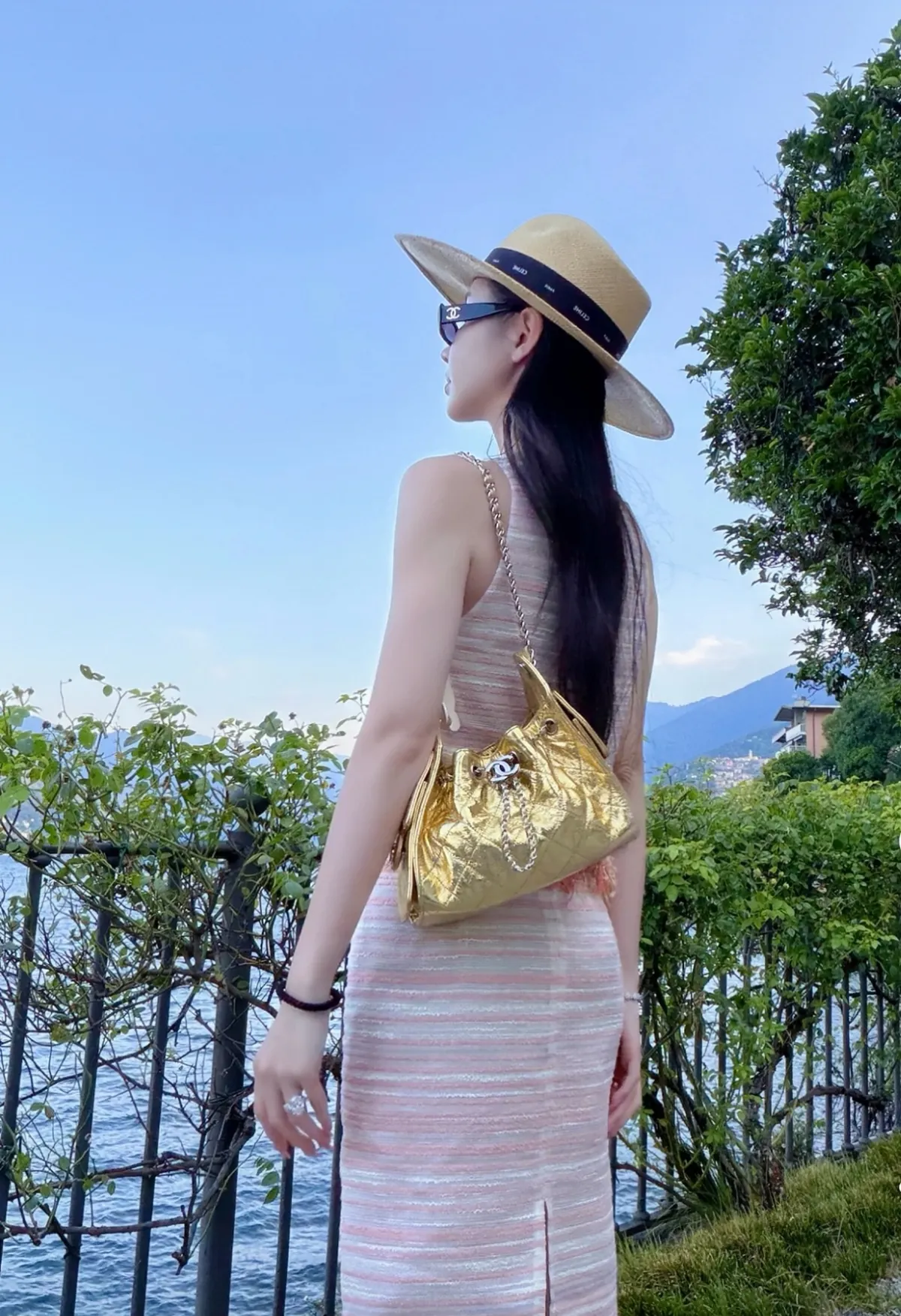
The featured image is an existing Chanel wardrobe reference, separate from the Cruise 2024/25 looks discussed here.
Break the colour block with a quieter base, not a second statement
A pale pistachio or canary yellow bag reads as a block of colour the moment the clothes around it are a similar saturation or a similar cool/warm cast. The fix is not to add more colours; it is to separate the bag from the body. Put cream, oyster, stone or a washed pale grey under the bag, and keep the yellow or green the only saturated note in the frame. A warm canary sits well against ivory and camel; a cool pistachio sits more naturally against pale grey, white and soft sage. The distinction matters because a yellow bag against cream looks deliberate, while a yellow bag against another mid-tone pastel looks accidental.
This is where the colour-block risk actually comes from: two large, flat areas of similar value beside each other. A long column of tailored trousers and a simple top in one quiet shade gives the bag a single field to sit against. If you want to wear the bag over a dress, keep the dress one matte colour and let its hem length, not its print, do the work.
Quiet clothing textures let the satin and quilting read
The bag’s interest is surface: satin sheen across an oversized quilt. That sheen disappears next to sequins, another satin, high-shine leather, or a very fuzzy knit. Matte cotton, wool crêpe, fine cashmere and plain linen all give the pillow shape a dull field that makes the panels catch light. McWhirter’s note that the runway put these bags with silk two-piece ensembles is useful, but I would read it as a direction, not a rule: a silk top with matte trousers is the more forgiving version for daylight, because the shine is confined to one half of the body and the bag stays the brightest thing in the outfit.
Where I would choose differently from the runway: the show’s all-silk pairing stacks sheen on sheen, which works under stage lighting and can look flat in a restaurant. One silk piece, one matte piece keeps the distinction between clothing and bag legible.
Under the arm: the carry changes the top, not the bag
McWhirter reports that the pillow bag was clutched under the arm on the runway. That carry is the reason the two-piece silk ensemble makes sense: a jacketless silk top or a soft shirt leaves the underarm free, while a bulky jacket or a heavy knit turns the same carry into a bunched, awkward wedge of fabric. So the clothing decision follows the carry. Sleeveless or short-sleeved tops, a fitted long sleeve, or a light layer that you can remove all let the bag sit close to the body without a rolled-up sleeve in the way.
For a two-piece ensemble, the useful version is a softly structured top over a matching or contrasting skirt or trouser, both in matte or semi-matte silk, with the bag held on the same side as the shorter sleeve. Treat the fit of the armhole as the practical check when you try the outfit on: a high, tight armhole is the one detail most likely to interfere with an under-arm carry. That is a conditional check you make yourself in front of a mirror, not a claim about how the bag performs.
Black versus pastel: two different jobs
The black version is the easier daily bag in this shape, because black satin behaves almost like matte leather in low light and does not compete with clothing colour at all; wear it over grey, navy, cream or winter white without thinking about it. The pastels are for days when the bag is the point of the outfit. If you own only one, the black does more work; if you own the pale pistachio or canary, the guide above is how to keep it from becoming a colour block.
For the pastel to stay an accent rather than a slab, keep the shoes quiet and close in tone to the trousers or skirt hem, so the eye travels from a neutral ankle up to the bag. A tonal shoe in cream or stone and a plain top in the same family as the shoe leaves the pale bag as the one interrupted colour in the frame.
Where I would choose differently
I would not build a full tonal pistachio outfit — green bag, green skirt, green shoes. That is the colour block the brief worries about. The stronger look is a green bag over a white or oyster column, with a brown or black shoe to ground it. For canary yellow, the same logic with a camel or navy base reads warmer and less like a matching set. If you want a second reference point for soft, pale bags against quiet clothing, the Cruise 2024/25 Mini 22 and minaudière guide covers how a softer bag carries an outfit; and for how a plain trouser line can hold a bag without competing, the wide-leg trouser guide is the same principle in a darker colour.