The style notebook
Chanel Cruise 2026/27 Little Black Dress with Shell Earrings and Slingback Sandals: Outfit Ideas
Chanel Cruise 2026/27 little black dress: let the shell earrings lead, keep the neckline bare and the slingback sandal quiet with a clean ankle.
For the Chanel Cruise 2026/27 look built on the little black dress, the shell earrings should lead — and the practical slingback sandals should be kept quiet enough to stay in their supporting role. Vogue Korea's 서동범, reporting on 24 November 2026, describes the dress paired with distinctive earrings reminiscent of seashells and practical slingback sandals, and reads the combination as an expression of the free spirit associated with Gabrielle Chanel. It also places the little black dress at the house's origin and marks its hundredth anniversary. Those are the reported pieces. Everything below about where to leave bare skin and how to balance the two accessories is my styling reading rather than a description of the look as the source states it.
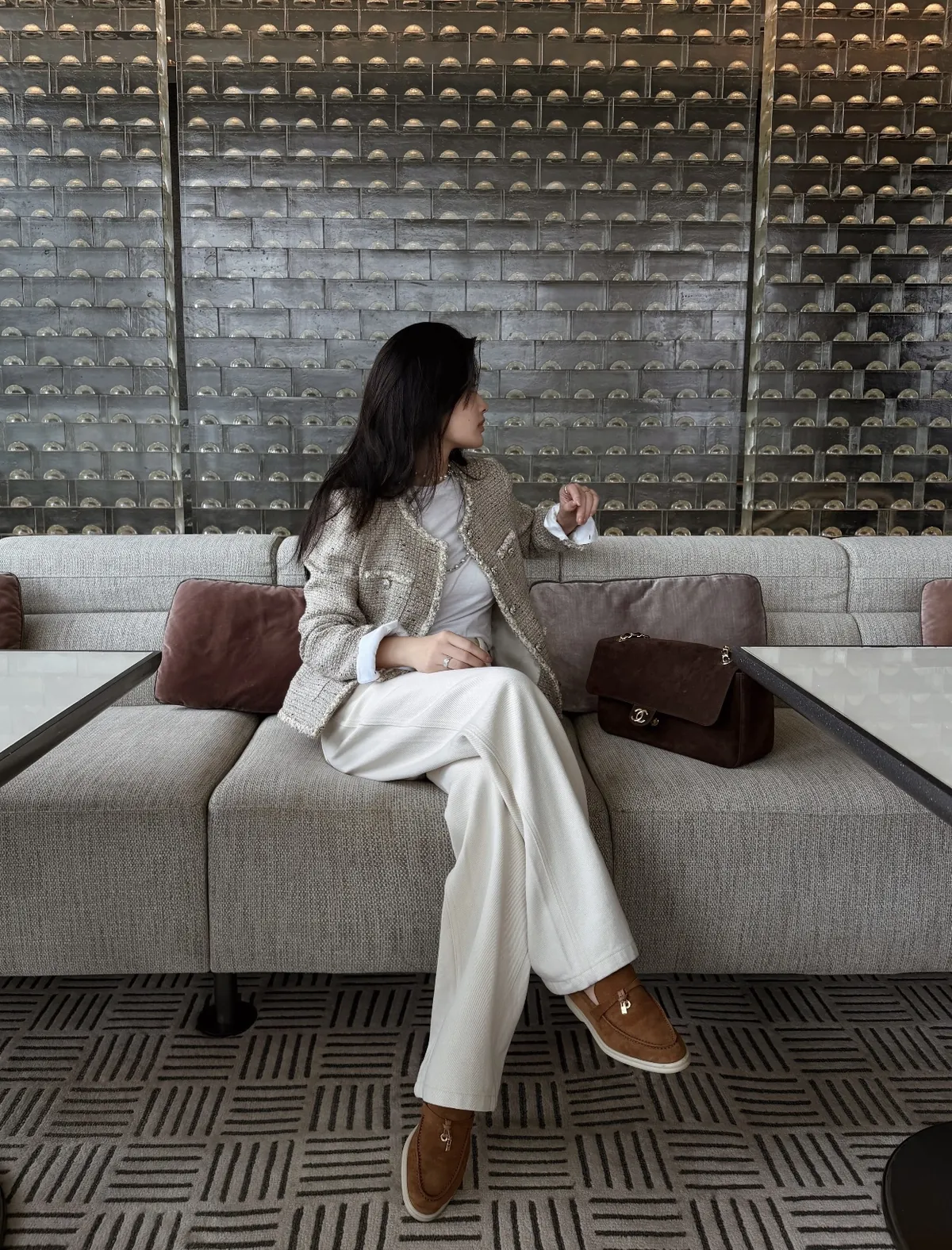
The featured image is an existing Chanel wardrobe reference, separate from the Cruise 2026/27 looks discussed here.
The earring moves near the face; the sandal moves at the ankle. They sit far apart on the body, so they rarely fight each other directly. What they compete for is attention, and attention is limited. Give it to the earring, because it is the detail with a specific shell character and the one placed beside the face. The sandal does its best work as a clean, unfussy ending.
Why the shell earring takes the lead
Read the Vogue Korea text closely and the two accessories are not described in the same register. The earrings are called distinctive and shell-like; the sandals are called practical. That difference in language is the useful cue. A shell-shaped earring is an ornament with a clear motif. A slingback sandal described as practical is being valued for usefulness, not for decoration. When you put the two together, the ornament should carry the personality and the practical shoe should recede.
Earrings near the face frame the neckline. If that neckline is already busy with a necklace, a high collar or a fussy neckline seam, the shell shape gets lost. My reading is that a plain, unadorned neckline gives the earring the plain ground it needs. That is the version I would choose: the dress does its work in silhouette, and the single piece of ornament sits where people look.
What stays bare
- The neck and décolletage. No necklace, no scarf at the throat. The earrings get the area around the face to themselves.
- The wrist. A watch or bracelet beside a shell-motif earring sets up a second discussion of what the jewellery is doing. Leave the wrist quiet unless you have a reason to bring in metal.
- The ankle. The ankle-strap of a slingback already draws a line there. Avoid an anklet and avoid stacking more straps or hardware on top of it.
A plain dress can absorb a lot, but the brief asks the accessories not to compete, and the neck and ankle are where the two pieces meet the body. Keep both clear and the earring-to-sandal span reads as one considered look rather than two additions.
The sandal choice, and where you would reverse
Because the reported sandal is practical, I would treat it as the neutral stub of the outfit: a simple line, nothing oversized or highly decorated at the heel, and nothing that reaches up the foot as a second focal point. The eye should stop at the earring, travel down a simple dress, and end on a shoe that does not ask to be looked at again.
There is a case for flipping the emphasis, and it is a specific one. If the shell earrings are small and close to the lobe rather than broad and sculptural, the earring no longer holds the top of the look strongly. In that case a more decided sandal can take the lead without the earring being overruled. The test is scale: the piece with more presence should lead. A large statement earring outranks the sandal; a modest earring can hand the lead down.
Vogue Korea also mentions a shell-textured slingback heel in another section of the collection report, which is a different shoe from the practical slingback sandal in the little-black-dress look. I would not merge the two. If the sandal itself carries a shell texture, it starts competing with the shell earring on subject matter as well as attention. The dress look described in the report pairs distinctive earrings with a practical sandal, and that separation is what I would preserve.
Bags, hair and other details
The dress is the fixed anchor; additions should be few. A small, plain bag keeps the hands from adding a second decorative centre. Hair worn back or off the neck exposes the earrings instead of hiding them, which matters more with a shell motif than with a stud — the motif needs to be visible to count. Anything at the hem line should stay minimal so the plain neckline and clean ankle read as a deliberate, unified choice rather than two gaps surrounded by clutter.
On the hundredth anniversary of the little black dress, the temptation is to treat the garment as the statement. In this look it is the steady middle term: the earring is the accent, the sandal is the punctuation, and the bare neck and ankle are what let the two remain distinct. For related options in the wider wardrobe, the hem and shoe decisions guide covers other shoe choices against a black dress, and the green suede pump guide is the alternative when you would rather the foot lead.