The style notebook
Chanel Cruise 2026/27 Top Handle Bags: Croissant-Silhouette Woven Raffia and Wicker Outfit Ideas
Chanel Cruise 2026/27 Top Handle Bags: how the woven raffia turn-lock and wicker drawstring crescents change your sleeves and wrist jewellery.
The Chanel Cruise 2026/27 Top Handle Bag gives you one silhouette in two surfaces, and the answer to the sleeve-and-jewellery question is different for each. Anna McWhirter's PurseBop report, published 28 April 2026, describes a sculptural, crescent-shaped bag with an integrated handle, shown in a tightly woven raffia with an almost beige-and-black houndstooth effect and a tab-and-CC-turn-lock closure, alongside a structured wicker version lined in leather with a CC-adorned drawstring that cinches the interior. Both were carried by hand on the runway even though each has a chain shoulder strap. The croissant curve and the hand carry set the problem: the front of the bag sits at forearm height beside the body, so anything loose at the wrist or crowded at the cuff sits in the same visual zone. My styling reading, not the report's: keep both wrists quieter than you otherwise would, then let the two closures pull you toward different clothing.
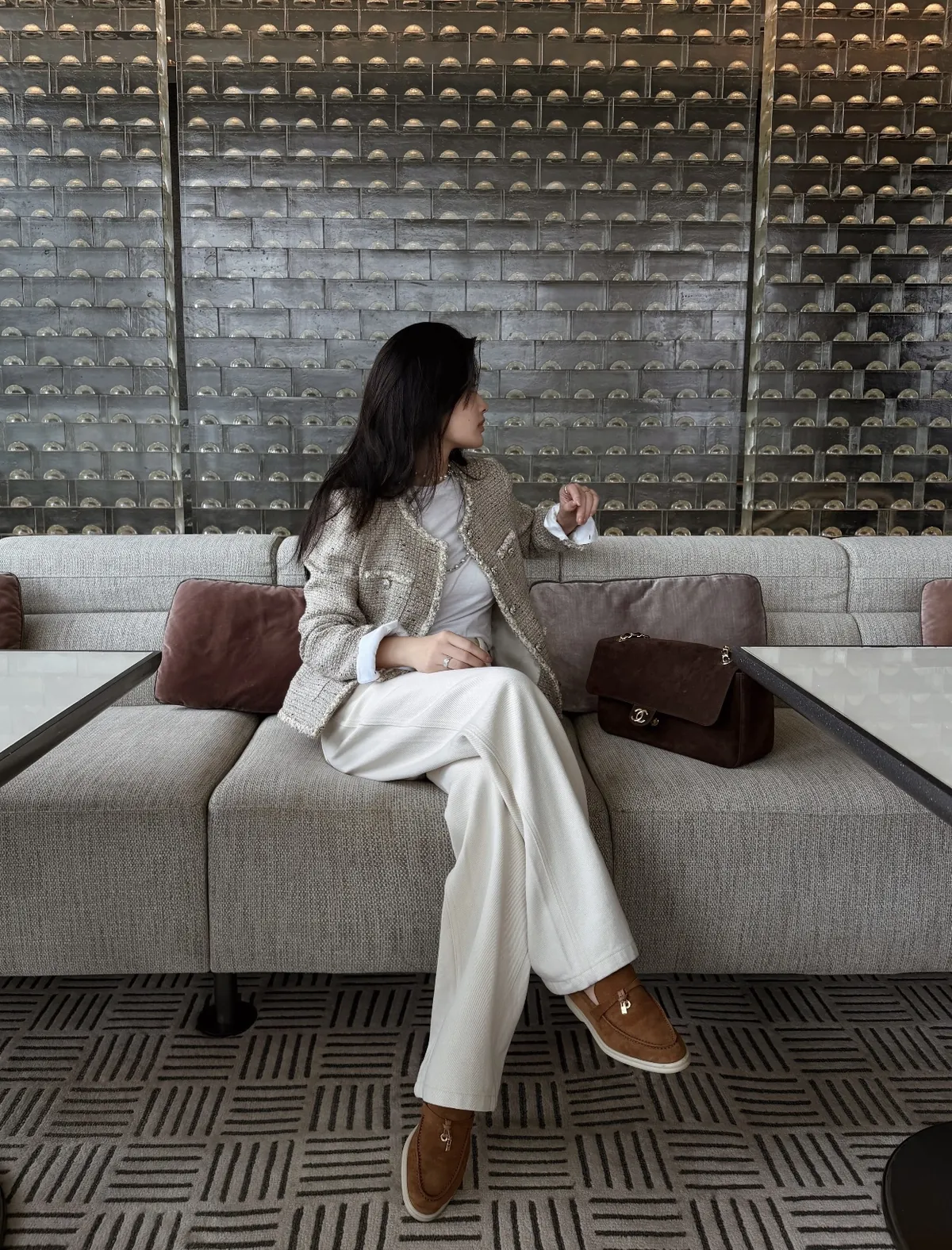
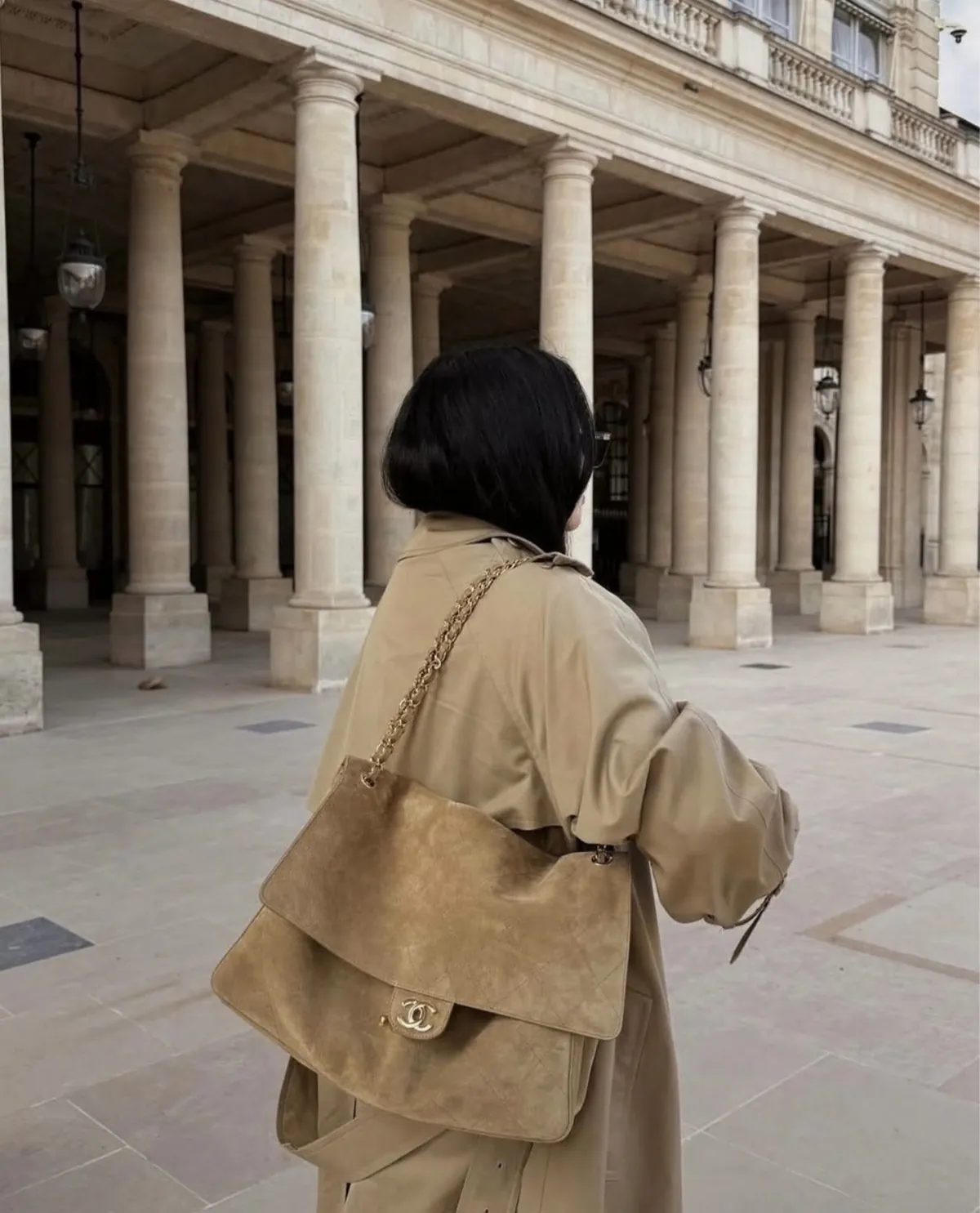
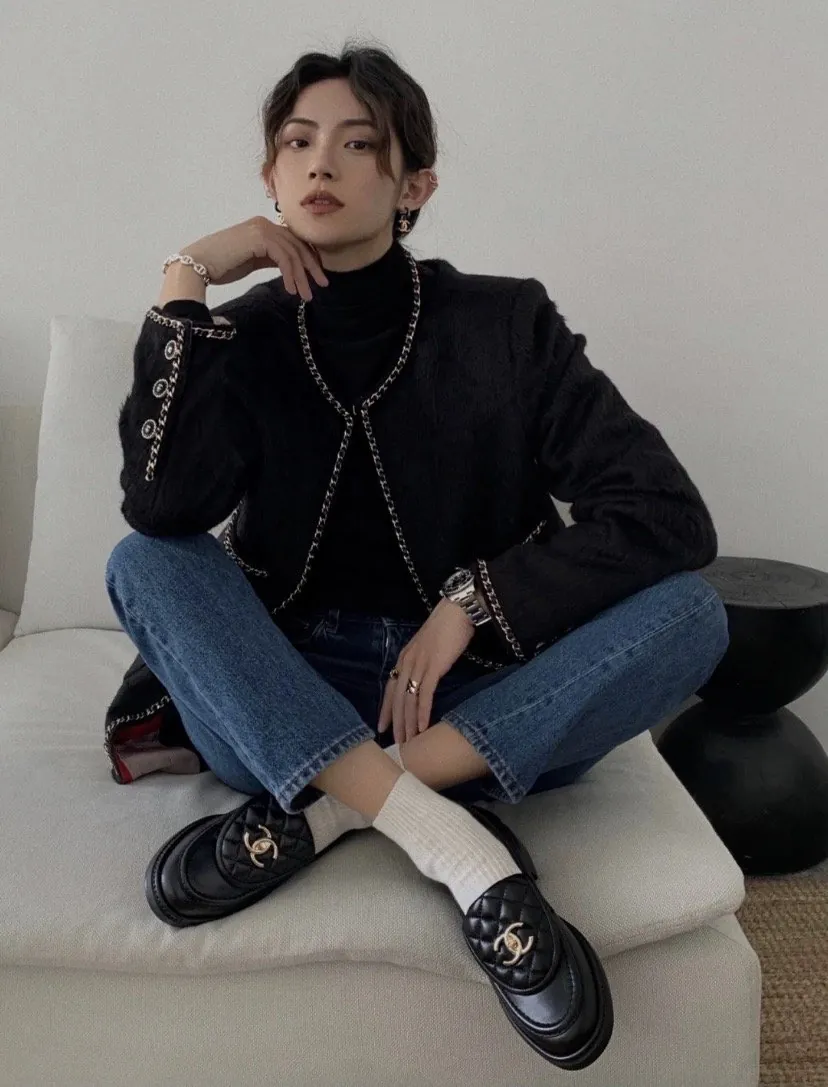
The featured image is an existing Chanel wardrobe reference, separate from the Cruise 2026/27 looks discussed here.
Woven raffia and the turn-lock: let the houndstooth do the pattern work
The raffia version already carries a pattern. Beige and black interlock in a small, dense houndstooth effect, and the closure adds two more marks — a tab and a CC turn-lock. That is a lot happening on one curved surface, so the clothing should treat the bag as the patterned element of the outfit rather than as a neutral accessory.
Plain sleeves serve it best. A smooth shirt cuff, a clean knit sleeve or a tailored jacket ending at the wrist leaves the woven surface and the turn-lock as the detail the eye lands on. If the sleeve itself is patterned — checks, stripes, a print — the houndstooth fights it at close range, and the bag starts to look busy rather than deliberate. Bared forearms also work well here, and they suit the seaside register of the collection.
Because the bag is hand-carried, the arm nearest it tends to rest at the side and the wrist ends up beside the closure. That makes that wrist the one to keep plain — a thin band, a single narrow bangle — while the free wrist can carry more. A stack of chunky bracelets on the bag side crowds the turn-lock; the other side has nothing to compete with.
Wicker and the drawstring: quieter clothing, one strong wrist
The wicker version reads quieter. The report gives a structured body, a leather lining and a CC-adorned drawstring cinching the interior, so the ornament is concentrated at the opening rather than on a surface pattern. The woven wicker supplies the texture and the drawstring supplies the detail; the clothing can afford to be plainer still, which lets the material do more of the talking.
Sleeves here can be slightly fuller without ruining the shape — a soft blouson cuff or a wide sleeve that falls away from the forearm gives the textured wicker a clean field. The one thing to avoid is a sleeve that bunches exactly where the hand grips the integrated handle. The drawstring sits near the top of the bag, so a wrist stacked with metal next to it has to share a small space; save the louder bracelet for the opposite arm, or choose a sleeve long enough to sit just behind the drawstring and keep that zone calm.
The leather lining is a useful cue for the rest of the outfit. Since the contrast is hidden inside, the outside stays single-material, which pairs neatly with linen, washed cotton or plain knitwear in one tone. My reading is that the wicker version is the more forgiving of the two for a wearer who likes a strong bracelet: with no houndstooth to compete against, one sculptural cuff on the bag-side wrist can be the outfit's only complication.
Where the two diverge, and what stays the same
The genuine split is patterned-surface versus plain-surface. If you already dress in checks, stripes or prints, the wicker bag gives your clothing room and keeps the ornament low; if your wardrobe is tonal and plain, the raffia crescent supplies the pattern your outfit lacks. Choose the raffia for a plain linen or cotton wardrobe, and the wicker for a wardrobe that already carries pattern.
Two habits hold for both. First, keep the bag-side wrist and cuff uncluttered — no wide bangles, no dense stacks, no sleeve that gathers at the forearm. Second, let the hand carry stay informal: the chain strap exists, but the report describes both versions carried by hand, so the integrated handle is the intended read and the clothing should look relaxed enough to belong to that gesture.
Before deciding, hold the bag by its handle with your usual sleeve and bracelet on and check that the cuff doesn't sit on or bunch at the handle or closure. That is a personal fit check, not a claim about how the bag behaves. For the stripe-led wardrobe that dominated this collection, the blue-and-white Executive Tote guide is a closer starting point, and the Bucket Bag guide covers the other hand-carried piece from the same show.
CHANEL Cruise 2026/27 Show — CHANEL Shows — CHANEL official video.
The CHANEL Cruise 2026/27 Collection — CHANEL official video.