The style notebook
Chanel Fall-Winter 1993 Fantasy Tweed Coat: Archival Display Outfit Ideas
Build around a Chanel Fall-Winter 1993 multicolored Fantasy Tweed coat: flat tonal layers and one quiet bag so the archival weave leads every look.

A multicolored Chanel Fall-Winter 1993 Fantasy Tweed coat directs the outfit best when the clothes beneath it are flat, tonal and matte. The coat needs a plain column underneath — a fine-gauge knit, a smooth skirt or narrow trousers — rather than another textured piece. Anna McWhirter, writing for PurseBop on 29 September 2026, reports that the coat was displayed with a blue-green tweed coat from the same collection at Anthology of Style's gala at The Frick. That tells you these are display pieces, not styling prescriptions. The outfit reasoning below is mine.
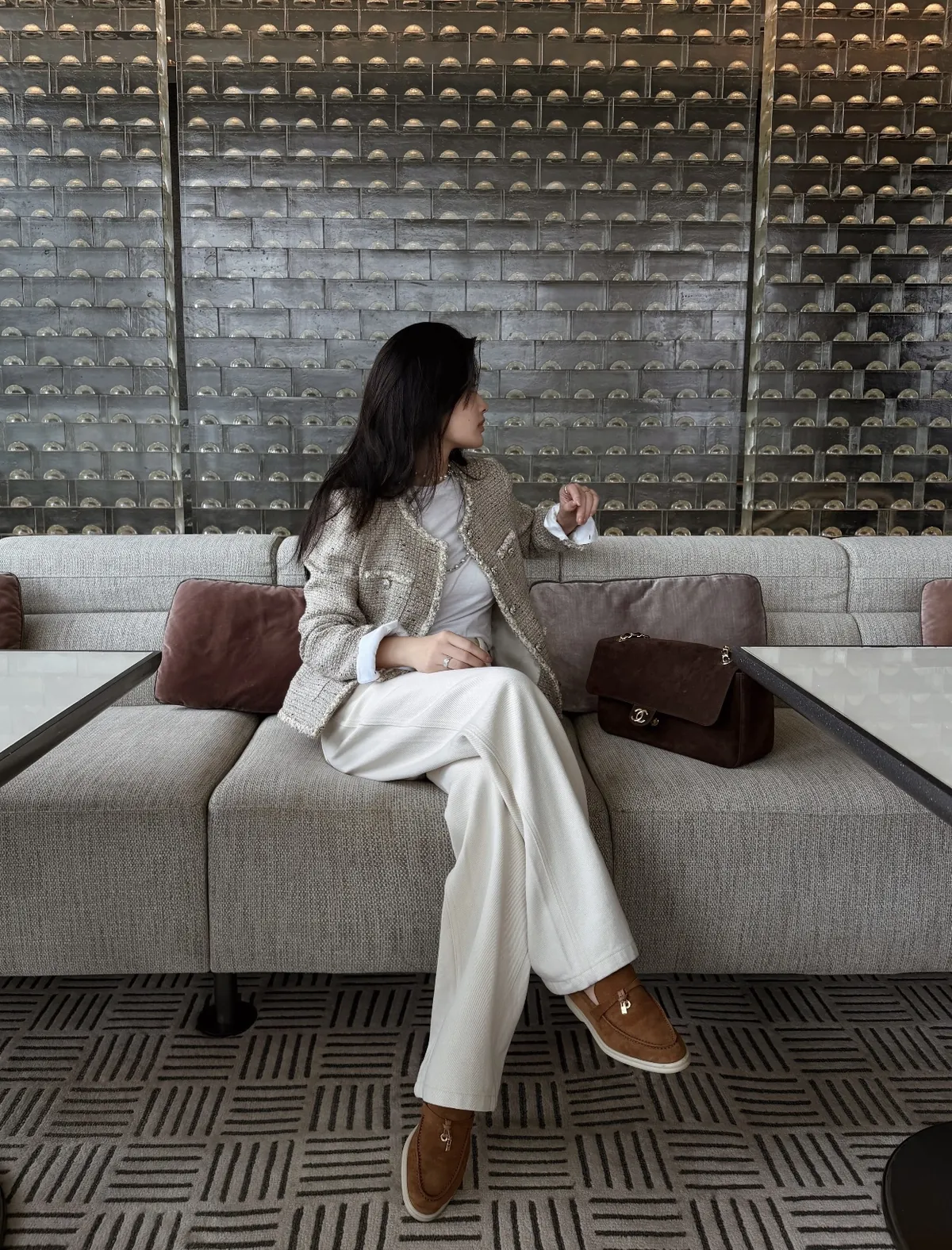
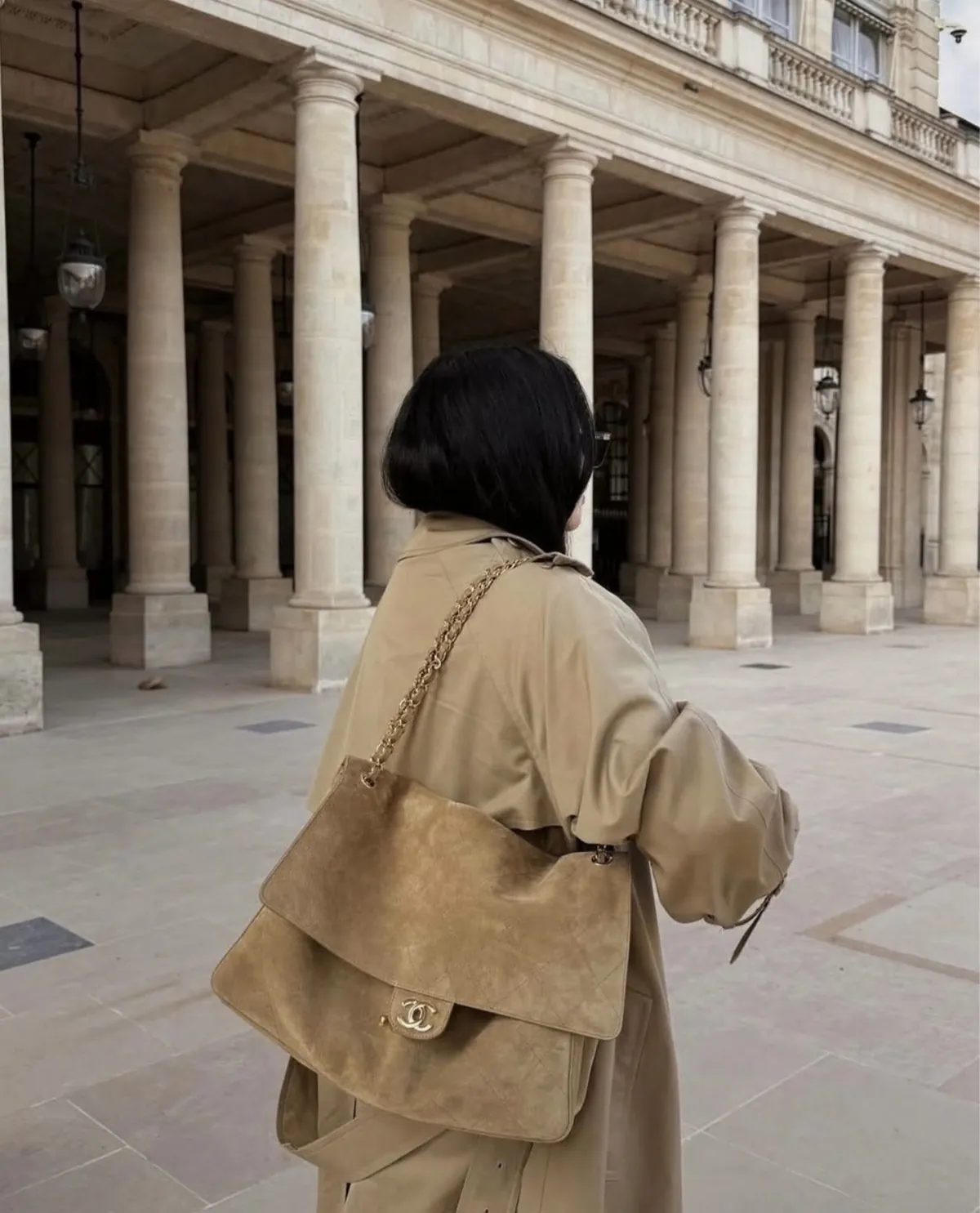
The featured image is an existing Chanel wardrobe reference, separate from the Fall-Winter 1993 looks discussed here.
Why a flat base lets the weave read
Multicolor tweed carries several hues in one surface. If the clothing around it adds a second pattern, a strong print or a chunky knit, the eye has nowhere to rest and the coat's colors blur into the background. A plain base gives the weave a calm field. Think of a fitted merino turtleneck in charcoal, deep navy or ivory, worn with straight wool trousers in the same tone. The silhouette stays close through the torso so the coat's texture sits on top rather than being swamped by volume.
Skirts work equally well. A simple A-line or pencil skirt in a single matte wool keeps the line clean below the coat. Avoid tweed skirts, bouclé trousers or anything with a visible weave of its own — two textured surfaces compete, and the Fantasy Tweed loses its role as the single statement. Ribbed knits can read as texture too; a smooth fine-gauge finish is the safer partner.
Color: where to echo and where to stay quiet
There is no verified list of the colors in this particular Fantasy Tweed, so the practical approach is to pull one quiet color from the coat itself and repeat it in the base layer. If the weave contains a soft grey or a muted green, a knit in that shade ties the outfit together without adding a new voice. When you cannot find an exact match, choose a neutral that sits behind the coat — off-white, stone, dark brown or black — and let the multicolor do the work.
A monochrome base is the most reliable route. Head-to-toe ivory under a multicolored coat gives the weave a bright field. Head-to-toe charcoal does the opposite, making the coat's colors read as jewel-like against depth. Both work; the choice depends on whether you want the coat to feel light or rich.
The bag: one restrained note
Keep the bag quiet. A single-color leather or smooth-finish bag in black, brown or a neutral pulled from the coat leaves the weave as the focal point. Avoid quilted textures, heavy hardware or a second pattern near the coat's surface. For archival occasions, the guests at The Frick carried vintage Chanel flaps and vanities, as McWhirter reports; a classic single-color flap is a coherent choice here because its smooth leather contrasts with the tweed rather than repeating it. If you are deciding between bag silhouettes for an archival event, our Vintage Diana Flap versus oversized CC Flap comparison sets out the proportions that keep a textured coat legible. For a plain-jacket wardrobe that lets a statement bag lead, the Souplissimo maxi flap with plain tailoring shows the reverse logic.
Where to choose differently
If the coat is being worn to a daytime appointment rather than a display event, flat leather loafers or simple slingbacks keep the look grounded, and a fine-knit scarf in one of the coat's quieter colors can bridge the neckline. If the coat itself is short and boxy, a narrow trouser keeps the proportion from becoming top-heavy. For an evening reading, a slim silk column in a single deep shade lets the tweed act as the outer layer without competing with a dress that has its own drama. The consistent rule: one texture, one pattern — the coat.