The style notebook
Chanel Fall/Winter 2026 Matthieu Blazy Black Dress: Camellia Back Detail Outfit Ideas
Chanel Fall/Winter 2026 Matthieu Blazy black dress styling: plan the deep back and camellia reveal with removable layers, bag carry and hair placement.
For Chanel Fall/Winter 2026, Matthieu Blazy's black dress offers two distinct readings: a sober front and a dramatic turn that reveals a plunging back and a camellia. This guide answers the question of what to leave bare and what to cover behind, treating the front and back as separate outfit states within one Chanel Fall/Winter 2026 wardrobe. Vogue Korea's report notes that the dress appears restrained head-on, while the reverse exposes a deep back and floral detail. The practical aim is to let the back's camellia read once, clearly, rather than crowding it with straps, hair, or a coat that never leaves.
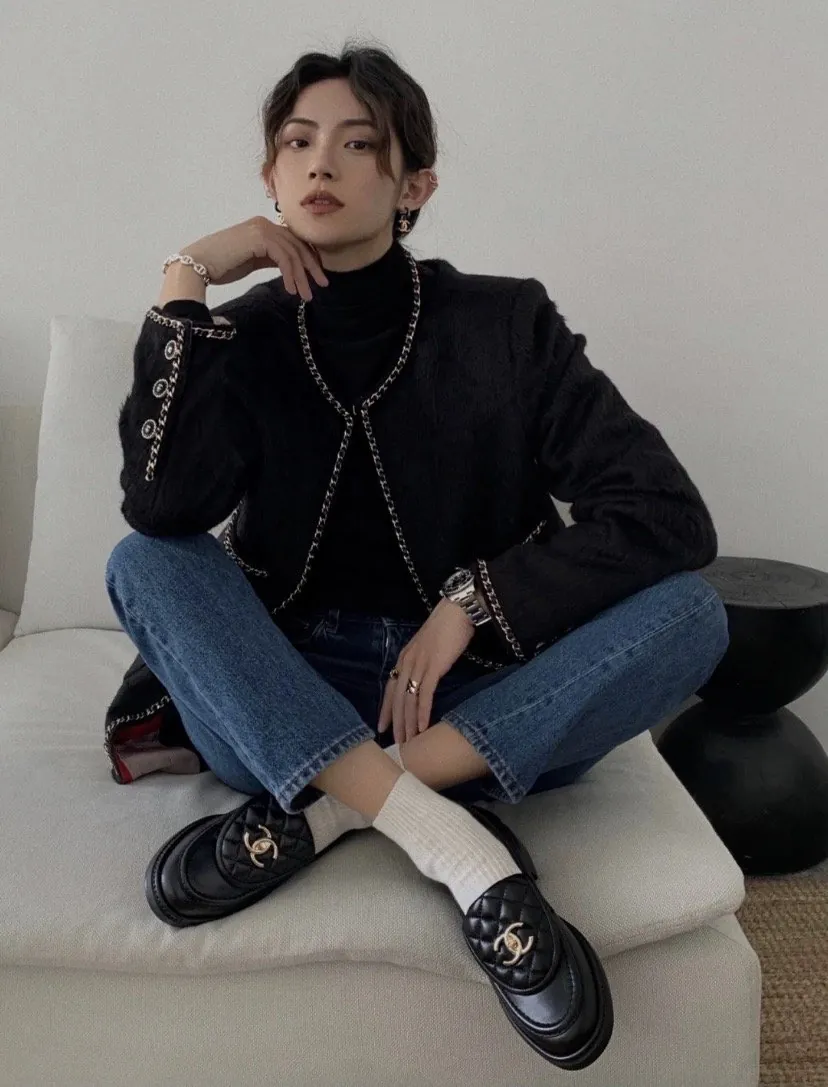
An existing same-brand wardrobe reference, filed as Chanel 25SS Loafers: Slip-On Mule Outfit Ideas, shows a separate look and is not a photograph of this collection piece.
Start with two outfit states, not one
Treat the dress as two outfits that happen in sequence. State one is the covered or front-facing version: a coat, jacket, or wrap is on, the back is protected, and the silhouette reads quiet. State two is the revealed version: the outer layer comes off, the back is fully exposed, and the camellia becomes the focal point. Designing both states in advance stops you from improvising a bag or coat that fights the reveal later. The front's restraint gives you room for a stronger shoe or earring; the back needs calm around it.
Choose a coat that can actually leave
The outer layer should be easy to remove and should not leave a mark on the bare back. A lightweight, unstructured coat that slips off the shoulders works better than a heavy belted one that requires untying. If the venue is cold, consider a cropped jacket that ends above the lowest point of the back opening, so the camellia is not hidden when the jacket stays on. A long coat is fine for the street, but plan to check it at the door rather than wear it draped half-on, which tangles with a deep back. For structured outerwear inspiration, the quilted coat ideas show how a defined layer can be removed cleanly.
Carry the bag away from the bare back
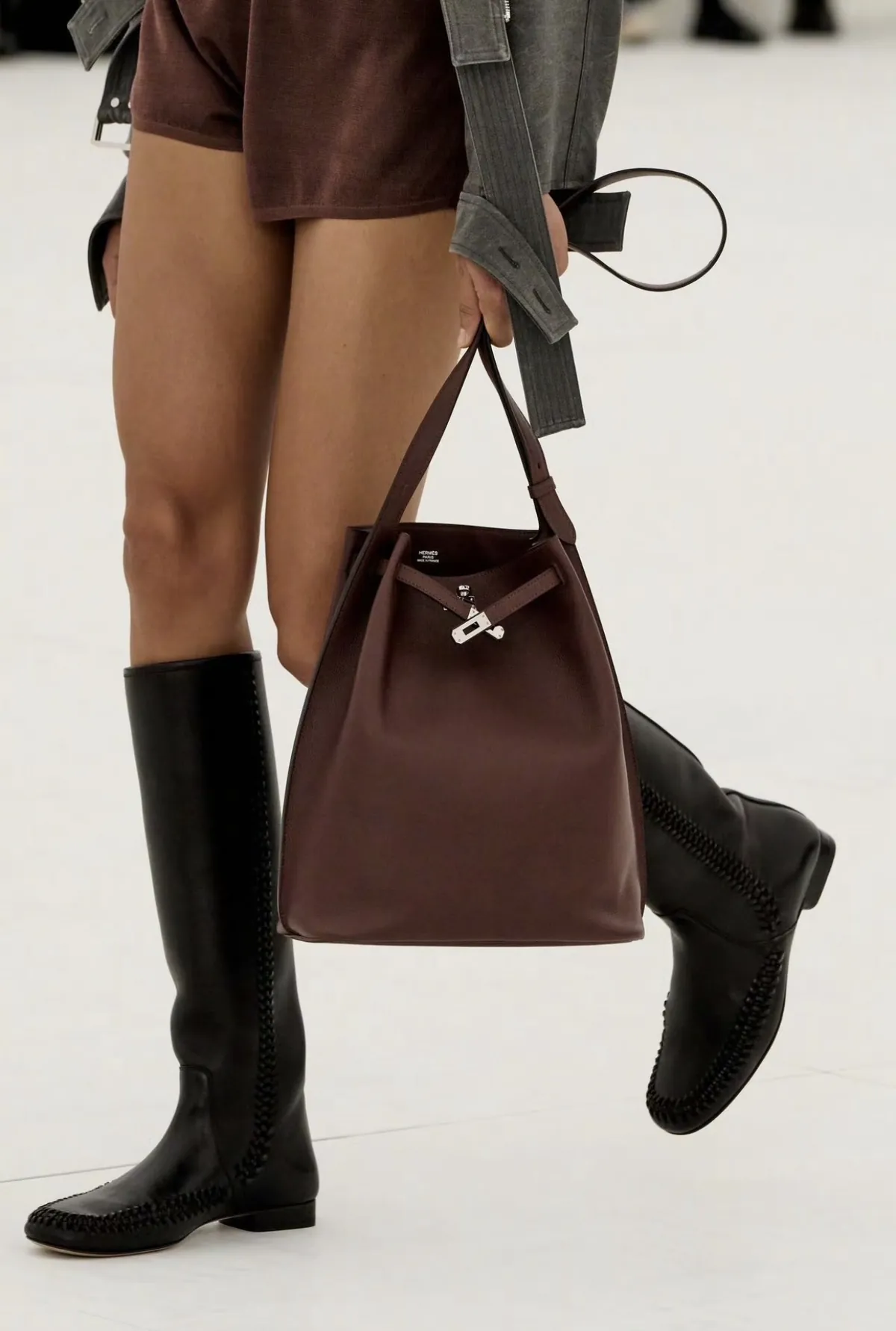
The most common mistake is a crossbody strap cutting across the deepest part of the opening. Instead, use a top-handle or handheld bag that sits below the hand and never crosses the spine. A shoulder bag works only if the strap is short enough to stay on one shoulder and does not slide toward the centre; test this before you leave. A small clutch is the safest choice for the revealed state. For a scaled comparison of shoulder versus handheld options, the black shoulder bag guide explains how strap placement changes the line of an outfit.
Decide what the hair should do
Hair is the least forgiving element around a deep back. Loose, long hair will cover the camellia as soon as you move, so either pin it up or sweep it to one side, leaving the opposite shoulder blade and the centre back clear. A low bun or a short crop keeps the neckline visible and lets the floral detail sit against skin. If you prefer hair down, choose a style that falls forward over the shoulders rather than down the back. This also keeps the front looking deliberate rather than accidental.
Keep the neckline and jewellery quiet
Because the back is the event, the front should stay close to the dress's original restraint. Skip long pendants that might swing behind you, and avoid back-clasp necklaces that sit directly on the opening. If you want jewellery, choose small earrings or a single bracelet. A scarf around the neck can be useful in the covered state, but remove it before the coat comes off so the back has a single, uninterrupted frame. The tassel scarf guide offers a reversible approach if you want one accessory to serve both states.
Shoes and hems that support the turn
A deep back draws the eye upward, so the hem and shoe should feel grounded. A covered shoe or a low, stable heel keeps attention on the reveal rather than competing with it. If the skirt is full or moves with the step, a simpler shoe prevents a busy lower half. For evening, a pointed flat or a modest heel in black is a reliable partner; for day, a loafer keeps the dress in the sober register it starts in.
A short decision checklist
- Covered state: outer layer removes without untying or pulling the back opening.
- Revealed state: no strap, pendant, or hair crosses the centre back.
- Bag: handheld or short-shouldered, never crossbody over the bare back.
- Camellia: visible once, with clear space around it, not crowded by a scarf or collar.
- Front: keep the neckline and jewellery restrained so the back remains the surprise.
The dress does the dramatic work; the outfit's job is to protect the timing of that reveal. Build the covered outfit first, then remove one element at a time until the back and camellia are the only things left to notice.