The style notebook
Chanel Haute Couture Book: Signature Bag Everyday Outfit Ideas
Chanel Haute Couture book reader guide: how to carry one signature bag through everyday outfits by varying silhouette and texture, not buying more bags.
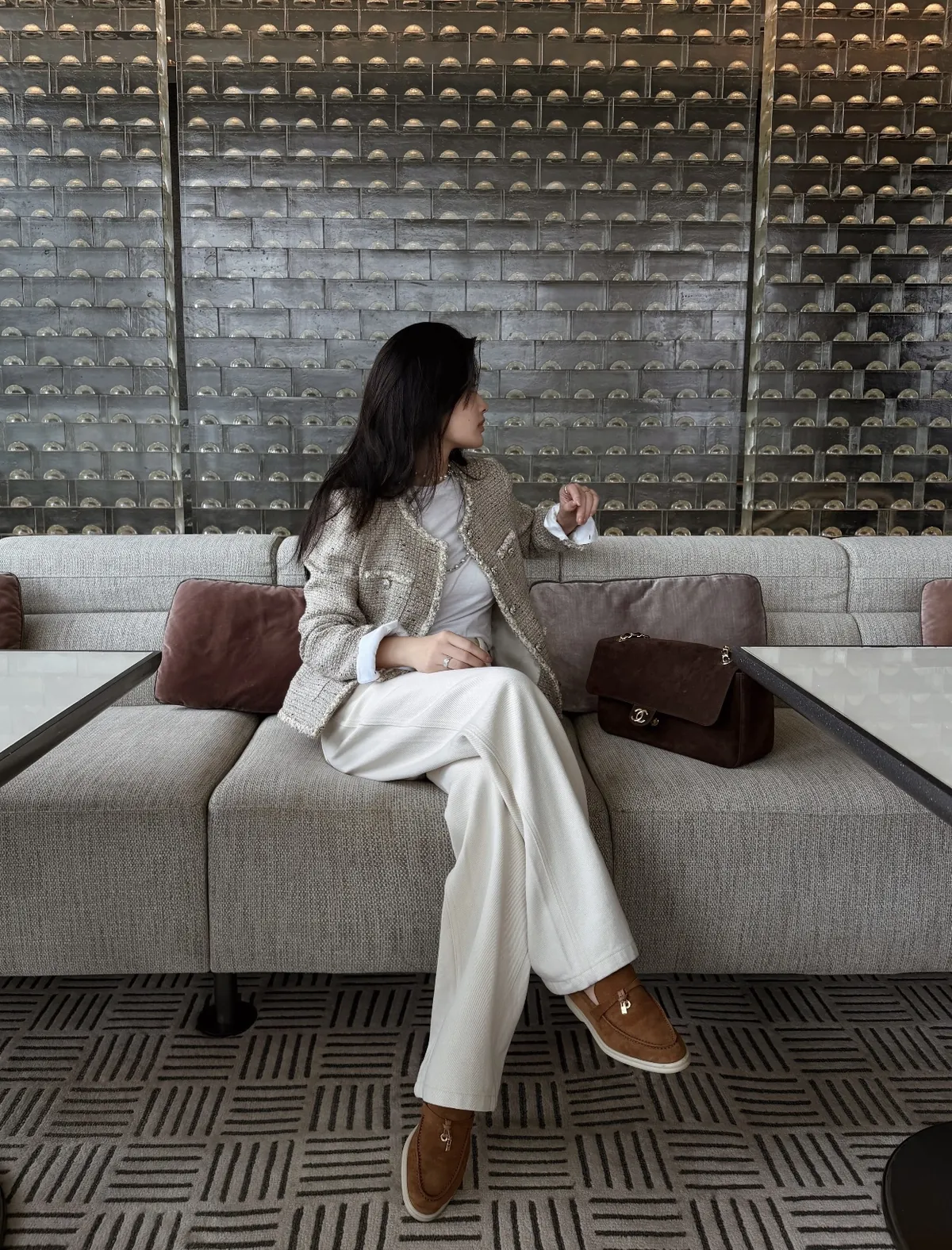
The temptation with a single Chanel bag is to let it become the outfit. The more useful discipline is the opposite: keep the bag constant and change everything else around it. In ELLE's coverage of the Chanel Haute Couture book event, published 11 September 2025, Chase Sui Wonders describes her own habit: “I have a Chanel bag that I wear with every outfit.” She frames Chanel styling as a spectrum — going “full tilt—like the full classic tweeds” or mixing and matching — and mentions stuffing a yoga mat or laptop into her bag on the way to the gym. The remark is a useful permission slip for a repeat-carry wardrobe, not a claim about any specific bag's capacity. The clothing rules below are my styling reading of that one-bag idea.
The featured image is an existing Chanel wardrobe reference, separate from the Haute Couture looks discussed here.
Change the silhouette, not the bag
If the bag stays the same, the shape of everything around it has to move. A single bag photographs or reads as repetitive when the clothing silhouette repeats too: the same straight trouser and tucked shirt five days running will make the bag look like part of a uniform rather than a choice. My rule is to rotate three registers of volume and pick one each day.
- Close to the body: a fitted knit or slim top over a straight or narrow trouser. This lets the bag be the widest thing in the frame, which suits a structured flap.
- Volume below: a wide-leg or pleated trouser with a neat top. The bag then reads as the tidy counterweight, and the eye moves between hem and bag rather than settling on either.
- Volume above: an oversized jacket or a boxy coat over a narrow base. This is the register where a small bag looks most deliberate, because the contrast is in scale rather than in decoration.
Any of these can hold a single bag; what you avoid is three days of the same register in a row. The wide-leg trouser with a black shoulder bag is a good reference point for the volume-below register if you want a concrete starting silhouette.
Keep the colour logic stable, vary the texture
A repeat-carry wardrobe works best when the bag is the fixed colour note. Mine is to treat the bag's tone — black, brown, beige — as a constant and let clothing provide the changes in surface. A tweed jacket, a flat wool trouser, a cotton shirt and a matte knit all sit in the same colour family without looking the same, because the eye reads weave and finish rather than new hues.
Texture is where you spend the variation budget. If the bag is smooth leather, pair it with a bouclé or a ribbed knit on one day and a crisp cotton or a dry wool on the next. If the bag has a visible quilt or grain, let that be the only patterned surface near it and keep the clothes plain. The tweed skirt suit with a flap bag is a useful model for how a single textured garment can carry a whole outfit beside a constant bag.
Rotate shoes and outerwear rather than buying another bag
The cheapest way to make one bag look like several is to change what sits at the two ends of the outfit. Shoes set the register: a flat loafer, a slim ankle boot and a low pump each pull the same clothes and the same bag into a different kind of day. Outerwear does the same job at the top — a trench, a cropped jacket and a longer coat all change where the bag sits in the overall proportion.
This is why I would not spend a second bag budget before exhausting the shoe and coat rotation. The bag does not need to be replaced to feel new; it needs different neighbours. A structured coat over a plain base reads formal, the same clothes under a casual jacket read off-duty, and the bag simply follows.
Where the one-bag habit stops working
There is one honest limit. A single bag cannot move between a gym run and an evening dinner without the clothing doing most of the work, and the ELLE quote is candid that the wearer herself uses the bag very casually — yoga mat and laptop included. If your week includes both a formal occasion and a genuinely active day, the answer is not more bags but clearer clothing rules for each. Treat the bag as the constant accessory and let the clothes decide whether the day reads polished or easy. That keeps the repeat-carry formula honest rather than pretending one object solves every outfit.