The style notebook
Chanel Métiers d'Art 2026 Jackets and Skirts: Pullover and Flap Bag Outfit Ideas
Chanel Métiers d'art 2026 jacket-and-skirt outfit ideas: decide whether a plain pullover or an embellished flap bag carries the extra element each day.
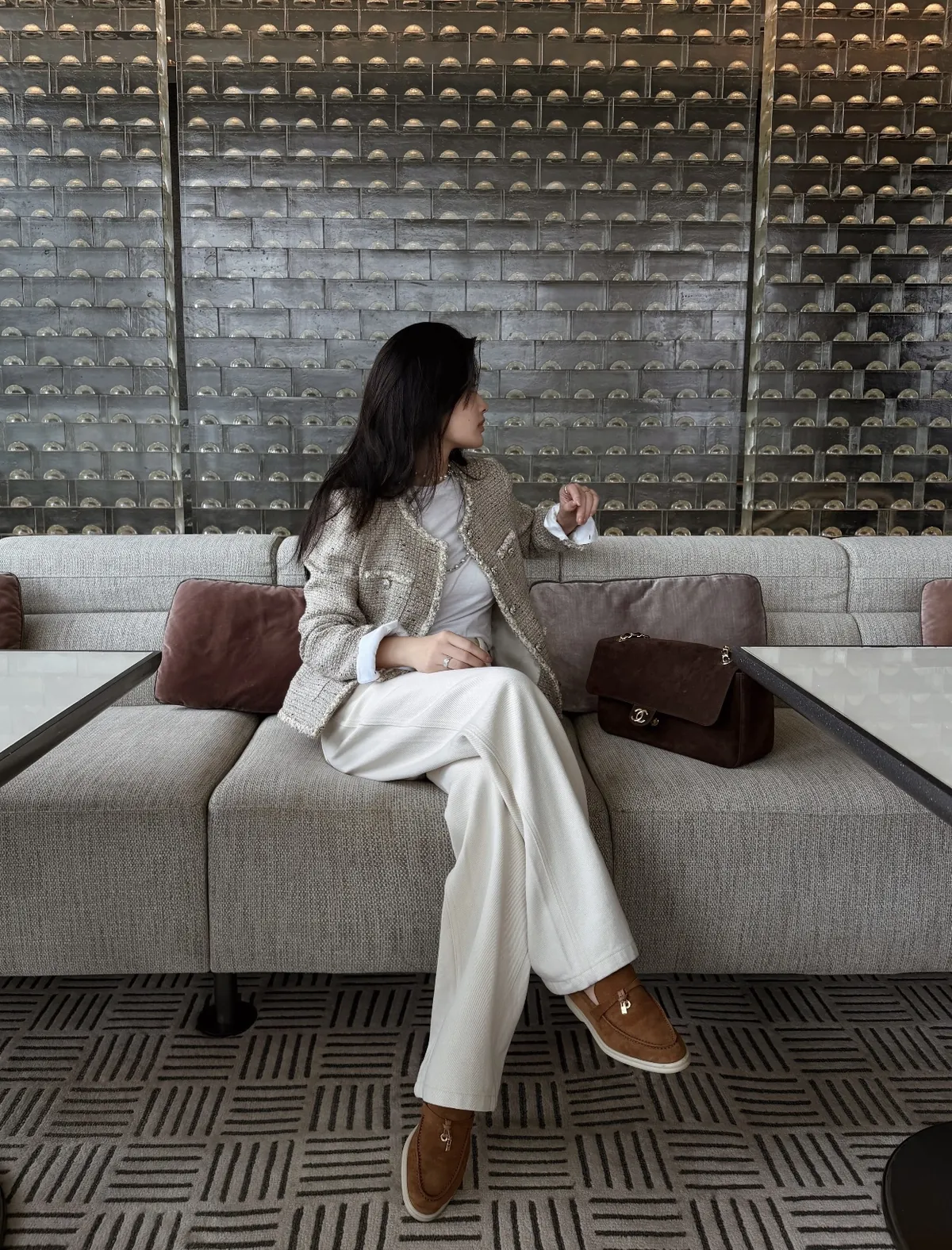
This reader guide answers the practical question behind two Chanel Métiers d'art 2026 looks: when a jacket and skirt are already the core of the outfit, does the extra element come from a pullover underneath or a flap bag at the side? The described Chanel Métiers d'art 2026 formulas give us the working answer, and it changes with the occasion rather than with the merchandise. The existing wardrobe reference above shows a Chanel flap bag that can stand in as a familiar anchor for these decisions; it is not a piece from the researched collection.
Read the jacket surface before choosing anything else
The described collection includes a double-wool-crepe skirt suit embroidered with twisted raffia and handblown glass beads intended to resemble popcorn stuck to the fabric. Treat that as the extreme end of the texture scale. When your jacket already behaves like a decorated surface, ornament has been spent; a second embellished element reads as noise rather than finish. When your jacket is a calm tweed or a smooth wool, the surface is open and something else has to close it.
- Embellished or highly textured jacket: quiet pullover, plain bag, plain shoes, small earrings.
- Plain jacket and plain skirt: one decorated element only, usually the bag.
- Plain jacket but textured skirt: keep the top half and the bag calm; let the skirt lead.
This is a styling judgment, not a rule printed anywhere in the collection notes. It comes from the simple fact that three worked surfaces at once leave the eye nowhere to rest.
Formula one: pullover, jacket, skirt, slingbacks
The first described look combines a pullover with a jacket, skirt, earrings, gloves, handbag and slingbacks. The pullover does the work here: it adds a soft layer at the neckline and gives the outfit a daytime, moving-through-the-city register. Choose a fine-gauge knit that sits close to the body so the jacket stays the outer silhouette instead of being padded out. A quarter-zip or high-neck shape is the most useful because it stays flat under a collar and lets you regulate warmth without taking the jacket off.
Colour the pullover from the skirt rather than from the bag. If the skirt is dark, take the knit one or two shades lighter; if the skirt is pale, go a shade deeper so the join between knit and waistband stays visible. Keep earrings small and stud-like, and treat gloves as weather equipment rather than decoration: plain, close to the sleeve tone. Slingbacks complete the formula because the open back balances the covered neckline.
The bag in this formula should be the quiet one. With knit, jacket and skirt already building three layers of interest, a worked flap at the hip would be a fourth voice. A clean shoulder shape is the right companion; the guidance in how to style a black shoulder bag with wide-leg trousers on keeping a bag visually quiet transfers directly to a skirt.
Formula two: jacket, skirt, flap bag, Mary Janes
The second described look pairs the jacket and skirt with earrings, a flap bag and Mary Janes, with no pullover in the layer. This is the more formal answer and it suits a day when the suit is the event: a lunch, a presentation, an evening where you are seated for most of it. Put the jacket directly over a fine top or a simple blouse, or close it over bare skin if the cut allows, and let the bag sit at the hip or in the hand.
Here the flap bag carries the extra element. That means the jacket should be the plainer of your options, or the skirt should be a solid wool rather than an embroidered surface. If you want to run this formula with an embellished jacket anyway, keep the bag smooth leather and the Mary Janes plain; the contrast between a worked jacket and a calm bag is what makes the pairing look deliberate rather than accidental.
Mary Janes keep the foot light and echo the tidy line of a matching skirt. Choose them in the same colour family as the bag, not an exact match, so the two ends of the outfit rhyme instead of repeating.
Where ornament stops: one lead element per outfit
Choose a single lead and dress everything else to follow it. This is the most useful decision tool for a jacket-and-skirt wardrobe because it stops the slow accumulation of accessories that makes a good suit look busy.
- Lead: jacket. Plain bag, plain slingbacks, stud earrings, no gloves unless cold.
- Lead: flap bag. Plain jacket, Mary Janes, minimal earrings, no pullover layer.
- Lead: pullover. Plain jacket and skirt, one quiet bag, small earrings.
Where the lead is the jacket, the pullover should still be present but almost invisible: same tone family as the skirt, no pattern. Where the lead is the bag, the pullover disappears entirely so the jacket reads as a single clean plane from shoulder to hem.
Choosing between the two formulas for a real day
Use the pullover formula for travel, office days, long lunches that turn into a walk, and anything involving changes of temperature. Use the flap bag formula for seated occasions and evenings where you want the suit to read as a complete statement rather than a layered one. If you own only one bag, choose the plainer version; it serves both formulas and stops the flap from becoming the reason you avoid the suit.
Earrings, gloves and Mary Janes should repeat an idea rather than introduce one. Match earrings to the jacket's hardware if you can, keep gloves plain and near the sleeve colour, and let the shoes pick up the bag's tone. For a second reference on letting one bag carry a tailored look without extra jewellery, the Chocolate Maxi Flap outfit guide shows how a single bag can hold a look together.
The short answer: let the pullover carry the extra element when you need layers and the jacket is already decorated; let the flap bag carry it when the suit is plain and the occasion is formal. Decide the lead first, then let everything else follow it.