The style notebook
Chanel Spring 2027 Charvet Shirt Under Rounded-Shoulder Jackets: Outfit Ideas
Chanel Spring 2027 style guide: how a Charvet shirt collar and cuff sit under a rounded-shoulder jacket, with skirt, trouser and quiet shoe formulas.
The attraction of a Chanel Spring 2027 rounded-shoulder jacket is the soft, eased line across the top of the body. Adding the Charvet shirt gives that line a collar to work against, and the collar is what decides whether the shoulder stays rounded or suddenly looks squared. This is a wardrobe guide for anyone weighing the shirt under the jacket against the bare-jacket route, and it treats the shirt as a deliberate second layer rather than an afterthought.
What the collar does to the rounded shoulder
A collar adds height at the neck and a small horizontal edge just below the jaw. Under a rounded-shoulder jacket, that edge becomes the visual ceiling of the look: the eye reads the collar first, then follows the shoulder curve outward. On the runway, the rounded jacket appeared worn without a shirt, which lets the shoulder carry the whole silhouette. Adding a shirt does not cancel the shoulder, but it changes the reading from "soft shoulder alone" to "soft shoulder framed by a neat upright point."
The practical rule: keep the collar standing but unfused from the jacket neckline. A collar that sits inside the jacket, with a little space between collar edge and lapel, preserves the roundness. A collar that spreads wide and flat across the chest pushes the eye outward and makes the shoulder look wider and more angular than it is.
Collar height formulas that preserve the curve
- Soft point, one button open: the safest everyday option. The points stay close to the neck, the shoulder curve stays visible, and the look reads relaxed rather than formal.
- Straight-point collar, buttoned to the top without a tie: sharper and more architectural. Works if the jacket is worn open so the vertical shirt front breaks up the shoulder line.
- Collarband or band collar: the cleanest way to keep the shoulder as the main event. There is no point to compete with the jacket edge, so the roundness reads clearly.
- Spread collar: use sparingly. Best when the jacket is single-breasted and worn open; the width needs space or it will fight the shoulder.
My styling interpretation is that the collar should occupy the neck, not the shoulder. If you can see the collar tips resting directly over the curved seam, the collar is too wide for this jacket shape.
Cuff exposure and sleeve decisions
The second control point is the wrist. Chanel's own collection notes describe eased tailoring, and an eased sleeve is exactly where a shirt cuff can either finish the line or clutter it. Choose one of three positions:
- No cuff showing: cleanest with a soft or band collar. The sleeve ends at the wrist and the shoulder and hem do all the talking.
- One centimetre of cuff: the classic answer, and the most reliable with a soft-point collar. Enough to signal a shirt, not enough to cut the arm into segments.
- Cuff turned back over the jacket sleeve: a more casual, weekend move. Keep the jacket sleeve soft and unlined-looking so the double layer stays light.
Whichever you choose, keep the jacket sleeve from bunching at the elbow. A pushed-up sleeve adds volume at the widest part of the arm and makes the rounded shoulder look heavier than intended.
Keep the lower half single and quiet
The jacket and shirt already give the top half two layers and a collar. The runway pairing for the rounded jacket was a knee-length skirt slung low on the hips, or a fringy mini. Either works with a shirt, but the skirt should stay single in volume: an A-line or straight knee-length skirt in a smooth cloth, or a slim trouser with a clean break. Avoid pleats, cargo pockets and wide waistbands at the same time as a collar and a rounded shoulder; three competing horizontal lines flatten the silhouette.
For trouser formulas, a straight or gently tapered leg keeps the jacket as the widest point. If you want a longer line, a low-slung knee skirt with a simple flat shoe is the most faithful translation of the runway mood. The fringy mini versus low-slung knee skirt guide covers that hem decision in more detail.
Finish the shoes and accessories quietly
The collar and the rounded shoulder are the two focal points. Shoes should not become a third. Choose a low, closed shoe in a tone close to the skirt or trouser: a flat, a slim loafer, or a simple pump. If you want a little polish, a cap-toe flat adds detail without adding visual weight. Keep jewellery minimal at the neck; a short fine chain or nothing at all lets the collar do its job. Bags should be small and structured so they do not broaden the hip line where the skirt sits low.
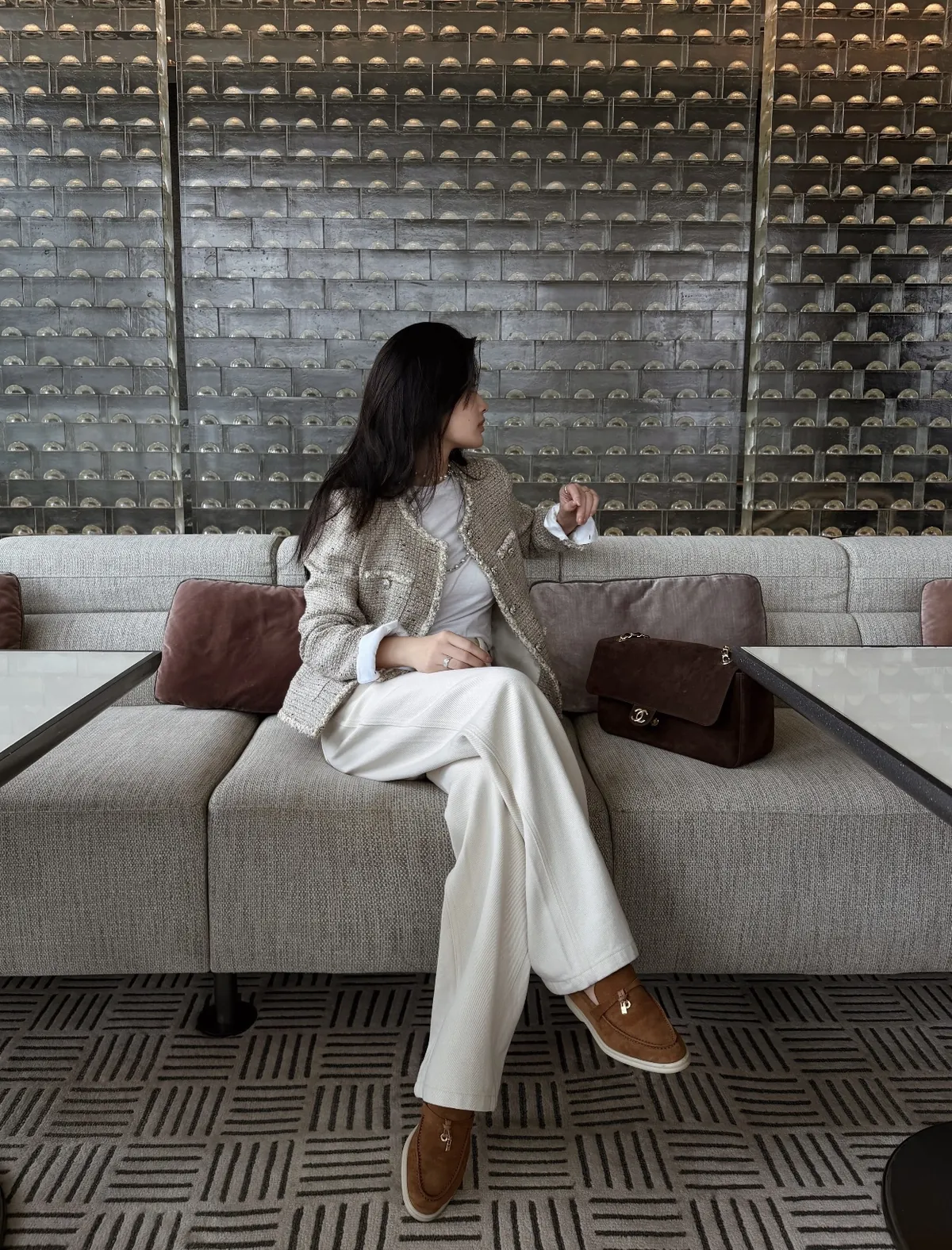
Two related guides help with the finishing layer: the rounded-jacket skirt and hem decisions and eased tailoring and smocked tweed outfit ideas. The existing wardrobe reference image shows the Chanel 26K Chocolate Maxi Flap bag, kept here as a wardrobe reference rather than a piece from this collection.
Three ready-to-wear formulas
- Weekday: soft-point Charvet-style shirt buttoned to the second button, rounded-shoulder jacket worn open, straight knee-length skirt, slim loafer in the same tone as the skirt.
- Evening: band-collar shirt buttoned to the top, jacket closed, low-slung knee skirt, cap-toe flat, one small structured bag.
- Weekend: straight-point collar with cuffs turned back, jacket open over a slim trouser, flat shoe, no necklace.
The shirt-versus-no-shirt question comes down to one choice: do you want the shoulder to speak alone, or do you want a collar to frame it? If the shirt goes on, keep the collar narrow, the cuff short, and everything below the jacket single and calm.