The style notebook
Chanel Spring 2027 Charvet Shirt vs Striped Bias-Cut Blouse: Jacket Outfit Ideas
Chanel Spring 2027 guide: Charvet shirt versus striped bias-cut blouse under an eased or rounded jacket, with clean-line formulas and stripe placement.
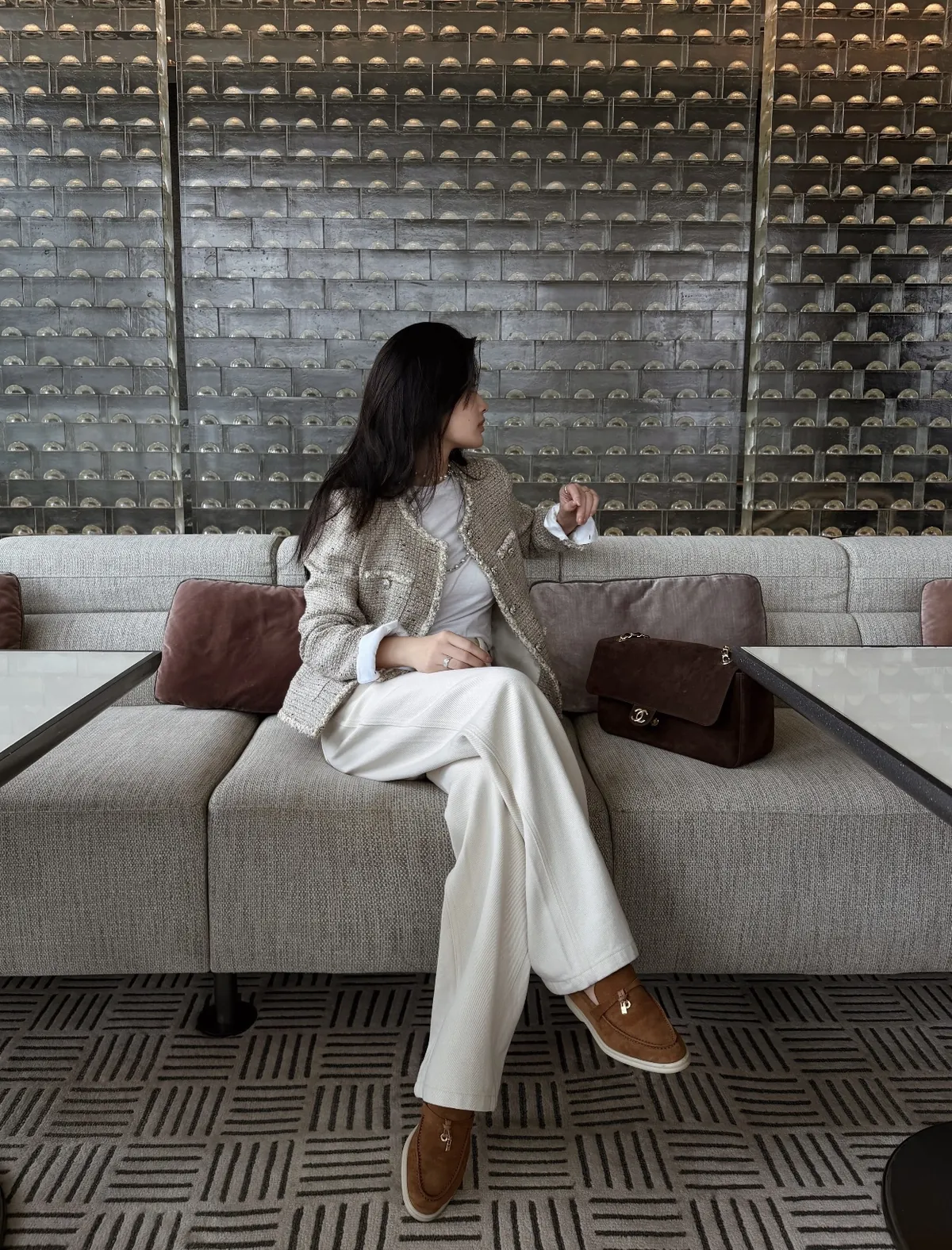
This Chanel Spring 2027 wardrobe guide answers a narrow question: under the collection's eased and rounded-shoulder jackets, does the Charvet shirt or the blue-and-white striped bias-cut blouse keep the line cleaner? The quick answer is that the Charvet shirt wins on line and the bias blouse wins on movement, so the decision depends on what the jacket is doing at the shoulder and hem. Note that the existing wardrobe image is a rounded-shoulder jacket reference from a prior outfit, not a look from this collection.
What the Spring 2027 record actually tells us
Chanel's own Spring 2027 collection material frames the season around freedom in construction and fabric, naming eased tailoring and smocked tweed. Vogue's review places new iterations of the Charvet shirt among the masculine, deconstructed propositions and describes the closing rounded-shoulder jacket worn without a shirt over a low-slung knee-length skirt or a fringy mini. A separate striped bias-cut blouse belongs to the same Spring 2027 story in the styled options below; treat the stripe direction and the fabric fluidity as the variables that matter here.
Line test: collar under an eased jacket
Under a softened or rounded shoulder, the cleaner top line comes from the Charvet shirt because its point collar and front placket create one straight vertical from throat to waist. A bias-cut blouse interrupts that vertical with diagonal drape, so the eye reads two directions at once. If you want the jacket to lead, choose the shirt. If you want the blouse to lead, keep the jacket unbuttoned and let it frame the stripe.
- Charvet shirt: collar sits flat and the placket stays centred; the jacket lapel or rounded neckline reads as a single frame.
- Striped bias blouse: the diagonal pull adds softness at the bust and waist; the jacket must be open or very relaxed to avoid a busy neckline.
Formula one: Charvet shirt, rounded jacket, low-slung skirt
Wear the shirt buttoned to just below the collarbone, sleeves full length or pushed to the forearm. Add a rounded-shoulder jacket in a smocked or textured tweed, left open. Finish with a knee-length skirt sitting low on the hips — the proportion flagged in the review — and a simple pointed or almond-toe shoe. This is the cleanest of the two formulas because the shirt's vertical placket and the jacket's curved shoulder give one soft line without competing patterns.
Where the stripe should stop: with a plain Charvet shirt there is no stripe, which is the point. If you add a striped scarf or belt, keep it below the waist so the neckline stays quiet.
Formula two: striped bias blouse, open jacket, straight trouser
Choose a blue-and-white striped bias-cut blouse and tuck it only at the front, leaving the back loose so the diagonal drape shows. Layer an eased jacket over it, unbuttoned, with the jacket hem landing at the high hip. Pair with a straight or wide trouser in cream, navy or white, and keep the shoe plain. Here the stripe does the talking, so the jacket should be a solid tone drawn from the stripe.
Where the stripe should stop: end the visible stripe at the waistband or just above it. If the blouse is long, tuck it fully so the stripe does not run across the hip and fight the jacket hem. Keep the sleeve stripe from crossing a bracelet-length jacket cuff — push the sleeve up or choose a full-length sleeve that finishes inside the cuff.
Choosing by jacket shape and occasion
For a structured or buttoned jacket, the Charvet shirt is the safer base because the collar supports the neckline. For a soft, unlined or smocked-tweed jacket, the bias blouse adds the movement the fabric wants. Use the Charvet shirt for meetings, travel and any setting where you want the jacket read first. Use the striped bias blouse for lunches, gallery days and relaxed dinners where a pattern is welcome.
- Buttoned jacket: Charvet shirt; keep the collar inside the lapel line.
- Open jacket: either option; the blouse benefits from a solid jacket.
- Smocked tweed: bias blouse, because both surfaces are soft.
- Tailored wool: Charvet shirt, for a crisper contrast.
Stripe placement rules that keep the line clean
The stripe should never cross the jacket's front edge horizontally at the bust. Vertical or diagonal stripes on a bias blouse are easier to control than horizontal ones, so favour a fine diagonal. Stop the stripe at the waist, keep the collar area solid, and let the jacket provide the only horizontal line at the hem. If you want more stripe, add it on a sleeve rather than the torso.
For trousers and skirts that support either formula, see eased tailoring and smocked tweed outfits and the rounded-shoulder jacket skirt and hem decisions. To take the blouse further, the striped bias-cut blouse with smocked tweed skirts gives a skirt-led version, and the Charvet shirt under smocked tweed covers the layered route.