The style notebook
Chanel Spring-Summer 2025 Oversized Top-Handle Flap versus the Smaller Version: Bag Choices
Chanel Spring-Summer 2025: choose the XL tuck-under-arm top-handle flap as a statement or the smaller day bag for practical carry.

Within the Chanel Spring-Summer 2025 top-handle flap family, the XL version makes sense when the bag is the silhouette's main event: it was shown tucked under the arm like an oversized clutch, with a large top handle, chunky chain and four feet. The smaller version is the better choice when you want a day bag that reads as a top-handle flap without turning the carry into a performance. Anna McWhirter's PurseBop report, published 1 October 2024, describes the oversized piece in an oversized flat quilted style with a flap front, CC clasp, matching chunky chain, large top handle and four protective feet, presented in black and white. The same report calls the smaller design simply more practical for day-to-day use, without adding measurements.
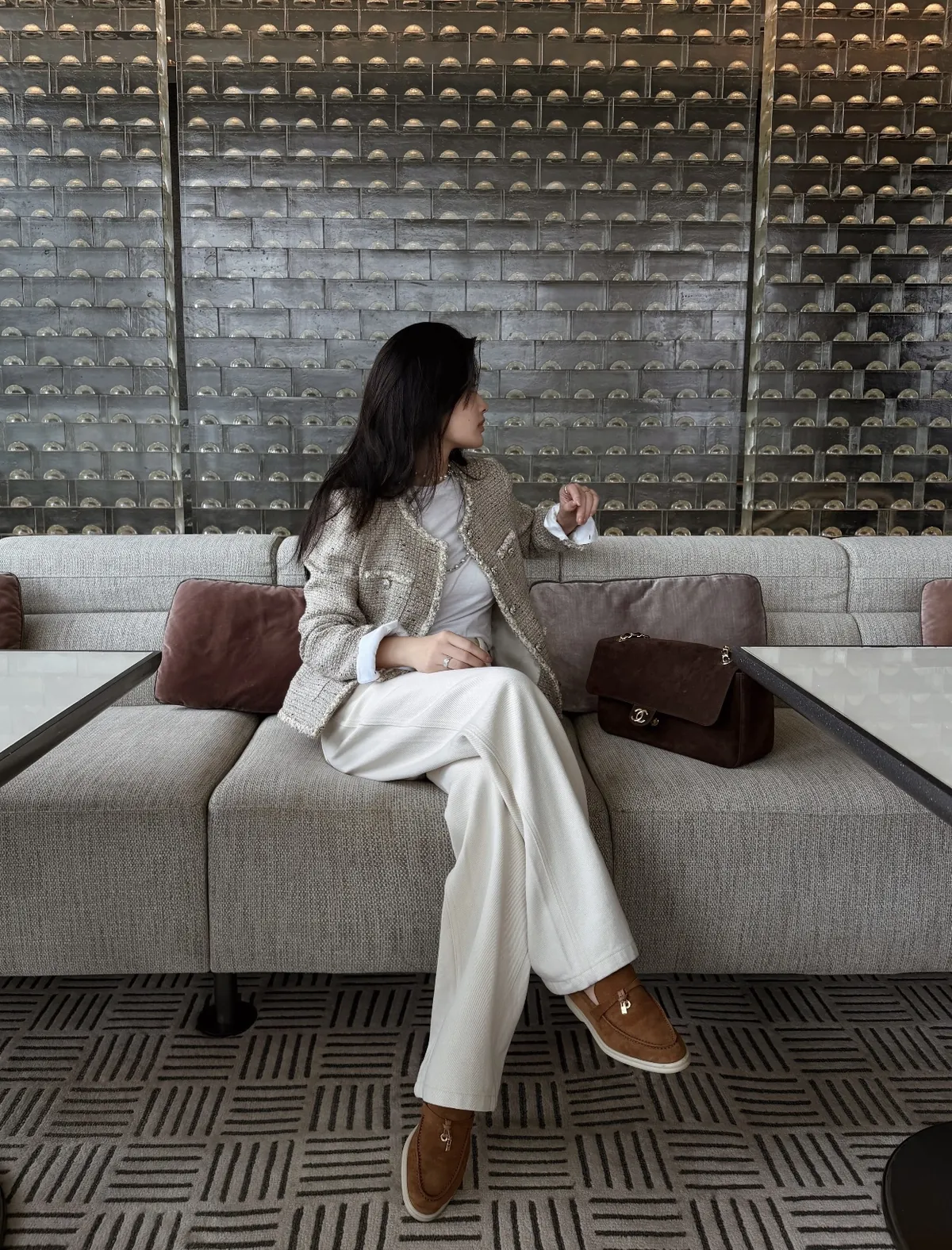
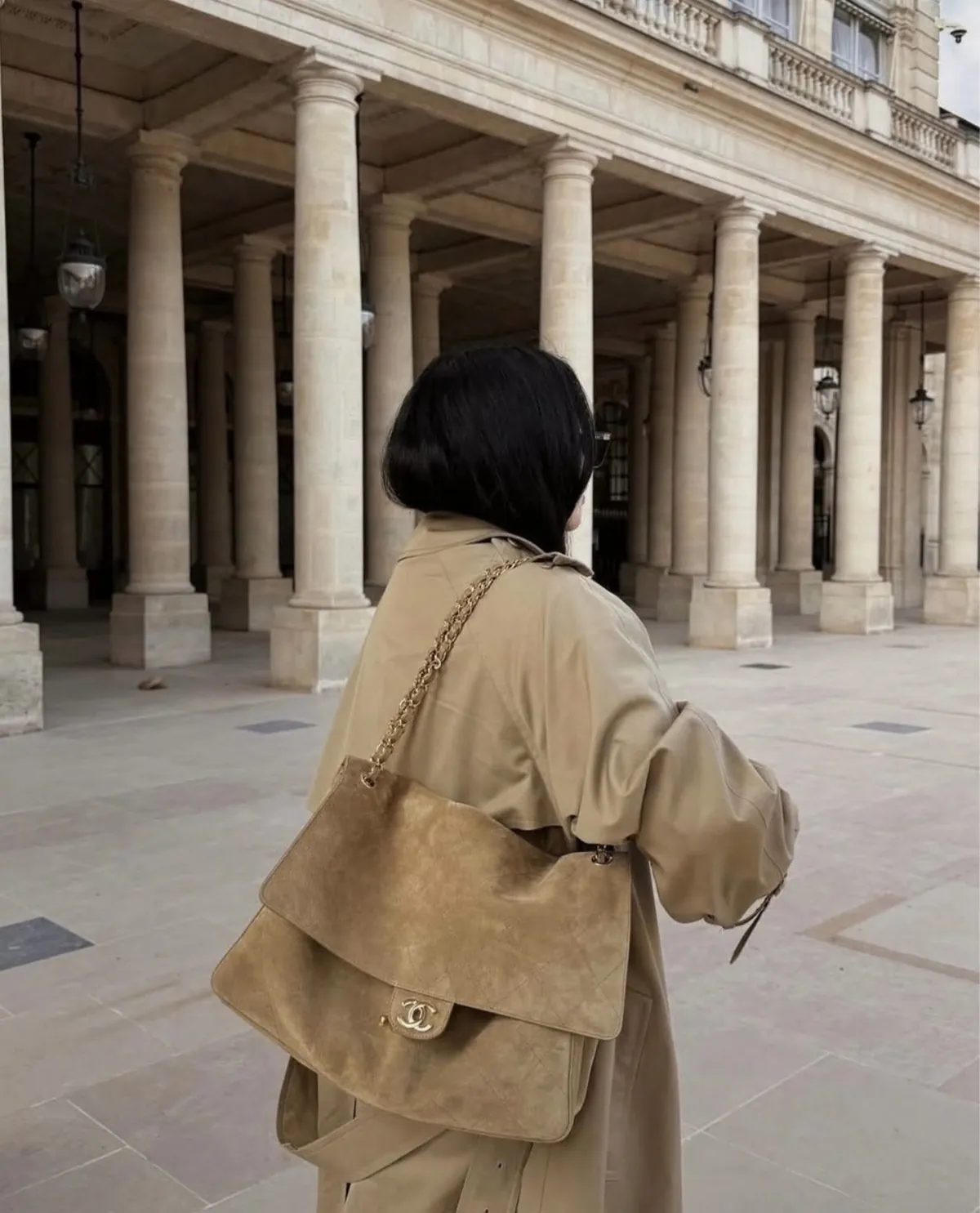
The featured image is an existing Chanel wardrobe reference, separate from the Spring-Summer 2025 looks discussed here.
The distinction is not that one is luxury and the other is sensible. It is where you want the visual weight to sit. A flat quilt at XL scale is a graphic, not a quiet texture, and the arms have to give it room.
The tuck-under-arm version needs a clear upper body
On the runway, the XL was carried under the arm as a statement clutch. That styling supports a simple wardrobe rule: the oversized flap works when sleeve bulk is low. A sleeveless dress, a narrow knit sleeve, a cropped tweed jacket with a close armhole — these leave the bag's large flat quilt and chunky chain as the one broad shape near the torso. A puffed sleeve, a cape or a full ruffled cuff competes for the same space and makes the handle harder to manage. This is my styling reading, not a claim about the handle's exact clearance.
The four feet are a real design detail from the report and matter most when a large bag is set down often. They also reinforce the bag's slight vintage object quality, which suits a look that is otherwise plain. Black leather keeps that object quality severe and city-facing; white pushes it toward spring and summer and makes the flat quilting read more softly. Neither is more formal in the abstract — black is easier to wear for evening, white is easier to wear with pale cotton and linen.
Where the smaller version earns the decision
McWhirter frames the smaller top-handle flap as the practical day-to-day option. That makes it the natural choice for a reader who wants the flap-and-handle shape but not the armful. A smaller top handle is easier to hold while opening a door, paying at a counter or carrying a second item, and the bag recedes rather than setting the outfit's scale. Pair it with the season's tweed bouclé two-pieces and sheer silk layers, where the tailoring is already the point; the tweed two-pieces guide sets out that logic.
If the outfit leans on a broad shoulder, a full sleeve or a coat worn closed, the smaller design is where I would go. The oversized flap is best kept for days when you can give it the arm. The hobo and top-handle carry guide covers the separate question of slouch versus structure, which is a different decision from this size choice.
Chain and handle at two scales
The report notes a matching chunky chain on the oversized bag, balanced by a large top handle. At XL scale, chain and handle read as hardware sculpture rather than jewellery. Keep necklaces and bracelets quieter when you carry it, and let the chain be the only metallic note. On the smaller version, the same idea compresses; a finer chain or a gold-tone detail elsewhere in the outfit is less likely to feel crowded. This is interpretation, since the report gives no chain gauge for the smaller bag.
The choice in one line
Take the oversized flat-quilted top-handle flap when you want the bag to be the shape in the outfit and can keep the arm line clean; take the smaller version when the bag should support the clothes and the day involves hands that are already busy.