The style notebook
Dior Autumn Winter 2026-2027: Jackets, Skirts and Dresses for a Wardrobe
Dior Autumn Winter 2026-2027 wardrobe choices: compare a petal-textured jacket, an asymmetric skirt and a softly pleated dress.
For Dior Autumn Winter 2026-2027, the asymmetric skirt is the most adaptable choice if you already wear separates: it changes the line of an outfit without asking you to rebuild the whole look. The petal-textured jacket is stronger for someone who wants structure and surface detail near the face; the softly pleated dress makes more sense if you prefer movement in a single piece.
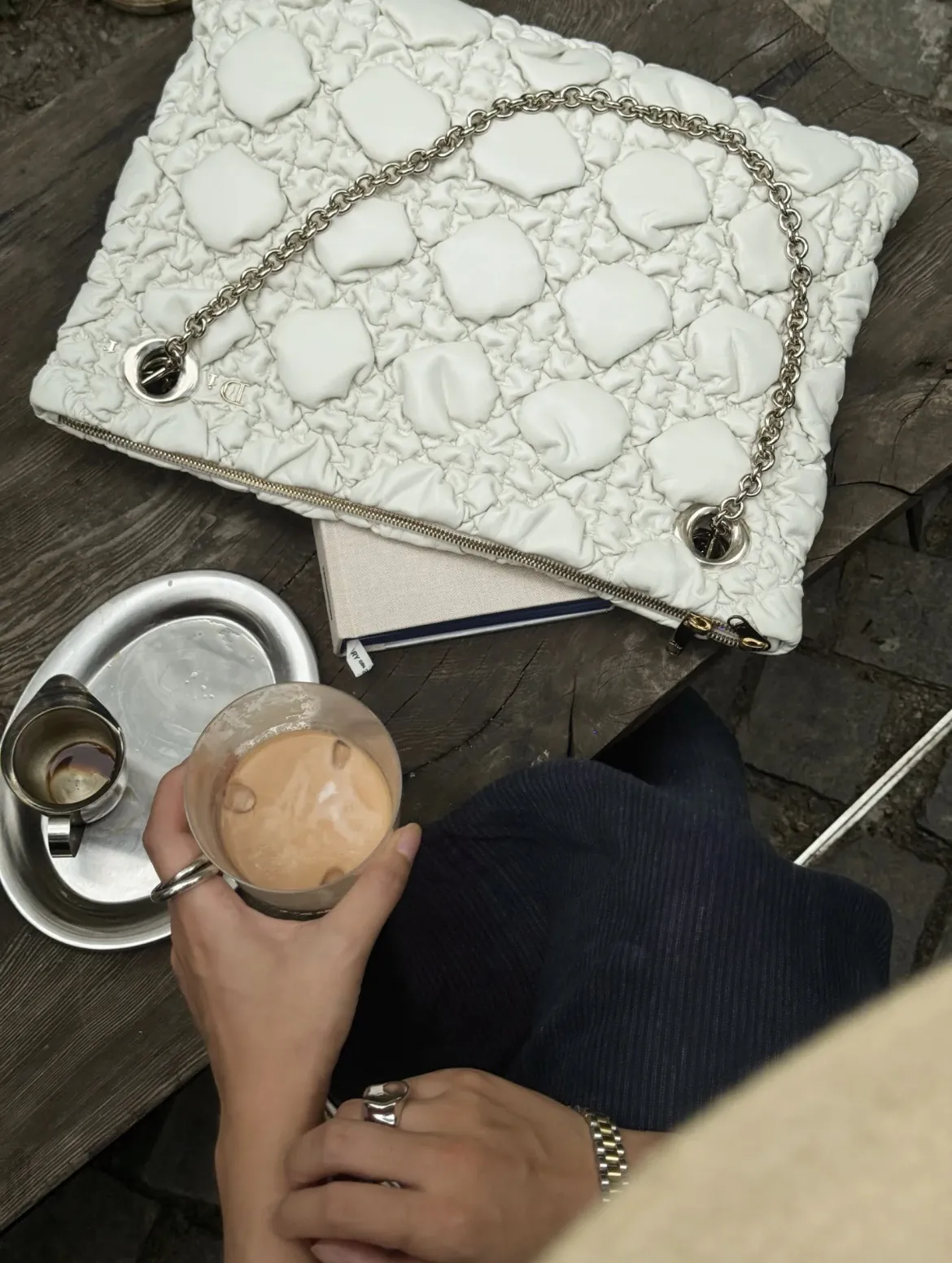
The featured image is an existing Dior wardrobe reference, separate from the Autumn Winter 2026-2027 looks discussed here.
In her March 2026 ELLE report, Elie Inoue describes Jonathan Anderson’s collection through floral forms and sharpened silhouettes. Her account distinguishes a cardigan-jacket with overlapping petal-like texture, skirts fastened asymmetrically, and a dress whose soft pleats reinterpret a spiral cage design shown in haute couture. The combinations below are styling interpretations of those reported details.
The cardigan-jacket: floral texture with a defined outline
Inoue describes the jacket’s raised outline as resembling a flower’s corolla, with a surface suggesting overlapping petals. In the opening look, the textured, luminous cardigan had a subtle peplum and was paired with a voluminous mini skirt and a long train. The contrast matters: this is not simply a floral print on an ordinary cardigan, but a design in which the flower informs both surface and shape.
For a quieter interpretation, wear the jacket with a fine plain top, straight dark trousers and loafers. The relatively clean trouser line gives the peplum room to register, while the jacket supplies the ornament. If you prefer a skirt, try a simple narrow one and compare its waistband with the jacket hem; a clear break between the two can make the change in shape easier to appreciate.
For a more dramatic proportion, borrow the idea of the opening look rather than its train: pair the jacket with a short, full skirt and opaque tights. That puts volume above and below the waist. The asymmetric skirt is a better starting point if you would rather draw attention lower down and leave your upper half relatively plain.
The asymmetric skirt: a change in balance
Inoue identifies asymmetrically fastened skirts and dresses as part of the collection’s precise approach to silhouette. The appeal of the skirt is the shifted fastening: it gives an outfit a point of interest away from the expected centre line. Its effect is different from the jacket’s petal texture, and the report does not specify a single skirt length or fabric for every example.
Try one with a tucked-in cream shirt and dark knee-high boots, allowing the fastening and any resulting line to remain visible. For a less formal combination, a close-fitting knit can play the same supporting role. If a longer jacket covers the fastening, the distinctive detail may be lost; compare it with a shorter layer or wear the outer jacket open.
Consider where the skirt’s actual hem falls against your preferred shoes. A boot meeting the hem creates a continuous lower line, while a gap between hem and shoe makes the change in proportion more conspicuous. Neither is a rule: the useful test is which balance you prefer with the particular skirt.
The softly pleated dress: movement as the main event
Inoue describes the earlier couture spiral cage dress as transformed here into a cloud of soft pleats. That connection makes the dress a choice about overall form rather than just a decorative surface. Where the skirt invites you to adjust the top and shoes around an off-centre detail, the dress provides a complete silhouette to work around.
For a daytime occasion, try it with simple flats and a long, clean-lined coat worn open, so the pleated shape remains visible. For dinner, swap the flats for a refined heel and let the dress carry the visual interest. If an outer layer interrupts the pleats at an awkward point, compare a shorter jacket with a coat that extends beyond the dress; the right relationship depends on the actual hem and volume.
The dress is the more compelling option if you want one expressive piece rather than a collection of interchangeable parts. If you enjoy changing a look with different tops, the skirt offers more room to do that. And if your wardrobe is already full of straightforward trousers, the jacket adds the most distinctive contrast at the top.
Jonathan Anderson in conversation with Bella Freud — Christian Dior official video.