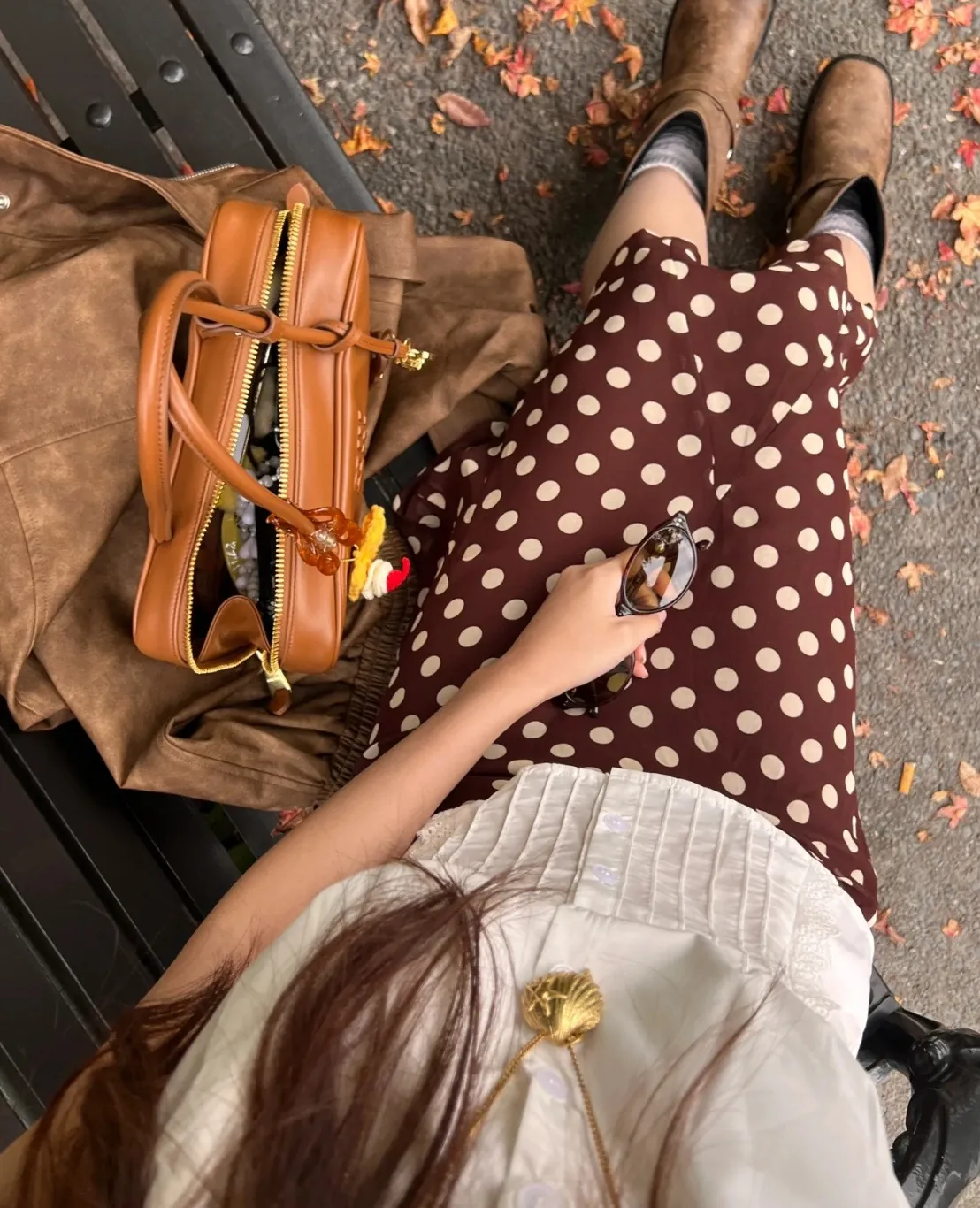
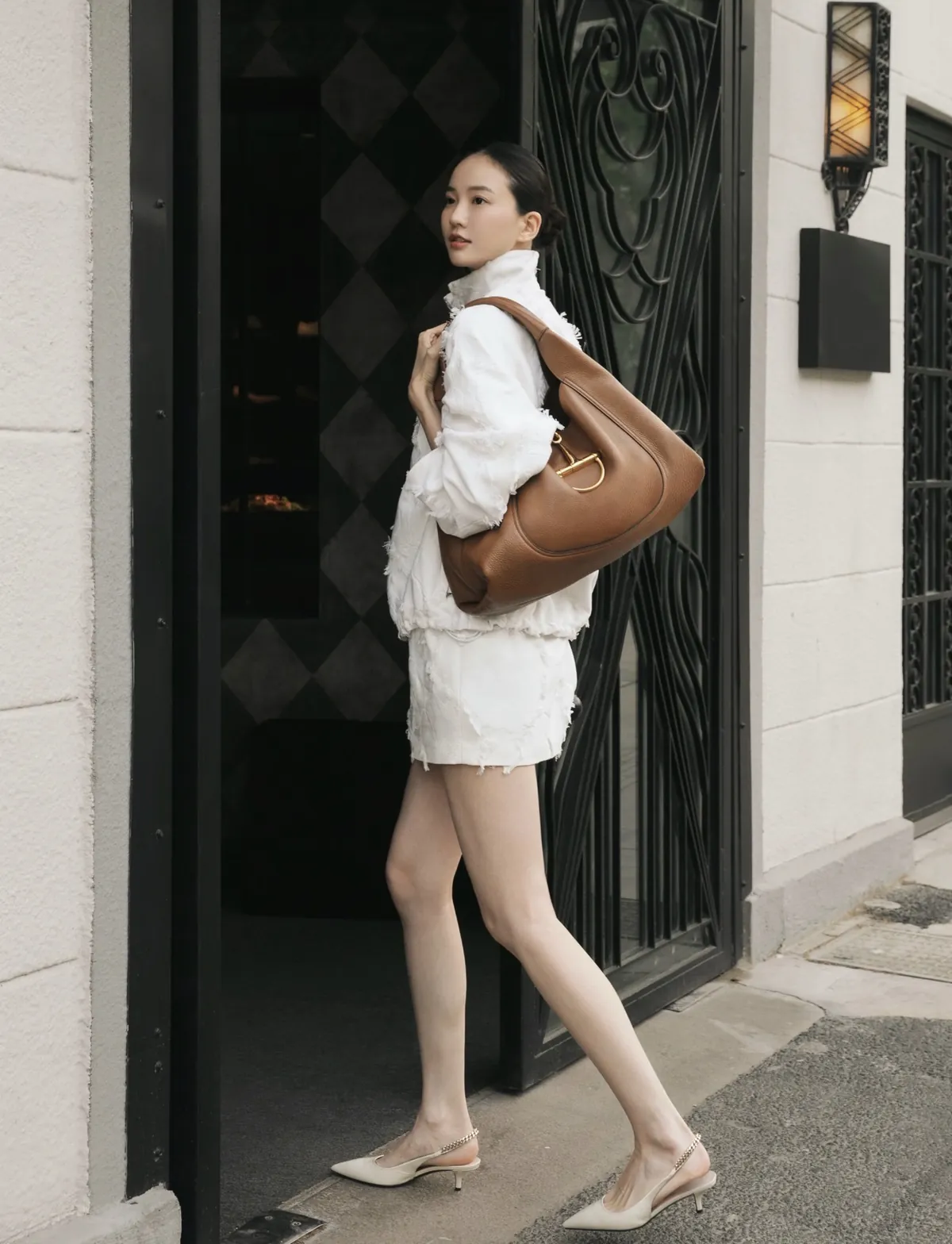
The style notebook
Dior Cigale Bag: Pared-Back Outfit Ideas for a Sculptural Shape
Dior Cigale bag styling: how pared-back clothing—clean waistlines, quiet volume and restrained accessories—lets the sculptural shape lead day to evening.
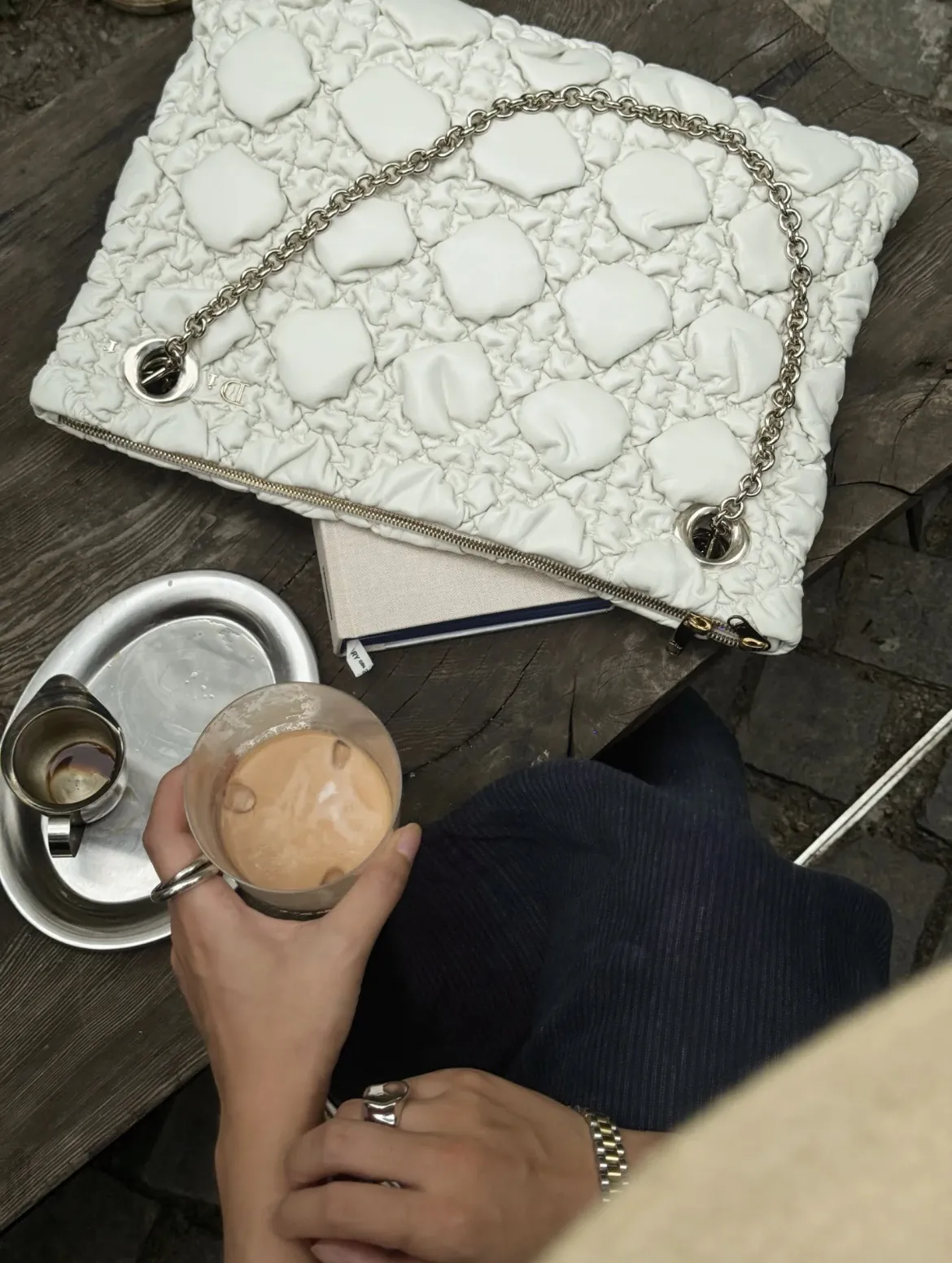
The Dior Cigale bag is the kind of accessory that asks a question of the whole outfit: how quiet should everything else be so that its architecture reads? The published evidence is direct. The Dior Cigale draws on the lines of a 1952 Christian Dior gown, and its sculptural form is described as giving the bag presence even when the rest of an outfit is pared back. My styling reading follows from that: the clothing should be calm, but not flat. The goal is a single clean waistline, controlled volume, and no second sculpture competing for attention.
The existing wardrobe reference above shows a structured bag carried against a soft, uncluttered outfit—useful as a reminder of proportion, not as a photograph of anything new.
The one-sculpture rule
Treat the Cigale as the one piece in the look that has a deliberate, shaped outline. That does not mean wearing nothing interesting; it means choosing clothing whose interest comes from line, fabric and fit rather than from extra three-dimensional detail.
In practice: skip oversized puffed sleeves, rigid bell sleeves, exaggerated peplums, heavily gathered hips and sculptural statement jewellery. Those elements each behave like a small gown, and together with the bag they turn a clean outfit into a tug-of-war. Keep one shaped element—the bag—and let the rest describe a body rather than a silhouette of its own.
Clean waistlines and jacket length
The waistline is where pared-back dressing either works or collapses. Choose a jacket or blazer that ends at the high hip or just below the natural waist, so it defines the body without adding a second horizontal break. A boxy cropped jacket can work if it sits neatly at the waist and does not flare; a long, swinging coat works only if it is fluid and narrow through the body.
- Blazer: single-breasted, one clear button, hem at high hip.
- Knit: fine-gauge crew or boat neck, tucked or half-tucked to show the waistband.
- Shirt: crisp poplin, sleeves rolled to the wrist, tucked cleanly.
- Coat: straight or slightly A-line, no storm flaps or big patch pockets at hip level.
That single waistline gives the eye a resting point. When the bag hangs at the side, the shaped accessory and the shaped body line are in conversation rather than competition.
Skirt and trouser volume
Because the bag is architectural, the lower half wants either a narrow line or a genuinely fluid one—not a stiff, structured volume. Think straight-leg trousers with a clean crease, a slim pencil skirt, or a soft bias-cut midi that moves. Avoid pleated kilts with deep knife pleats, stiff cargo pockets at the thigh, or heavily tiered skirts: each creates a competing geometry.
For a relaxed daytime formula, try a fine knit with straight dark trousers and a low, simple shoe. For something softer, a fluid midi dress with a defined waist and a flat sandal keeps the outfit quiet while the bag supplies the structure. If you want a little more edge, a wide-leg trouser with a shoulder bag is a familiar proportion that still leaves room for a shaped accessory to lead.
Necklines and the frame above the bag
The neckline controls how much the upper body competes with the bag. A clean crew, a narrow V, a boat neck or a simple collared shirt all leave the shoulder and neck area calm. High, fussy necklines with ties, ruffles or oversized bows pull attention upward and can make the outfit feel busier than the bag deserves.
If you want warmth at the neck, choose a fine scarf folded close to the collarbone rather than a voluminous loop. A restrained long scarf can still work when it is narrow, as in this guide to a long tassel scarf worn simply; the principle is to keep the texture fine and the volume low.
A pared-back day outfit
Start with a fine merino crew in cream or navy, straight wool trousers in a dark neutral, and a low block-heel loafer or a flat mule. Add a single-breasted jacket that ends at the high hip. Keep jewellery to small studs or a thin chain. The Cigale then sits against matte fabric with no reflective competition, which lets its outline read clearly.
In cooler weather, swap the jacket for a straight coat in grey or camel and keep the trousers narrow. A matte wool surface is a good partner for a sculptural bag because it absorbs light and does not fight the shape. If you prefer a softer palette, the logic of cream, grey and black with a deep-toned bag applies here too: few colours, one shaped accessory.
An evening version without extra drama
Evening does not require more sculptural clothing—it requires better fabric and a cleaner line. Choose a fluid column dress in satin-back crepe or a fine knit with a defined waist, a narrow V or slash neck, and a simple pointed flat or a low slingback. Avoid big shoulder bows, heavy beading at the hip and statement earrings that echo the bag's curves.
One quiet detail is enough: a thin metal cuff, a small clutch-free hand, or a single ring. The bag carries the occasion. If you want a reference point for how a shaped bag holds a room without extra styling, this guide to a mini handbag for day and evening shows the same restraint in a smaller format.
Quick selection checklist
- Can I trace one clean waistline from shoulder to hem?
- Is the bag the only strongly shaped element in the outfit?
- Are the fabrics matte or softly fluid rather than stiff and glossy?
- Is the jacket or coat hem at high hip or below, never cutting across the bag's widest point?
- Have I removed one accessory that competes with the bag's outline?
Follow those checks and the Cigale does what its couture-derived shape is meant to do: give presence to a wardrobe that has been deliberately, not carelessly, pared back.