The style notebook
Dior Marlene Dietrich-Style Tailoring: Blazer, Pencil Skirt and Chiffon Top Ideas
Dior Marlene Dietrich-style tailoring: should the chiffon top or the blazer and pencil skirt carry the softness? A contrast-dressing guide.
For a Dior Marlene Dietrich-inspired suit, let the tailoring hold the shape and give the softness to the chiffon. The blazer and pencil skirt are the severe, structured half; a chiffon shirt is the pliant, semi-sheer half. Put them in the same outfit and you get the contrast that matters — not a soft suit with a soft blouse, and not a hard suit worn hard. Alessandra Zauli, writing for Elle on 17 November 2026, describes Gianfranco Ferré's Spring-Summer 1996 Dior ready-to-wear tribute to Dietrich as a play of contrasts: the severity of tailored blazers, wide trousers and pencil skirts against the seduction of short tops and chiffon shirts. Those garment categories are the reported facts; the balancing judgements below are my own styling reading of them.
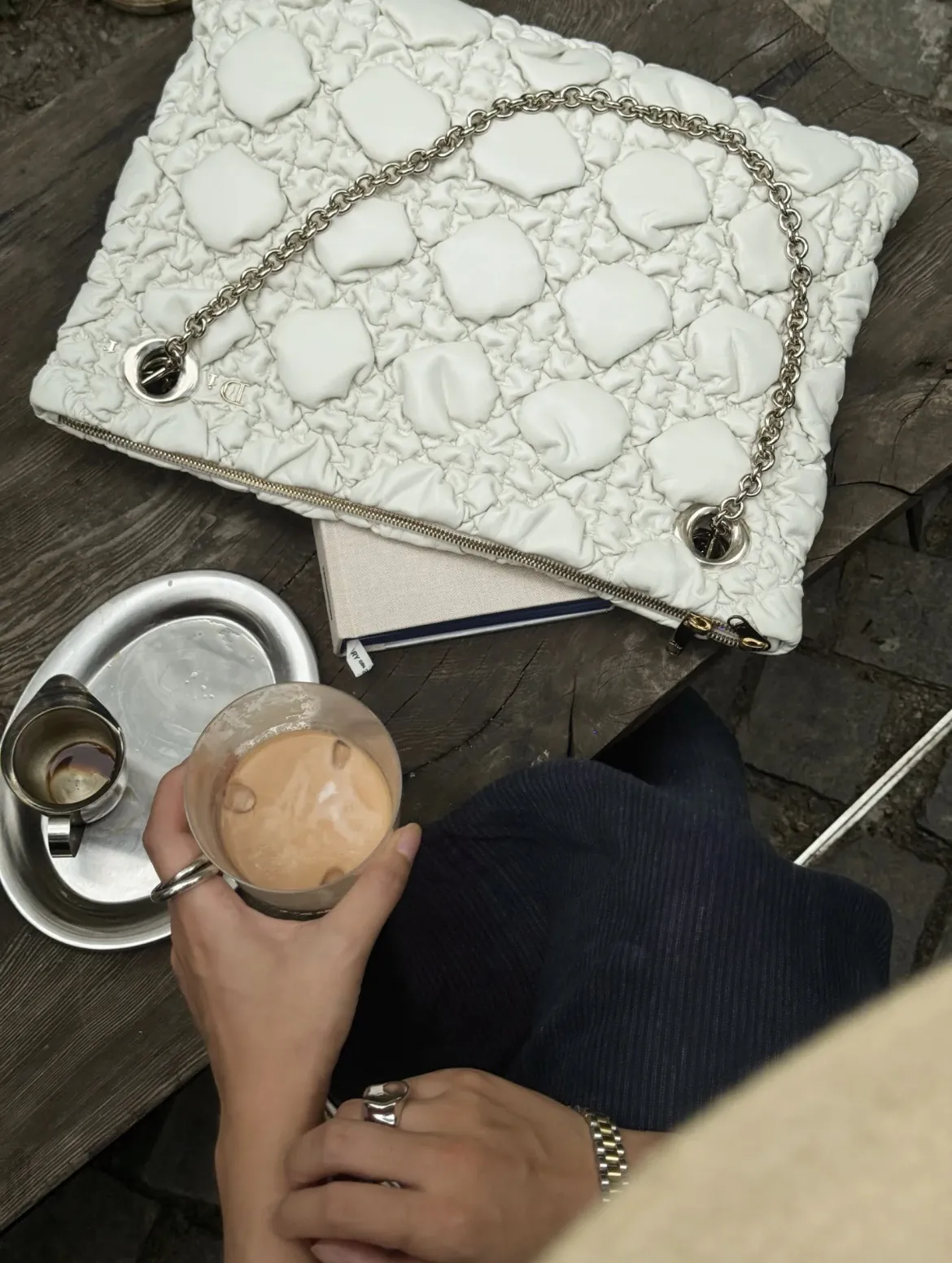
The featured image is an existing Dior wardrobe reference, separate from the Marlene Dietrich looks discussed here.
Why the softness belongs in the top, not the skirt
A pencil skirt already reads as controlled: it narrows toward the hem and holds a straight line. If you add a second crisp element above it — a stiff shirt, a rigid blazer buttoned high — the whole outfit becomes a uniform. Chiffon solves that. Its light, semi-sheer texture catches the body without holding a hard edge, so the top half reads as movement while the skirt below stays firm. The tension is the point: one half resists, the other yields. That is the contrast Ferré's reported pairing was built on, and it is why the chiffon shirt is the better softener than, say, a silk blouse with a stiff collar.
What a chiffon shirt actually does to a pencil skirt
The useful effect is not simply "feminine." Chiffon adds a translucency and a slight drape that soften the horizontal line where top meets waist. On a dark pencil skirt and a dark tailored blazer, a chiffon shirt in the same tone creates a quiet, tonal column where the only variation is texture — crisp skirt, matte jacket, floating shirt. A pale chiffon shirt against a black suit does something different: it opens up the chest and neck area and makes the tailoring look more deliberate. Both work. What I would avoid is a chiffon top that is itself heavily ruffled or frilled, because then the skirt's firmness and the blazer's severity have nothing clean to contrast against.
When the blazer stays on, and when it comes off
The blazer is what turns this from a skirt-and-blouse outfit into Dietrich-style tailoring. Worn open over a chiffon shirt, its straight front edges frame the soft layer instead of hiding it, and the contrast reads clearly. Buttoned, it assumes command and the chiffon retreats to a collar and cuffs — still effective, but a quieter version. If the room is warm and the blazer comes off, the chiffon top has to be able to carry the pencil skirt alone. That is an argument for a chiffon shirt with a defined shoulder or a neat collar rather than a strapless, unstructured piece.
Where wide trousers replace the skirt without losing the contrast
The same reported 1996 lineup put wide-leg trousers alongside pencil skirts, and the substitution is the most useful alternative here. Wide trousers bring volume from the hip down, which changes the balance: with a pencil skirt the softness in the top balances a narrow lower half, while with wide trousers the tailoring's weight sits lower and wider. My reading is that the blazer becomes more important in this version — a fitted, defined shoulder over wide trousers re-establishes the severe frame the skirt used to provide, and the chiffon stays as the softening layer beneath. If you keep the loosest part of the outfit in the trousers and leave the jacket soft too, the contrast collapses into general slouch. Three routes worth weighing:
- Chiffon shirt, pencil skirt, blazer: the closest match to the reported contrast, and the most controlled silhouette.
- Chiffon shirt, wide trousers, structured blazer: more relaxed, but the jacket must stay sharp to keep the tension.
- Short top, pencil skirt, blazer: Ferré's reported short tops are the more daring soft option, revealing more of the waist and shifting the contrast from texture to proportion.
Keeping it a Dietrich-inspired suit rather than a costume
Dietrich's own Dior link gives the look a reference point beyond the runway. Elle recalls her in a black tailored suit in Stage Fright, and describes the piece Dior cut for her as shaped to the bust with velvet-edged lapels. That reported detail is worth borrowing: velvet or contrast-edged lapels give a severe blazer a single soft note at the collar, which pairs beautifully with chiffon below and keeps the contrast in one place. Pearls and a veil were part of her signature; a strand of pearls is enough here, and adding a veil turns a wardrobe choice into a film recreation. For a modern suit, I would keep the accessories quiet and let the chiffon do the softening the blazer's lapels cannot. If you want one further reading on how a print or textured layer changes a blazer's role, the Dior Bar jacket and printed dress guide covers that decision from a different angle.