The style notebook
Dior Fall-Winter 2026 Couture Armadillo Minaudière: Silver Chainmail Outfit Ideas
Dior Fall-Winter 2026 Couture Armadillo minaudière: how to dress around the silver metalwork shell, chainmail tail and long silver chain.
The Dior Fall-Winter 2026 Couture Armadillo minaudière is already three pieces of metal in one object: a silver-tone metalwork shell with a richly textured, armour-like finish, a chainmail tail extending from the rear, and a long silver-tone chain. Your clothing and other hardware need to subtract from that, not add. The clearest evening outfit is a plain, covered dress or a narrow column in one soft, matte colour, with no shiny belt buckle, no chain necklace and no metallic shoe competing at the same height. Put the bag against cloth, not against more silver. Anna McWhirter's PurseBop report, published 6 July 2026, describes the design in those exact terms and notes that the previous couture season brought an ermine-inspired minaudière instead.
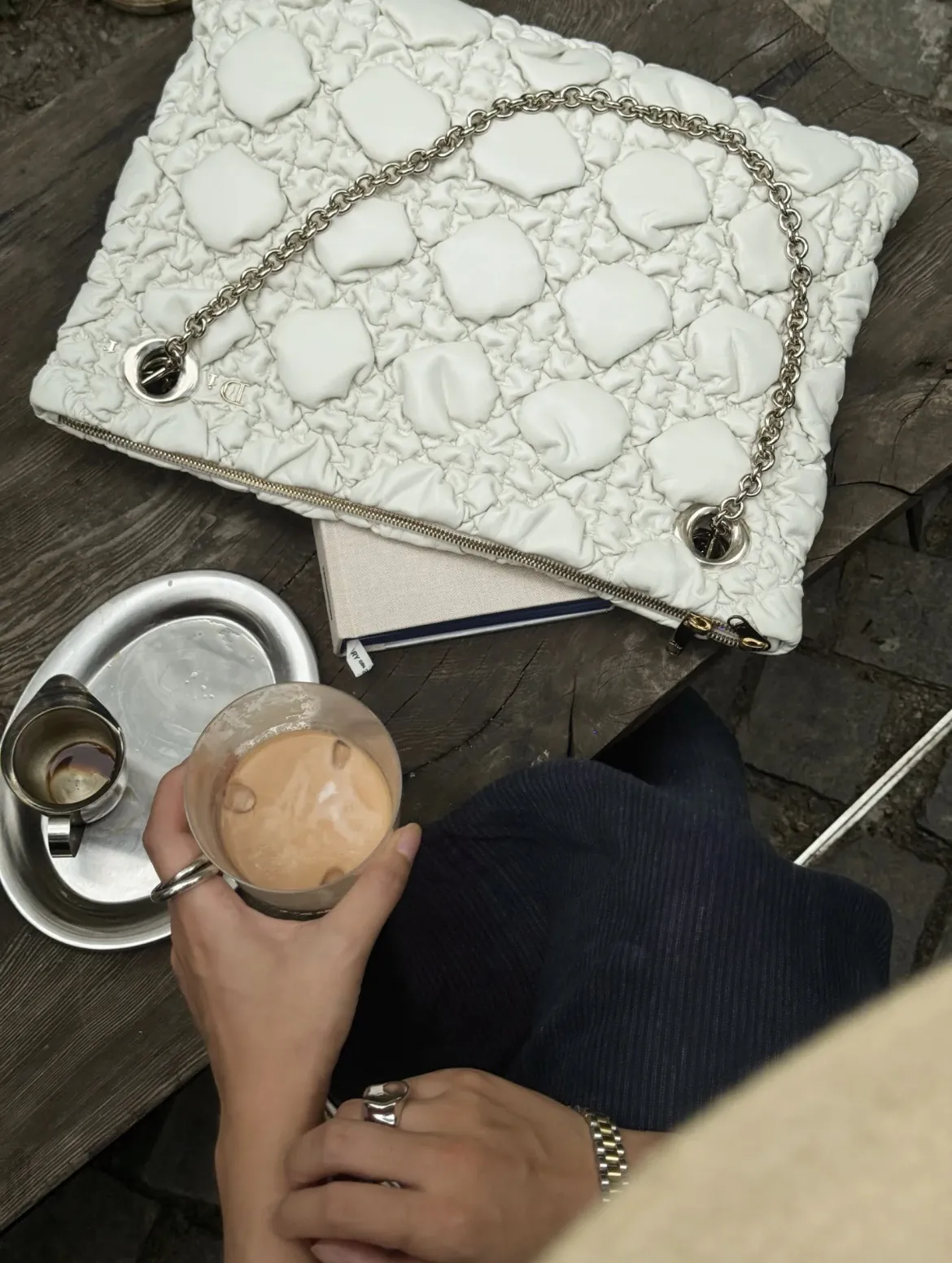
The featured image is an existing Dior wardrobe reference, separate from the Fall-Winter 2026 looks discussed here.
Why this bag is not the cactus minaudière
The cactus minaudières carry their interest in colour, blooms and surface variety, so the outfit around them suppresses a second flower. The armadillo works differently. Its drama is metallic and monochrome: a textured silver shell, a chainmail tail, a long chain. There is no hue to protect and no floral accent to avoid repeating. What you are protecting is the metal itself — the textured finish of the shell and the movement of the tail. Colour is therefore freer than it is with the cactus. A deep oxblood, a forest green, an ink blue or a plain black all leave the silver to do its thing. Shine is what you need to reduce, because a satin bodice, a sequined skirt or a lamé sleeve gives the metal a second, louder reflection in the same frame.
Count the metal, then remove one piece
The bag brings two metal zones: the shell and the long chain. The tail is a third, finer element. Before you leave the room, count the other metal on your body and in your outfit. A chain-strap shoe, a metallic belt, a stack of bangles, a shiny clasp at the neckline, a silver-tone watch on a bare wrist — each one adds another reflection. My rule for this bag is one piece of metal beyond it, and often none. Earrings that sit close to the face are the easiest single addition. Skip the necklace: the long silver chain already draws a line down the torso, and a second chain near the collarbone competes with it for the same vertical space. Skip hard metal belt buckles and metallic heel hardware if you can. If you want a shoe with presence, a plain satin pump in a dark colour gives weight without a second silver point.
The tail asks for a clean lower half
The chainmail tail extends from the rear of the bag, so it hangs and moves behind the shell. Where it lands depends on how you hold the bag, but the clothing logic is stable: give the tail an uncluttered field to fall against. A slim trouser, a narrow skirt or a dress with a plain hem lets the chainmail read as a distinct moving element. A heavily fringed hem, a tiered skirt with many edges or an asymmetric drape with its own movement puts a second moving thing in the same zone, and the tail stops being the surprise. If you want length and movement in the dress, keep it above the knee or let the skirt fall straight and quiet at the hem. The tail is the detail at that level, not the cloth.
What the long chain does to evening proportion
A long chain changes where the bag sits, and that changes what the eye reads first. Long-chain minaudières tend to hang low, so the eye travels down the torso rather than stopping at the hand. That favours a clean, continuous front: a dress with a simple line from shoulder to hem, or a narrow suit whose jacket closes flat. Busy detail in the middle — a wide contrast belt, a large bow at the waist, a peplum ruffle — interrupts that descent. The collection itself uses bows at necklines, waistlines and bags, and the draped suits and cocktail dresses from the same season are a good place to look if you want tailoring rather than a gown. If your look has one bow already, that is your detail; let the armadillo be the second.
Neckline and sleeves
Since the chain runs down the front, a high, plain neckline or a clean open one both work, but avoid a neckline trimmed in metal, crystal or shiny beading. Those details sit exactly where the chain begins. Sleeves are the other question: a sleeve that ends in a metallic cuff or a buttoned, hardware-heavy wrist adds a third metal note near the hand that holds the bag. Plain cuffs, or sleeves that stop before the wrist, keep the hand area calm. If you are choosing between one dress and another, the deciding factor is not the colour — it is how much non-cloth detail sits in the vertical strip the chain will cross.
A quick check before you commit
Stand in front of a mirror with the bag on its chain, over the actual dress or suit you plan to wear. See where the shell and the tail sit, and whether the tail catches on fabric, a slit or a pocket. Try it over the coat or jacket you would wear most, too, because an outer layer changes the surface the chain rests against. Then test your own bag: whether your phone and small essentials pass through the opening and whether it closes is a fit question to settle with your things, not something an outfit guide can answer for you.