The style notebook
Dior Junon-Style Petal-Embellished Dress: Accessory and Jewelry Outfit Ideas
Dior Junon-style petal-embellished dress: how much jewelry before the petals stop leading, which accessories stay quiet, and when one accent earns its place.
For the Dior Junon-inspired dress described by Elle, the jewelry answer is blunt: the petal surface is the ornament, so the default is no necklace and no second sparkling piece. Alessandra Zauli, writing for Elle on 17 November 2026 about the Dior–Marlene Dietrich story, describes the animated short's new dress as having “le fattezze del mitologico Junon con cascata di petali brillanti” — the features of the mythological Juno, with a cascade of sparkling petals wrapping the body. That single sentence is the reported fact. Everything below about how much shine you can add before the petals stop leading is my styling reading of it, written for someone rebuilding the idea from their own wardrobe rather than dressing a character.
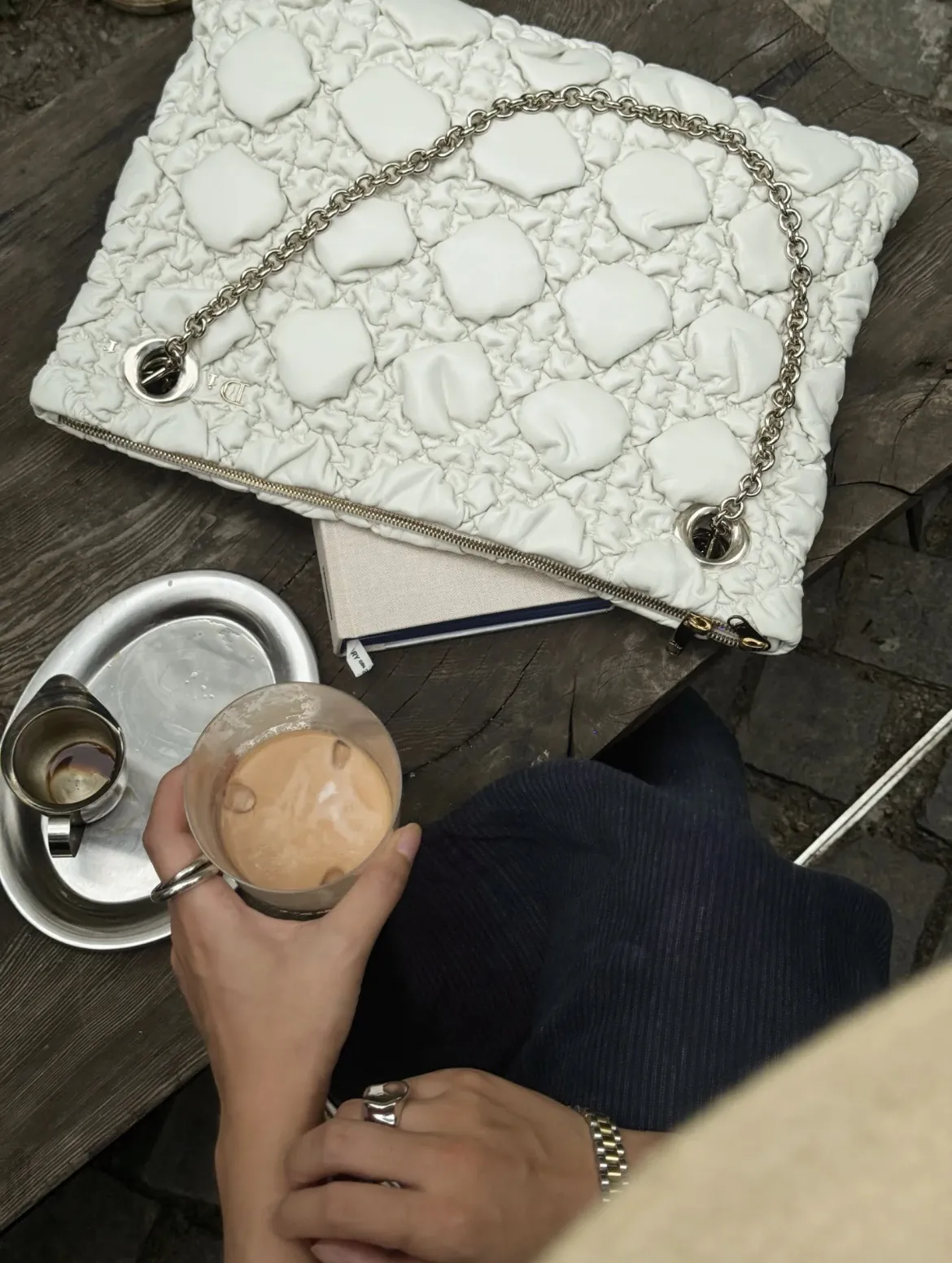
The featured image is an existing Dior wardrobe reference, separate from the Junon looks discussed here.
The dress is not a quiet base asking to be accessorised. A cascade of brilliant petals across the torso is already carrying reflected light, texture and a mythological reference at once. Every added piece either frames that cascade or fights it, and few additions sit neutrally in between.
Where the shine count should sit
Think of the outfit as having a budget of sparkling surfaces. The petals take nearly all of it. What remains is best spent on the parts the dress does not cover: ears, wrist, hair, hands, feet.
That leads to a workable hierarchy rather than a rule about quantity:
- One small earring — a plain gold hoop, a single pearl stud or a slim drop — reads as a frame around the face, not a rival to the bodice. It is the quietest way to signal that the look is finished.
- Nothing at the neck. A necklace lands exactly where the petal cascade is working, and any sparkle there splits the eye between two competing light sources. A bare neckline, or one crossed by the dress's own construction, keeps the petals as the single ornament above the waist.
- One wrist piece at most, and preferably matte or plain metal rather than stones. It occupies a different zone from the dress and gives the hand something to do without echoing the petals.
- A ring only if it is the one deliberate accent. A single ring is a strong, small gesture; several rings turn the hand into a second jewellery story.
In practice this means choosing between the earring and the ring, not layering both. The question in the brief — how much before the petals stop leading — has a practical answer: one piece, maybe two if both are tiny and matte.
Why pearls are the wrong instinct here, and what to choose instead
Elle's account of Dietrich in the Dior atelier describes “un giro di perle al collo” — a strand of pearls at the neck — alongside a black tailored suit and a veiled gaze. That is a real, reported styling moment, and it is tempting to borrow it for the Junon dress. I would not. The pearl strand worked against dark tailoring because the suit supplied no shine of its own; against a cascade of brilliant petals, a pearl necklace becomes a second bright band in the same region. The historical reference is worth keeping in mind, but the dress changes where it belongs: pearls in a single earring, not a collar.
For metal, warm gold or a plain silver tone both work, provided the finish is brushed or polished rather than set with stones. A delicate chain worn at the wrist or a slim cuff in the same metal as the earring keeps the jewellery looking chosen rather than accumulated. If the dress's petals read cool and silvery, cool metal is the easier companion; if they read warm, gold. That is a judgement about tone rather than a verified property of the dress, so treat it as a preference to test against your own piece.