The style notebook
Dior Spring 2026 Couture Pilowy Envelope Clutches: Outfit Ideas
Dior Spring 2026 Couture Pilowy envelope clutches: a plain column or simple tailored line lets the oversized tailor's pin and Paris label set the evening detail.
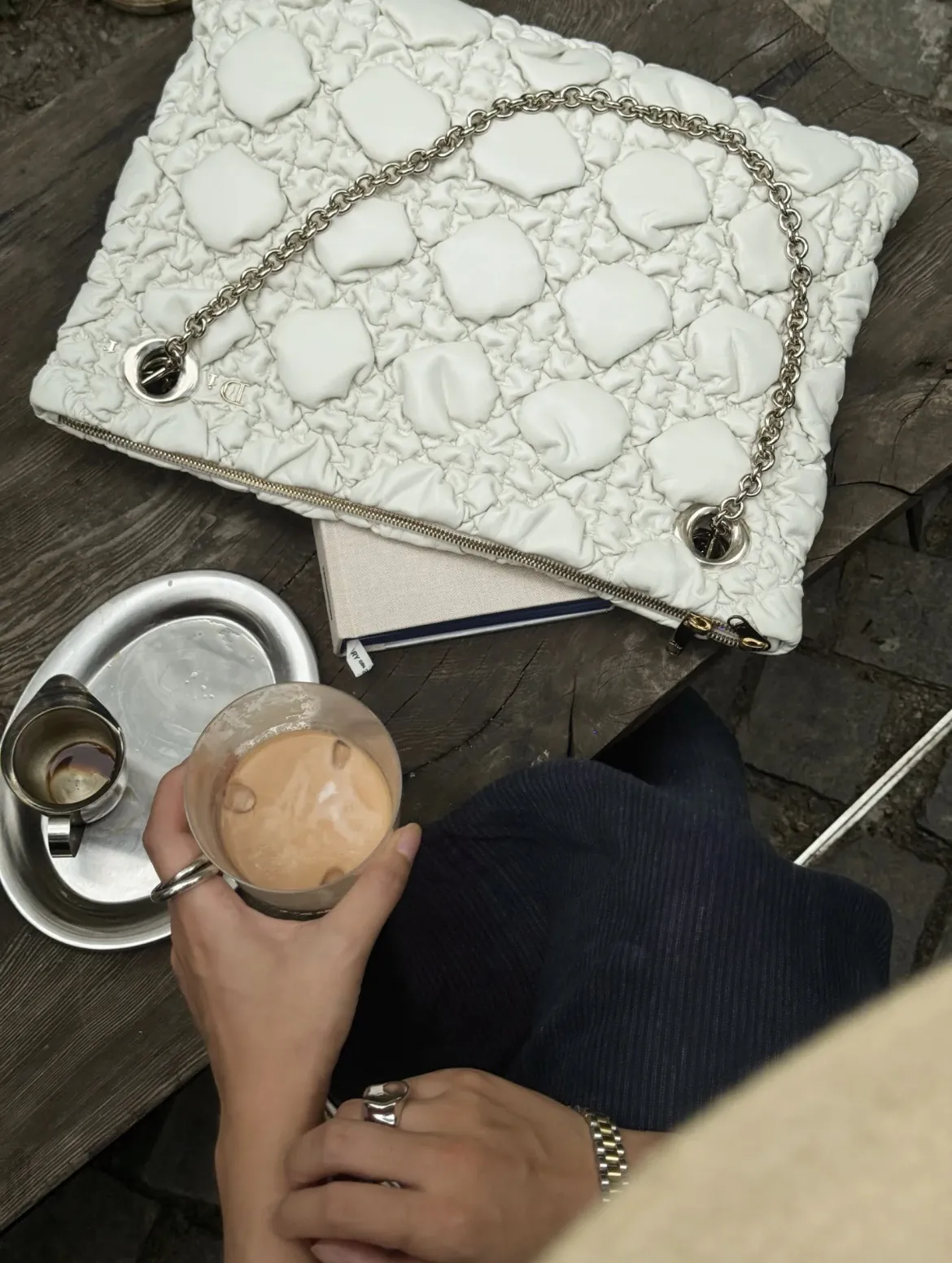
For the Dior Spring 2026 Couture Pilowy envelope clutch, the evening outfit should be quiet enough that the oversized tailor’s pin and the Christian Dior Paris label are the only things demanding attention. The simplest way there: a plain column dress in a matte fabric, or a straight tailored line with one clean seam and no hardware at the hip. The clutch is an elongated envelope with a soft, unfussy character, and the pin is a single graphic stroke across it. Clothing that adds a belt buckle, a large brooch or a second metallic accent steals that stroke. Clothing that stays smooth gives it something to mark.
The featured image is an existing Dior wardrobe reference, separate from the Spring 2026 looks discussed here.
What the runway actually showed
Anna McWhirter’s PurseBop report, published 27 January 2026, describes the Pilowy envelope clutches among the season’s silk jacquard accessories: elongated silhouettes, each accented with an oversized tailor’s pin, shown in black, red and floral-printed blue, with a Christian Dior Paris label reminiscent of the tag at a garment’s nape. The outfit reasoning below is my own reading of how that pin and that label behave in an evening look; it is not a comment on how the clutch carries or wears.
Plain column versus simple tailoring
A column dress works because it removes the waist and the hip from the conversation. In a matte silk, crêpe or fine wool, one colour, with a high or softly draped neckline, the body becomes a vertical field. The elongated clutch lies against it as a second long shape, and the pin reads as a single horizontal interruption. This is the choice I would make for a black or red clutch: the garment repeats nothing, so the colour of the clutch and the metal of the pin are the only two events.
Simple tailoring is the better route when you want the label to do more work. A narrow trouser with a clean front crease and a collarless jacket, or a long straight coat over a plain top, gives the clutch a horizontal line to sit under and gives the tailor’s pin a garment-world reference. The pin looks like a tool borrowed from a workroom, so a suit or a coat with visible seams and no decorative hardware suits it. Avoid a jacket with a large metal button at the waist or a chain belt: those sit at the clutch’s height and compete with the pin for the same job.
The three colourways ask for different neighbours
The black version is the most forgiving and the most severe. It benefits from a garment in a different dark tone — ink, charcoal, deep brown — so the clutch is a distinct object rather than a continuation of the outfit. All-black works too, but then let the pin and the label be the only brightness on the body. The red version already supplies the accent; pairing it with a second bright colour, a red lip and a red shoe, turns a single detail into a colour theme. A neutral garment — cream, stone, navy, black — keeps the red as one decision.
The floral-printed blue is the one that changes the rule. A print on the bag means a print on the clothes is usually one pattern too many at close range. A solid blue that picks up one tone from the print is the safer echo; a solid cream or black is the cleanest. If you want pattern, keep it far from the bag — a printed shoe is less of a collision than a printed sleeve resting on the clutch.
Where the pin changes the jewellery decision
The oversized tailor’s pin is metal and it is large. That does not forbid jewellery, but it argues for restraint near the hands and the hip. A thin bracelet on the opposite wrist, small earrings, or no necklace at all keeps the pin as the one deliberate piece of hardware. A statement cuff on the arm that holds the clutch puts two metal objects in the same frame and makes the pin look like one of several. If the dress has a bare neckline, a fine chain is enough; a choker or a cluster of brooches at the shoulder competes with the label’s position near the top edge of the bag.
When a structured bag is the better answer
The Pilowy clutch is soft, elongated and hand-held, and it asks the outfit to be calm around it. The same evening clothes often suit a structured bag better when the night involves a crowded room, a seated dinner where the bag must stand on the table, or a coat you will keep on. A small structured top-handle bag gives the outfit a second architectural element and holds its shape against a column dress. The clutch is the choice when the outfit is plain enough that a soft, flat object with one pin is the point; the structured bag is the choice when you want the bag to add structure the clothing does not provide. The smooth Lady Dior is the clearest alternative in the same collection if you want a shaped bag rather than a flat one.
One check before you commit
The clutch is elongated and hand-carried, so try it against the coat or jacket you will actually wear to the evening, with the sleeve you will actually have. Check that the pin does not catch on a loose knit or a raw edge, and that the label sits where you want it when the clutch is tucked under the arm as well as held in front. If the outfit has a defined waist, hold the clutch at hip height and see whether the pin lands against a seam; if it does, a plain column in the same colour will let the pin read more clearly. For a wider view of the season’s evening bags, the Dior Spring 2026 Couture bag guide sets the fringe tote, Cyclamen and insect minaudières against each other.