The style notebook
Dior Spring-Summer 2026 Book Tote Bags: Detachable Strap and Size Carry Ideas
How the Dior Spring-Summer 2026 Book Tote's detachable strap and its Small, Medium or Large size change shoulder, crossbody and outfit proportion.
The Dior Spring-Summer 2026 Book Tote bag now comes with a detachable shoulder strap, and that single addition reshapes the size question. All three sizes carry the strap, so the strap does not pick a size for you; the dimensions do. My rule: the Small is the shoulder-or-crossbody bag that leaves an outfit intact, the Medium is the one that redraws the shoulder line, and the Large is a travel-shaped tote that wants quieter clothes beneath it. Anna McWhirter's PurseBop report, published 7 January 2026, describes the new editions as including a detachable shoulder strap that allows shoulder styling or crossbody wear. Everything below about proportion and clothing is my own styling reading.
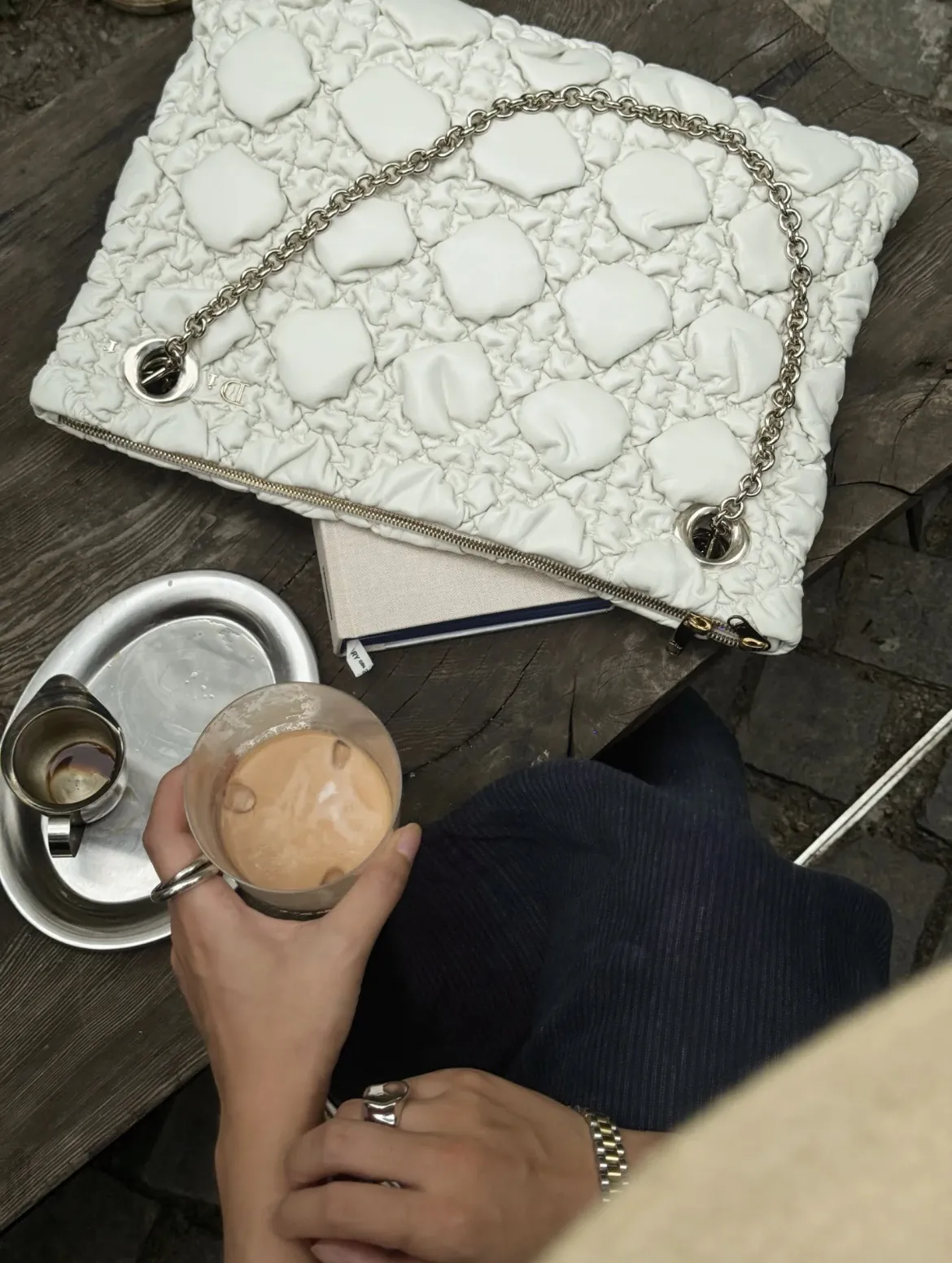
The featured image is an existing Dior wardrobe reference, separate from the Spring-Summer 2026 looks discussed here.
McWhirter lists the totes as rigid canvas and technical fabric with intricate embroidery recreating first-edition book covers — Dracula, Les Fleurs du Mal, Madame Bovary, Les Liaisons Dangereuses and a Dior-by-Dior design — alongside interior pockets, sturdy handles and lightweight construction. The sizes she gives are Small 10.5 × 8.5 × 5.5 inches, Medium 14 × 11 × 6.5 inches and Large 16.5 × 14 × 7.5 inches. Those numbers describe the outside of the bag only. Whether your own laptop slips through the opening and the tote still closes is something to check with the machine in hand, not something the dimensions settle.
Small: the strap position that keeps a silhouette
At 8.5 inches high and 10.5 wide, the Small stays close to the torso in either carry. On the shoulder it reads as a compact embroidered block; across the body it sits high and behaves like a structured pouch with a printed face. That high placement is why the Small works from day into evening. The waist seam, the coat's line and a belt all stay visible, so a cropped jacket, a tucked shirt or a belted trench keeps the shape you built.
The clothing decision with the Small is restraint near the face. The embroidered cover is already a full graphic, so a plain knit, a solid shirt or a single-colour jacket gives it room. A second print at the same level — a checked blazer, a patterned scarf, a busy collar — competes with the cover and flattens both. For evening, the same size works over a narrow sleeve or a simple dress because the bag's face is the one strong element.
Medium: where the carry starts to move the outfit
The step up to 14 × 11 × 6.5 inches is the one that changes how clothes need to be assembled. Eleven inches of height on the shoulder puts the bag in the same zone as a jacket hem, a waist seam or a belt; worn crossbody, it crosses the ribcage and covers a defined waist.
My preference is the Medium long on one shoulder, over clothes with a clean vertical: straight trousers, a fine-gauge knit, a single-breasted coat, an unwrapped scarf. A belted trench or an oversized blazer with strong shoulders crowds the strap and the bag together. Because the rigid canvas holds its own shape, the Medium reads best against soft cloth; a thick puffer worn over the strap makes the bag look undersized and the shoulder busy, while a lighter coat leaves the tote's structure visible. Slip the strap over the coat you actually wear most, and you will see whether it hangs beside the chest or tucks under the arm.
Large: a bigger scale, simpler clothes
At 16.5 × 14 × 7.5 inches the Large is a different scale from the Small, close to half again in height. On the shoulder it becomes a broad rectangle beside the torso; crossbody, it turns into a dominant band across the front of the body. Either way the embroidery sits around chest level, which is why a simpler base works better: one colour, an easy trouser or jean, a plain coat. The Large also suits hand carry by the sturdy handles over a loose linen shirt or a simple sweater and wide trousers, when you want the bag to be the widest element in the look with nothing trying to match it.
I would avoid pairing the Large with a sharply tailored, close-fitting jacket. The bag's rigid rectangle and the jacket's structured shoulder repeat the same squared line; a softer layer or an open coat gives the tote room to read as the single graphic.
Which carry to plan for
- Hand carry on the sturdy handles suits the Large and any short day of fixed stops; the strap stays off and the embroidered face points outward.
- Long single-shoulder carry is the most flexible position for the Medium and Small over a coat or heavy knit.
- Crossbody colour works best on the Small, where the bag sits high and the waist stays visible; on the Medium and Large it covers the torso and asks for quieter clothes.
- The detachable strap is an option you can remove, so decide whether your outfit wants the bag held or slung before you dress around it.
For a first Book Tote, let the carry you do most decide, not the largest dimensions you might need one day. The Small keeps a shoulder or crossbody look composed, the Medium asks clothes to stay close to the body, and the Large wants a looser, plainer wardrobe with the tote as the only bold note. Before you commit, try the size over your usual coat, and test your laptop against the opening rather than trusting a measurement.
This is a separate decision from the Dior DiorAlps 2027 Book Tote comparison, which covers a different collection and different surface choices. If you want a soft shoulder bag for a working day rather than a rigid embroidered tote, the SS26 suede tote and Boston bag choice is the closer fit.