The style notebook
Gucci Ten Archival Scarves Reimagined: How to Wear the Project
Gucci's Ten archival scarves reimagined project: decide whether to wear one at the neck, on a bag or store it, with plain-base outfit ideas and occasion placement.
Gucci's Ten archival scarves reimagined project raises an urgent question: if the scarf is a piece of silk history, does tying it diminish it? The answer depends on how the scarf behaves in the outfit, not on whether it is precious. Worn at the neck over a plain base, it works as a single statement; folded and knotted onto a bag, it becomes a removable one; stored flat away from light, it stays a collectible. Gucci's Stories page presents the project as ten archival scarves reimagined in a project honouring its silk legacy. That is the frame. Everything below is styling interpretation, not a claim that any scarf in the project is available, identical to an archive piece, or designed to be worn a particular way.
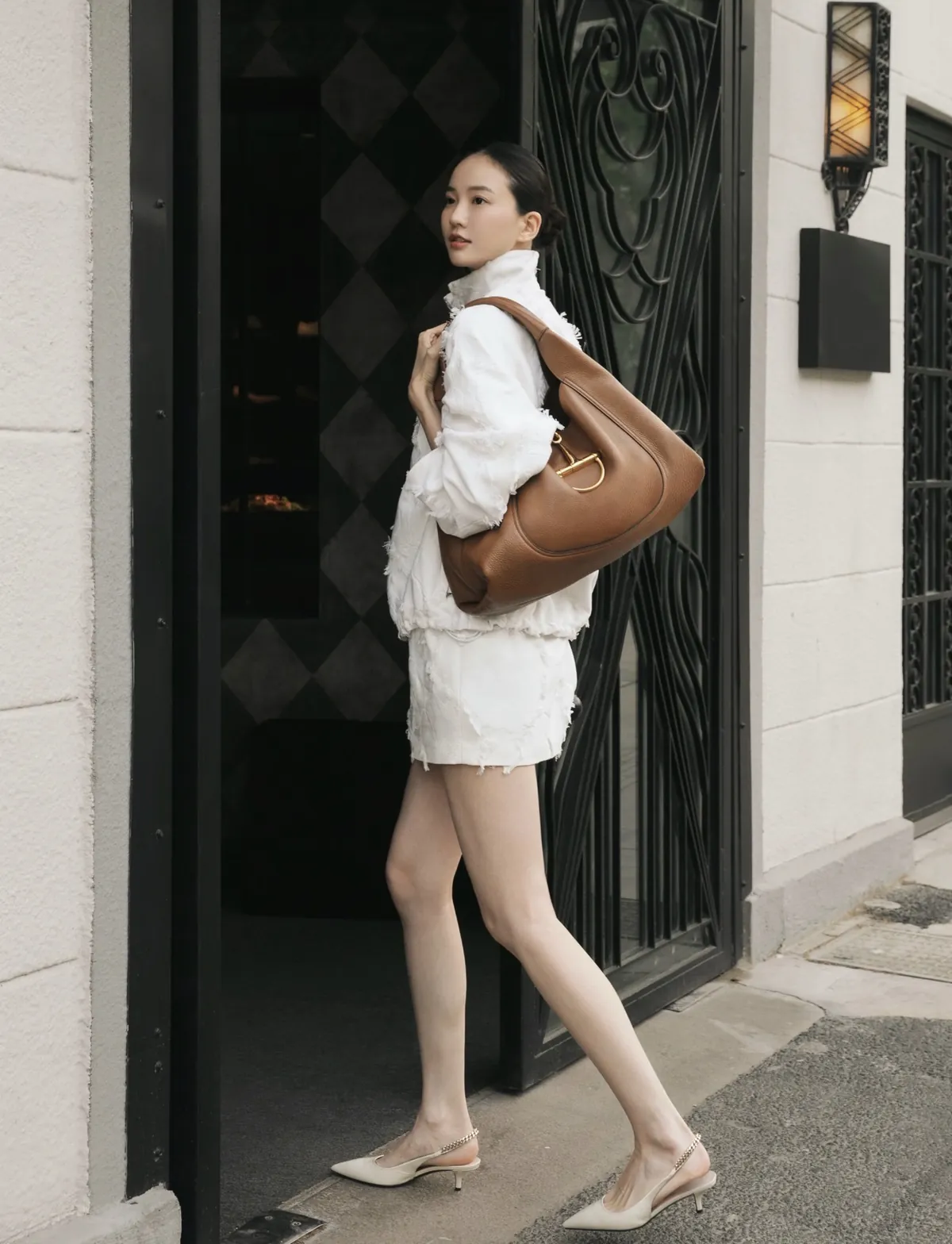
The featured image is an existing Gucci wardrobe reference, separate from the Ten archival scarves looks discussed here.
What the project actually gives you to work with
The only confirmed detail is the number and the premise: ten archival scarves, reimagined, tied to Gucci's silk heritage. Gucci does not describe the prints, dimensions, hems or fibres on the Stories page. That makes the print the variable to plan around, because a reworked archive print is a dense, finished image. Dense prints want ground to sit on. If the scarf competes with a checked jacket, a striped shirt and a floral skirt, the outfit has no room for the story.
Wear it at the neck over one plain base
A neck scarf reads best when the clothing underneath is a single colour and a single texture. A cream shirt with straight trousers, a black fine-knit crew neck, or a plain grey jacket all give the print an edge to work against. Tuck the ends inside the collar or let them fall over a jacket lapel, and keep the jewellery minimal; the scarf is already doing the accessory work.
Where this stops working is a high, fussy neckline. A ruffle, a cowl or a cluster of lapels at the throat crowds the knot and hides the very centre of the print. Choose a clean neckline, and let the scarf be the only thing happening there.
Shoulder wrap or bag tie: which placement earns the print
The shift from neck to shoulder changes the scale of the print you show. At the neck, the viewer sees a knot and a corner of the design. Draped as a shoulder wrap over a slim column of colour, the scarf becomes a broad block of pattern over the torso, which suits a bold, large-format print and a plain dress or matching trouser suit. Keep the wrap undefined and the rest of the outfit close to the body.
Knotted onto a bag, the print appears in a smaller, mobile form. This is the safest way to wear a valued scarf regularly, because it lifts a plain coat or plain trousers without asking the silk to survive a whole day at the neck. A Gucci bag with a smooth handle or front hardware gives the knot something to sit against; the scarf adds a soft, printed note that the leather alone does not supply. For day, a bag tie over a neutral coat is the lower-commitment route. For evening, move the same scarf to the neck above a plain black dress and let the print carry the formality.
Day and evening placement, practically
- Day: a bag tie or a loose neck knot with a plain crew neck and straight trousers. The scarf should be the only patterned thing in the outfit.
- Evening: a neck knot or a shoulder drape over a plain dark column, with the scarf's own colour repeated in nothing but perhaps a shoe. Avoid piling a second print on top.
- Travel: folded flat in a pouch rather than worn tight at the neck, then tied once you arrive.
If a print is especially valuable to you, the bag tie is the placement that lets it leave the drawer without exposing it to a full day of knotting and friction at the throat. That is a personal risk judgment, not a durability claim.
Collectible or wearable? Make it a rotation decision
The tension the Gucci Ten archival scarves reimagined project creates is between a scarf as an object and a scarf as clothing. A practical split: keep the reimagined archive piece as the one you store for its print and history, and wear it on planned occasions rather than daily. If you buy it to wear, decide the placement before you store it, because a scarf you have never tied is easier to leave folded. Draping it once over a plain base and once on a bag tells you whether it is a neck piece or a bag accent for your wardrobe.
Your answer to the opening question is therefore specific: wear it, but choose one placement and one plain ground, and reserve a single repeat occasion for it. A scarf that enters the wardrobe as the only print in the outfit will earn its keep without asking to be treated as a museum piece.