The style notebook
Gucci Giglio Bag: Large Shopper Tote Outfit Ideas
How to dress around the Gucci Giglio large shopper tote's GG monogram: plain bases, one soft layer, low shoes, and when a structured shoulder bag should lead.
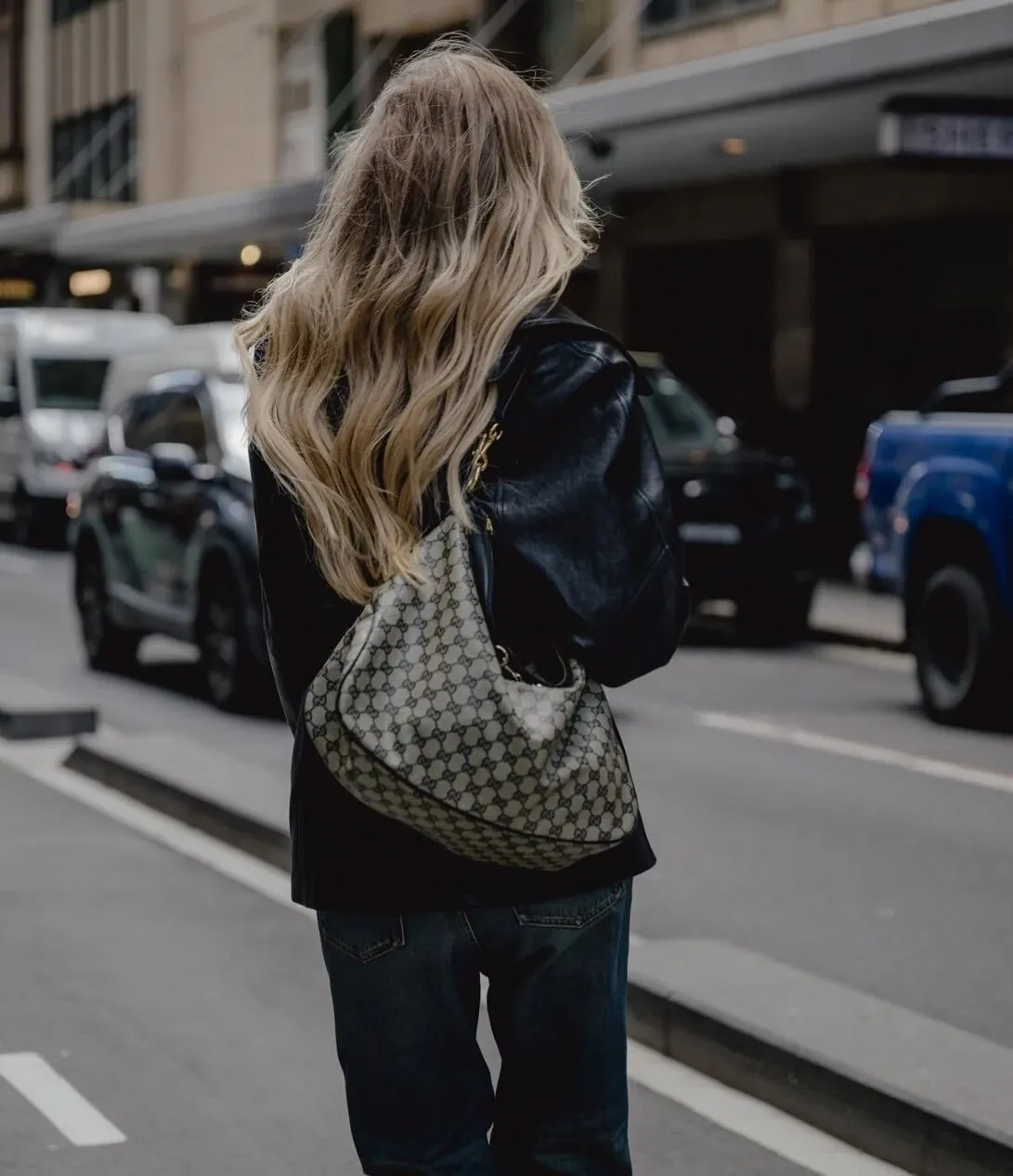
The Gucci Giglio is easiest to wear when the outfit is built to carry it, not compete with it. That is the direct answer for a large shopper tote in GG-monogram-stamped coated canvas: treat the bag as the dominant pattern and give the clothing a plain, soft, low-key frame. A structured shoulder bag is the better focal choice on days when the outfit itself is the point and you want the bag to sit back as a neat accent rather than a big printed mass.
The featured image is an existing Gucci wardrobe reference, separate from the Giglio looks discussed here.
Harper’s Bazaar’s Camille Freestone, writing on 23 March 2026, describes the Giglio as “a large shopper style tote” shown in “various shades of the GG-monogram-stamped coated canvas” across Gucci’s “Beauty and the Bag” campaign imagery. Those are the reported facts that matter for dressing: size first, all-over monogram second. The styling judgments below are my reading of those details, not claims about the bag’s weight, capacity or how it carries.
Why the bag should lead most days
A large tote with an all-over monogram already supplies scale, pattern and a recognisable surface. If you add a second monogram — a logo belt, a monogram scarf, a printed logo knit — the eye has no quiet place to rest and the bag stops looking deliberate. The same thing happens with competing patterns: a checked coat over a striped shirt with a floral skirt turns the tote into one more busy element.
The practical rule is a plain base in a solid colour, ideally something that lets the coated canvas read as the one textured, patterned object. Black, navy, cream, stone or grey trousers and a plain knit or shirt do the job. A plain base also makes the bag’s particular monogram shade legible, whether it is a lighter beige tone or a deeper ground.
Where you would choose differently: if the Giglio is genuinely the only patterned thing you want to wear that day, put the pattern contrast in a single soft layer — a brushed cardigan, a loose overshirt — rather than in a second print. One soft layer gives the outfit movement and stops it reading as a uniform, without adding a rival motif.
The quiet formula for school drop-off and errands
For the kind of morning Ratajkowski describes in the interview — she mentions swapping an early call time for school drop-off — the clothing needs to be quick and uncomplicated. That is a styling observation about the occasion, not a claim about how the bag performs.
- A plain long-sleeve tee or fine knit in a solid neutral.
- Straight or relaxed trousers, or dark denim without distressing or logos.
- One soft layer: an unbuttoned overshirt, a cardigan, a plain zip jacket.
- Flat shoes or low-profile sneakers, so the vertical line stays clean beneath a big tote.
The soft layer is the piece that earns its place. A big structured tote next to crisp, plain clothing can look hard; one slouchy knit or soft overshirt introduces a contrast in texture that makes the combination feel considered rather than stiff. Keep the colour of that layer close to the base — cream over stone, grey over black — so it reads as tonal rather than as a second statement.
Travel-adjacent days and the coat question
On days that involve a train, an airport or a long walk between errands, the coat or jacket is the other large shape in the frame. Freestone quotes Ratajkowski saying that in a cold New York winter “you actually need to think about your coat and your bag as the main things.” That is a useful way to frame the decision: two big objects, one plain and one patterned.
Let the coat be the plain one. A solid wool coat, a plain trench or a dark puffer keeps the silhouette simple and lets the monogram tote do the visual work. If the coat is patterned, the bag is better swapped for a plain shoulder bag that day. Low boots or flat shoes continue the clean vertical line.
When a structured shoulder bag should lead instead
There are days when the outfit is designed and the bag should not compete. A tailored suit, a patterned dress, a layered look with strong texture or a monogram-print garment all want a quieter bag. A structured shoulder bag in plain leather does that job: it keeps a defined shape near the body, adds a neat horizontal or vertical line without a large printed surface, and lets the clothing stay the focal point.
Ratajkowski’s own framing in the interview supports the idea of choosing by phase rather than by default — she describes wearing one bag for a stretch and then switching, and says that switch “dictates how I’m dressing in general.” Read as a wardrobe decision, that is a reason to keep both roles in mind: the Giglio for days when the tote carries the look, a structured shoulder bag for days when the clothing does.
If the question is which to reach for when you are unsure, ask what the outfit already contains. A plain base and a soft layer point to the Giglio. A print, a strong shoulder or a full tailored look point to the structured shoulder bag.