The style notebook
Gucci Spring 2025 Low-Slung Trousers and Louche Tanks: Outfit Ideas
Gucci Spring 2025 low-slung trousers and louche tanks: top-length and layering ideas that keep the low waist reading as deliberate.
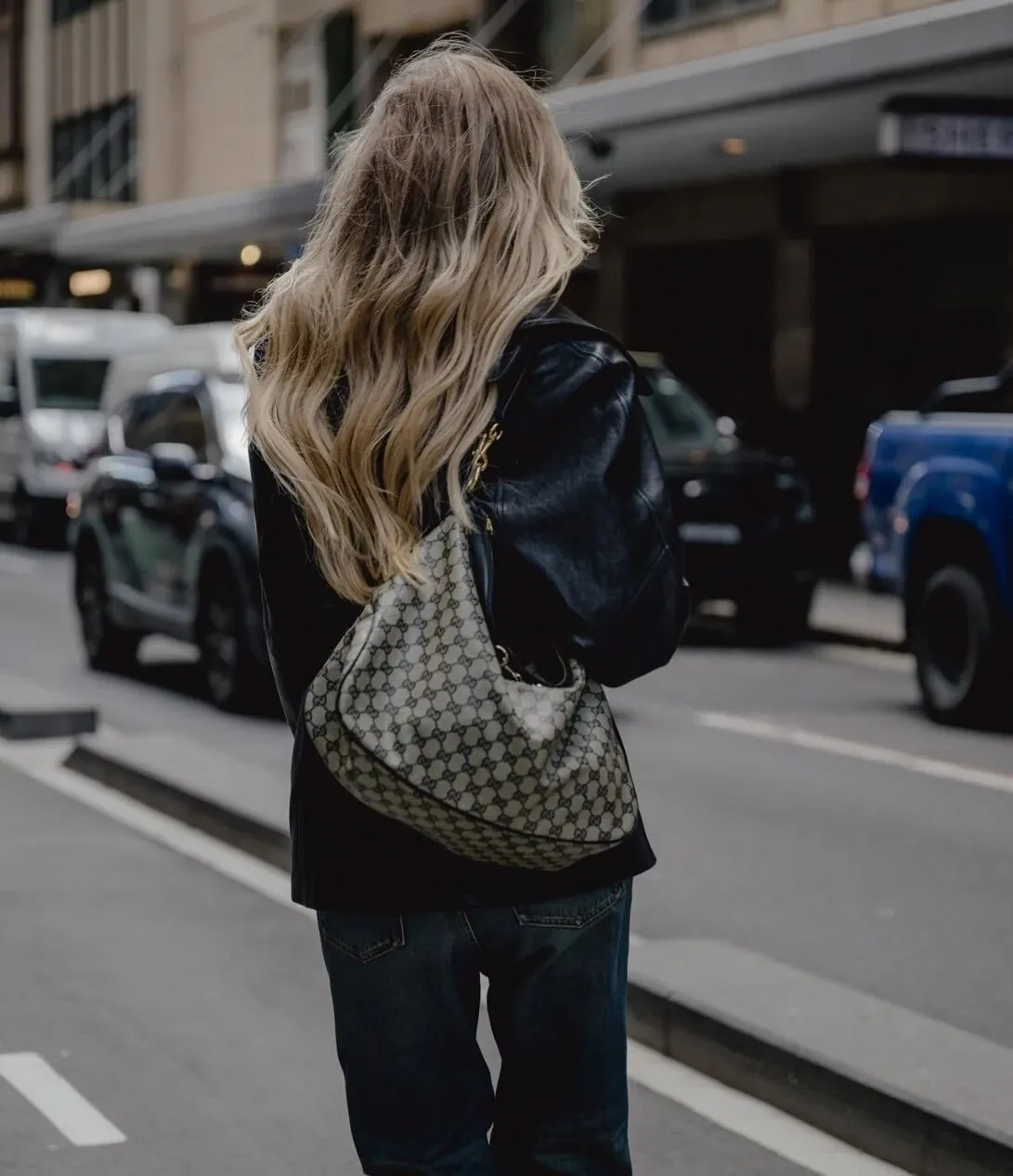
For the Gucci Spring 2025 low-slung trousers with louche tanks, the top length that keeps the low waist intentional is a hem that ends either just above the waistband or at the high hip — a cropped tank that stops at the natural waist, or a longer, looser tank that skims the hip and tucks or half-tucks into the trouser. The gap that exposes the lower waist is the point; the failure is a tank that ends midway between waistband and bust, which reads as a top that has ridden up rather than a deliberate proportion.
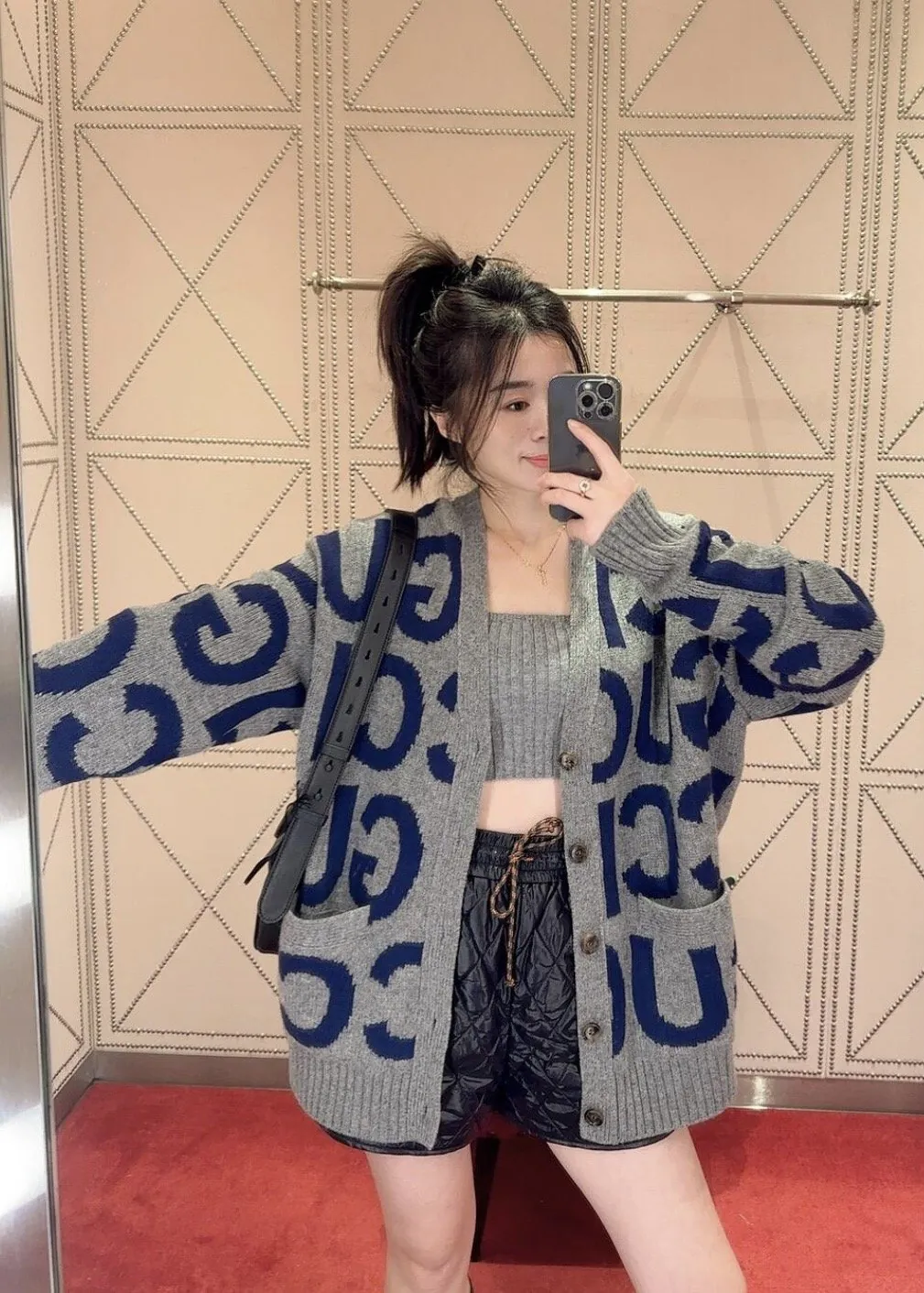
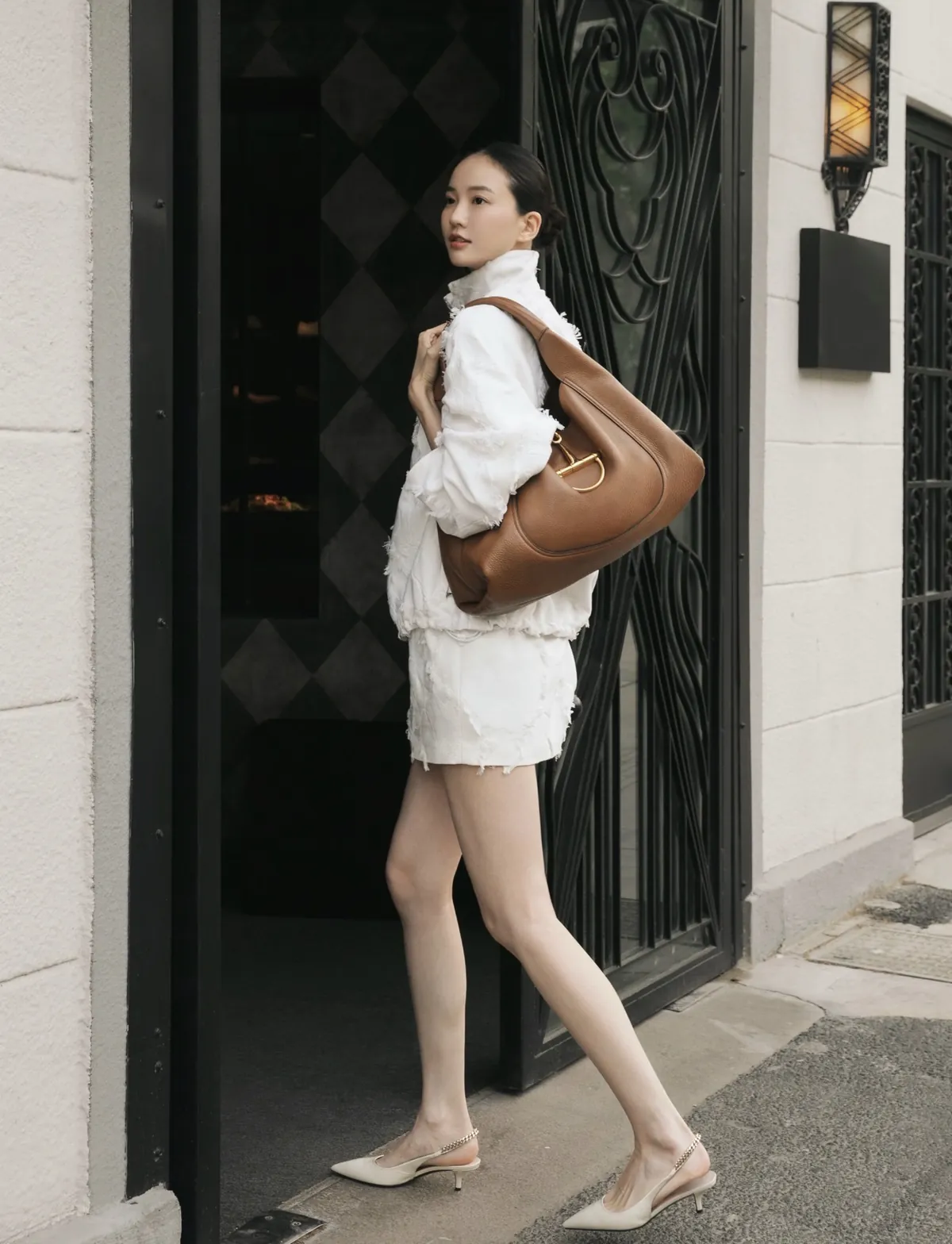
The featured image is an existing Gucci wardrobe reference, separate from the Spring 2025 looks discussed here.
ELLE’s Véronique Hyland, writing on 20 September 2024, describes Sabato De Sarno’s Gucci Spring 2025 collection as “a uniform fit for a nonchalant jet-setter: low-slung trousers with louche tanks,” among draped cutout gowns in jersey, sheer lace and baggy jeans with floor-sweeping trenches. She also reports the designer’s show notes called the centerpiece “casual grandeur.” That is the reported pairing. The length and layering judgments below are my styling reading of it, not a claim about any garment’s cut or fit.
Why the mid-length tank is the problem
A low waistband already sets the trouser’s top edge below the natural waist. The eye reads that line as intentional when the top clearly relates to it in one of two ways: stopping just above it, or falling past it. A tank that ends a few centimetres below the waistband — in the no-man’s-land between waistband and rib — suggests uncertainty. The fabric ends where the body has not been addressed, and the exposed strip looks incidental.
So the top-length question is less about how much skin shows than about where the tank’s hem lands relative to the trouser’s edge. Choose a tank that stops at the waistband, leaving a deliberate sliver of midriff framed by both edges, or one long enough to reach the hip. In the first case the exposed waist is the outfit’s punctuation mark; in the second, the low waist reads through the fabric as a soft drop rather than a visible gap.
A cropped, compact tank over the low waistband
The cleanest way to make the low waist look chosen is a tank that ends at or just above the waistband. Because the tank is short, the trouser’s rise is fully visible, and the exposed strip is defined by two clear horizontals: the tank hem above, the waistband below. That framing is what makes the lowness read as a proportion decision rather than an accident. Keep the tank close to the body — a compact rib or a simple knit — so it does not balloon over the waistband and obscure the line it is meant to reveal. The trouser should sit cleanly at the hip with no bunching at the fly, so the waistband itself stays a crisp edge.
A long, loose tank that covers the waist entirely
The other strong answer is the opposite: a long, relaxed tank that falls to the high hip and hides the waistband altogether. Here the low rise is felt rather than seen — the trouser sits lower, the tank hangs longer, and the proportions read as slouchy and offhand. This is the version closer to the “louche” description. The tank should be loose through the body but not voluminous enough to swallow the trouser’s shape; a fine knit or a fluid jersey skims rather than tents. A partial tuck at one side, or a full tuck with the fabric bloused slightly over the band, reintroduces the waistband as a quiet detail without exposing the waist.
Which to choose depends on the occasion. The cropped version suits warm weather and a clearer, more graphic look; the long loose version is easier for a relaxed lunch or a day that involves sitting, moving and layers. Neither is more correct — they solve the same proportion problem from opposite directions.
Layering that does not fight the low waist
A shirt or overshirt worn open over the tank changes the calculation. If the outer layer is long and loose, it can carry the slouch while the tank underneath handles the waist relationship. Wear the overshirt open so the tank and the waistband remain visible in the centre; buttoned, it turns the outfit into a tunic-over-trouser and loses the low-slung point. A cropped jacket or a boxy short-sleeve shirt that ends at the same place as a cropped tank keeps the horizontal clean. Avoid an outer layer that ends exactly at the mid-length problem zone — the same rule applies to the jacket hem as to the tank hem.
When the ensemble needs more polish, a fine knit tank in a deep tone — the collection’s deep red and chartreuse are reported hues — keeps the focus on proportion rather than print. Plain, matte fabrics let the waistline do the talking. If you want to see how a longer, floor-sweeping layer behaves against a low waist, the trench and baggy jeans length guide covers that decision separately.
The belt question, kept brief
A belt is optional here and should not become the subject. The low waist is the gesture; a wide or heavily buckled belt can turn it into a hardware story. If you want a belt, choose a narrow, plain one in the same tone as the trouser so the waistband line stays quiet. For belt-led low-rise styling with an explicit buckle focus, the Spring 2027 jeans and multi-buckle belt guide is the better reference; this page keeps the tank as the focus.
A short way to decide
Before you leave the mirror, check where the tank hem sits. If it stops at the waistband or falls to the hip, the low waist is doing its job. If it ends between the two, either shorten it by tucking or lengthen the layer — or add an open overshirt that resolves the line. The rest of the outfit can stay plain: a simple sandal or flat, a small bag, and no competing focal point at the neck. The tank and the trouser edge are the look.