The style notebook
Hermès Fall-Winter 2026 Riding Boots: Thigh-High and Ostrich Outfit Ideas
Hermès Fall-Winter 2026 riding boot outfit guide: plain over-the-knee, Kelly-buckle and calf-length ostrich boots, chosen by hem and layer.
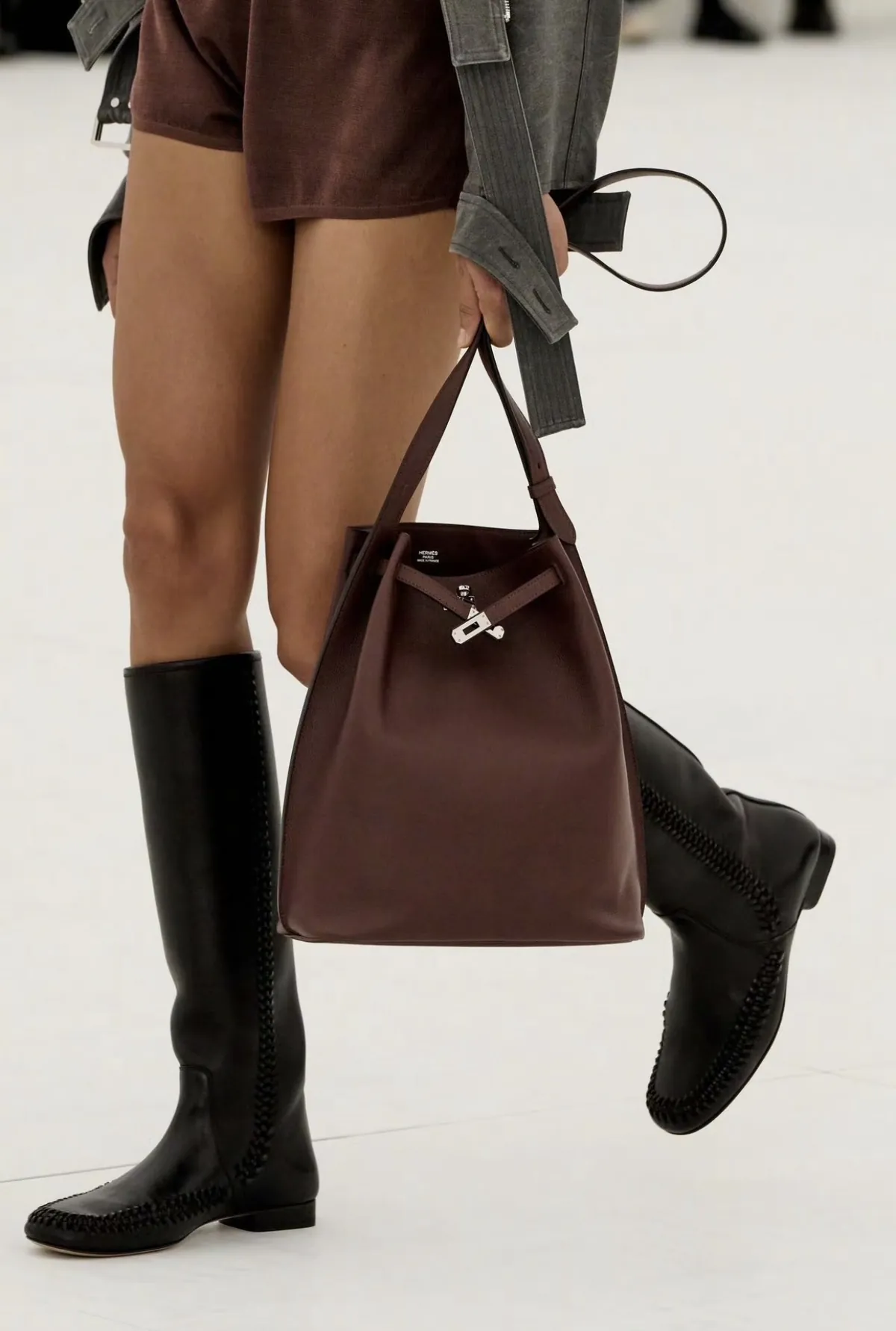
The Hermès Fall-Winter 2026 riding boots split into three decisions, and only one of them is about the buckle. The over-the-knee boot is described in soft, supple leather with a classic almond toe and a sleek silhouette, shown on the runway without the Kelly-belt buckle and again at the Re-See with it. That gives you a plain shape and an ornamented one in the same height. The third option is a calf-length variation in ostrich leather, which changes the hem problem more than either buckle choice does. In short: the buckle version earns its place above a plain, quiet outfit, while the clean version is the one that lets textured or patterned clothing do the talking.
The featured image is an existing Hermès wardrobe reference, separate from the Fall-Winter 2026 looks discussed here.
What the source actually establishes
Anna McWhirter's PurseBop article, published 8 March 2026, describes statement thigh-high riding boots in soft, supple leather with a classic almond toe and an over-the-knee silhouette. The runway version appeared without the signature Kelly-belt buckle for a clean, minimalist look; at the Re-See, the boots were also shown with the Kelly buckle detail, offering the option to wear them with or without the hardware. A calf-length variation was presented in ostrich leather. It is worth separating the new over-the-knee style from the Jumping Boots, which return with diagonal quilted detailing and keep the Kelly-buckle hardware. The reported ready-to-wear note is that the tall boots called for bike shorts, sharp jodhpurs and sleek leather pants, with leather coats, some quilted or in ostrich skin, over equestrian-inspired knitwear. The hem and layering judgements below are my reading of those facts, not instructions from the collection.
The plain over-the-knee boot: clothing leads
With no buckle at the top of the shaft, the boot's reportable features are its almond toe and over-the-knee line. That makes it the easier partner for clothing with surface interest: a quilted leather coat, an ostrich-textured outer layer, a knit with visible stitch. The eye travels to the fabric and then down a clean leg line. Where the buckle version still works with those textures, the plain one keeps the outfit from having two competing ornaments at knee height.
For trousers, the useful distinction is sleek versus slouchy. Leather pants sit close and continue the boot's own line, which is why they read as the natural pairing in the reported styling. Sharp jodhpurs, cut close through the thigh and flaring slightly at the knee, echo the equestrian reference without repeating the boot's silhouette. A wide, pooling trouser is the harder choice: it hides the almond toe and the over-the-knee edge that define the boot.
The Kelly-buckle version: let the hardware stand alone
Adding the Kelly buckle puts a second focal point into the outfit, placed at roughly the same height as a short hem or a jacket's lower edge. The practical answer is to reduce ornament elsewhere. Choose a plain leather coat without quilting, a smooth knit, a dark trouser or a simple skirt. The buckle then reads as the deliberate accent rather than one of several.
This version also changes the layering question. With the plain boot, a long coat can hang over the shaft and the boot's clean top disappears without much loss. With the buckle, a coat hem that lands exactly on the hardware hides the very detail you chose. Either let the coat fall well below the boot's top or keep outerwear short enough to leave the buckle visible.
The calf-length ostrich pair: a different hem problem
The ostrich variation ends below the knee, so it shares neither the over-the-knee height nor the buckle question. Ostrich leather has a textured surface, which means the boot itself supplies the visual interest. Clothing that is smooth and plain around the calf keeps that texture legible. A narrow trouser hem that stops just above the boot's top, or a skirt that clears it, preserves the calf line. A longer, fuller hem that bunches over the shaft buries the most distinctive part of the boot.
The reported season context places ostrich skin across outerwear as well. Wearing an ostrich coat with an ostrich boot is a texture-on-texture choice; if you take it, keep the colours close and the rest of the outfit plain. If you want the boot to stand out, a smooth leather or wool coat is the more reliable partner.
Height, hems and the tights question
Over-the-knee boots meet clothing at the thigh, calf-length boots meet it lower. Bike shorts and short skirts are the obvious over-the-knee partners because they leave the shaft visible from the hem downward; a midi skirt that covers the boot's top defeats the purpose. Tights are the variable to settle before you commit to a short hem. A dark opaque tight keeps a short skirt legible in cold weather; a bare leg changes the outfit's register entirely. The source does not describe any tights, so treat this as a styling choice rather than a reported pairing.
The coat decision matters again here. A long leather coat over bike shorts and over-the-knee boots makes a coherent outer line, and the boot's almond toe finishes it at the ground. The same coat over the buckle version needs the shorter hem so the hardware is not competing with the coat's lower edge. For the calf-length ostrich pair, a coat that ends near the boot's top gives the cleanest break; a shorter coat leaves more of the textured shaft in view.
What to buy when the wardrobe decides
If the wardrobe is mostly plain tailoring, smooth leather and quiet knits, the Kelly-buckle over-the-knee boot adds a signature detail to outfits that would otherwise lack one. If it already carries quilted leather, textured coats or equestrian knitwear, the clean almond-toe version lets those pieces lead. If a mid-calf height suits the skirts and trousers you actually wear, the ostrich variation is the different proposition: it solves a hem-length problem, not a hardware one. Try the intended boot with the trousers, tights and coat you plan to wear, because the reported details describe the boot, not how it will sit with your own clothing.