The style notebook
Hermès Geta and Geta Slim Messenger Bags: Architectural Outfit Ideas
How the Hermès Geta's elongated H closure and the Geta Slim's east-west proportions should shape coat, trouser and strap choices.
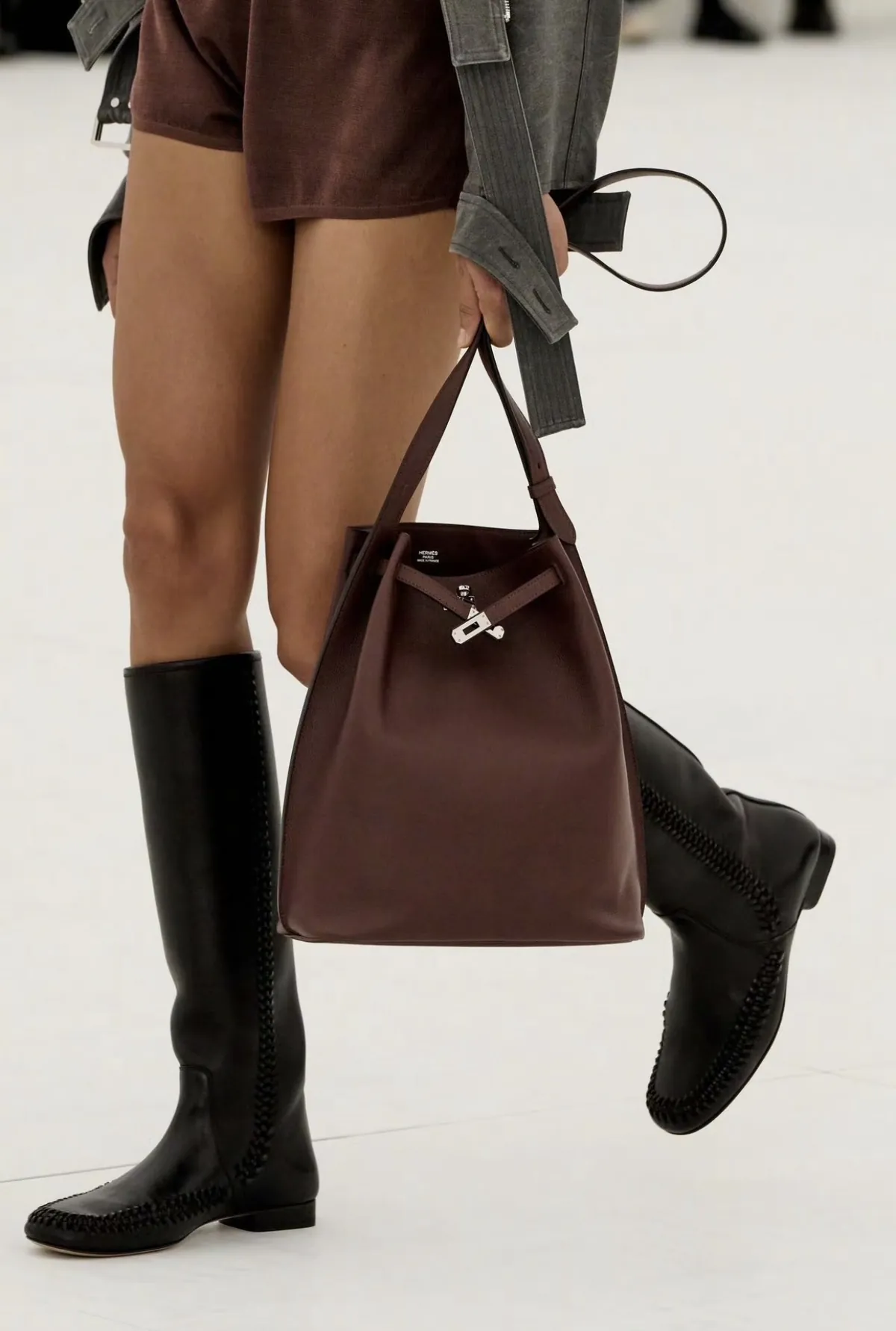
The Hermès Geta and Geta Slim come down to proportion rather than occasion. PurseBop's 11 July 2026 guide describes the Geta as an architectural bag with an elongated H closure that extends beyond the base, translating the reference to traditional Japanese wooden platform sandals into a compact, symmetrical messenger. The Geta Slim, it reports, refines that shape into a more streamlined, east-west silhouette. Those two design facts set the whole wardrobe problem: on the classic Geta the closure runs down a compact, balanced face, while on the Slim the same elongated H sits on a wider, lower body. The clothing notes below are my own styling reading of the reported design, not a claim about how either bag performs.
The featured image is an existing Hermès wardrobe reference, separate from the Geta looks discussed here.
The closure decides which version suits your coats
The elongated H is the focal point on both bags, but it reads differently depending on the face it sits on. On the compact, symmetrical Geta, the closure has a clear vertical run from flap to base, so it wants clothing with a clean vertical line above and below it. A straight-cut coat with a centre front that falls close to the body keeps that vertical reading intact. A double-breasted coat with a strong horizontal button row fights it: the eye meets a crosswise band just above a closure working the other way.
The Geta Slim spreads the same closure across a wider panel. That east-west body calls for a cleaner, quieter frame around the bag, because the wide face already carries the horizontal emphasis. On this version a plain shirt, a fine knit or a smooth single-breasted jacket is enough; a coat with a busy check or a striped suit competes with the east-west spread rather than supporting it. If you wear mostly double-breasted tailoring and structured, horizontal details, the classic Geta's vertical closure is the easier partner. If your wardrobe is plain coats, tunic lines and straight trousers, the Slim's wider body has more room to read clearly.
Shoulders, sleeves and the strap line
Both are messenger shapes worn across the body, so the strap crosses the chest and shoulder and the clothing beneath it matters. A coat with a dropped, soft shoulder lets the strap sit over a smooth surface. A sharply tailored shoulder with an epaulette, a storm flap or a heavy seam adds a lump under the strap on the shoulder you carry it on. Where I would choose differently is in a belted trench: the belt and the bag strap land in similar territory at the waist, so on a belted coat I would leave the belt loose and let the strap be the single functional line across the body.
Sleeve volume is the other shoulder decision. Full, gathered or balloon sleeves bunch where the strap crosses the upper arm. A set-in sleeve with a clean armhole and a straight or slightly tapered line keeps the shoulder area readable. This is a styling call, not a measured strap drop; the source gives no strap length, so how high or low either bag sits is something to check with your own clothing rather than assume.
Trouser lines that match the bag's width
The classic Geta is compact and symmetrical, so it pairs naturally with trousers that keep a similar balance: a straight leg, a gentle taper or a slim cropped cut. A very wide, fluid trouser adds width at the same time as the bag adds width at the torso, and the two compete for the same horizontal space. That does not rule wide trousers out, but it argues for a plainer top half so the outfit has one broad element rather than three.
The Geta Slim's east-west body has more width to carry, so it tolerates a wider trouser better than the compact Geta does. A wide-leg trouser with a clean pleat and a simple flat shoe or a low boot gives the Slim a considered frame. If you want a reference for balancing a wide trouser against a shoulder bag, the notes on a black shoulder bag with wide-leg trousers cover the hem and proportion questions without assuming this bag's measurements.
Keeping the H unobstructed when worn crossbody
The strap position is the practical styling lever. Keep the closure facing forward and clear of any layer that folds across the chest: a scarf knotted at the sternum, a cross-body cardigan or a wrapped shawl will sit on top of the H and hide the feature the bag exists for. A crew neck, a boat neck or a simple collared shirt leaves the area above the bag plain, so the closure stays the one graphic element.
Jewellery follows the same logic. A pendant that lands at the same height as the elongated H introduces a second vertical metal focus, so I would keep the neckline bare or choose earrings instead. Hardware tone matters too; if the Geta's closure is the only metal on the body, the outfit reads cleaner than when a necklace, bracelet and belt buckle all echo it. For an evening version of either bag, a plain dark dress or a simple knit and trouser in one tone gives the architectural shape room. The choice between the two comes down to the frame you want: the vertical, compact Geta for sharper tailoring, the wider Geta Slim for plain, horizontal-friendly layers and broader trousers.