The style notebook
Louis Vuitton Fall-Winter 2026 Blazers: Leather and Denim Jacket Layering Outfit Ideas
Louis Vuitton Fall/Winter 2026 blazer layering: how to slip a leather or thin denim jacket between blazer and shirt and keep the suit's line.
For Louis Vuitton Fall/Winter 2026, the useful answer to layering a leather or thin denim jacket between blazer and shirt is a size ladder, not a styling trick: each layer must be smaller than the one outside it, and the innermost layer must be the thinnest. Vogue Korea's 안건호 (published 21 January 2026) reports that Pharrell Williams broke the basic suit equation of “blazer, shirt and trousers” by inserting a leather jacket and a thin denim jacket between blazer and shirt, and that the loose silhouette of the blazers kept the fit from looking awkward. The report also describes a three-button jacket with a relaxed silhouette and functional fabric, and says Williams paired a mock neck under the shirt on most suit looks. Those are the reported runway observations; the fit and proportion rules below are my own styling reading of them.
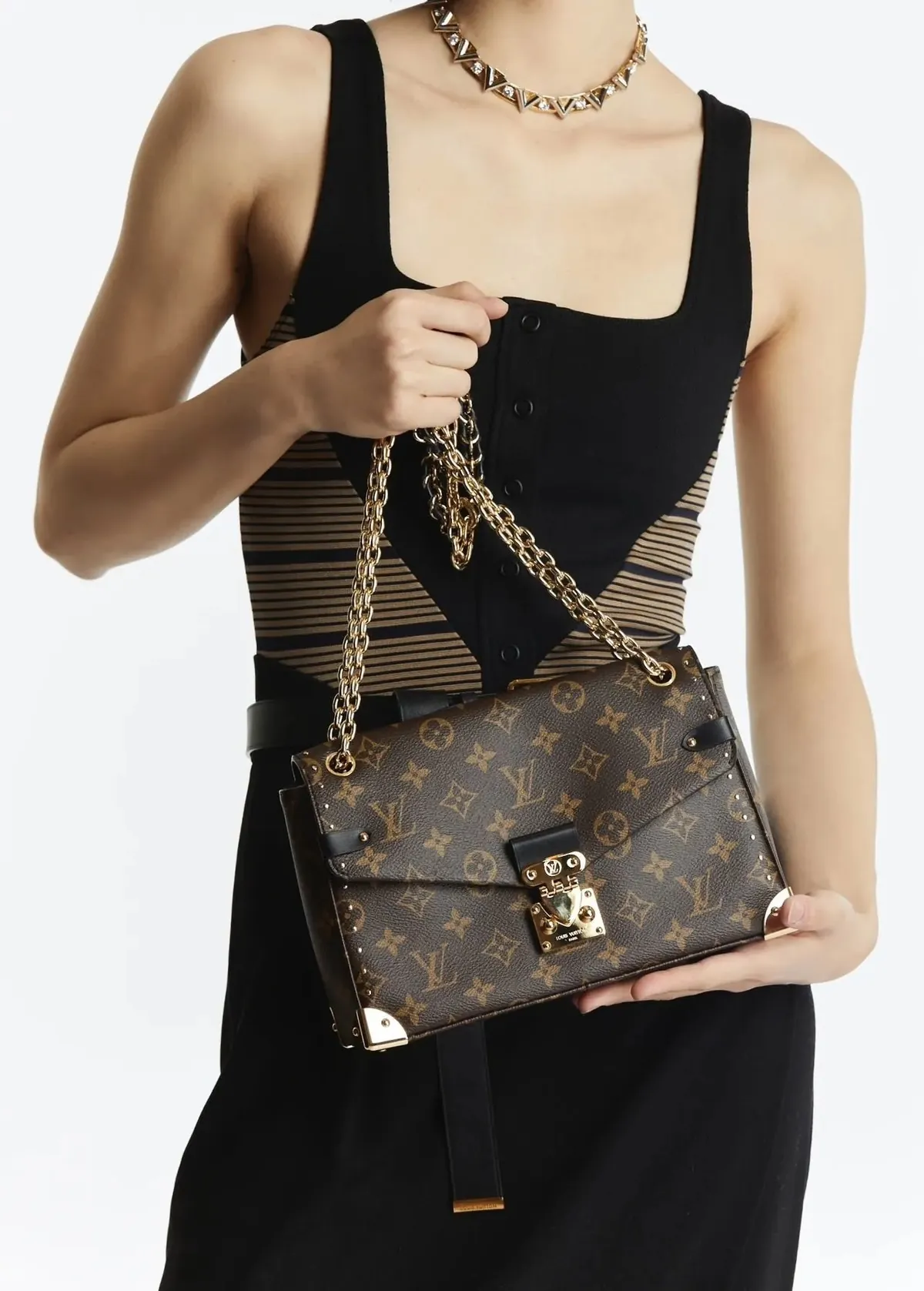
The featured image is an existing Louis Vuitton wardrobe reference, separate from the Fall/Winter 2026 looks discussed here.
The blazer has to be the roomiest piece you own
The runway device works because the outer blazer was roomy to begin with. If you try it with a close-fitting two-button jacket, the extra mid-layer pushes at the armhole and the front edges pull apart, and the suit line collapses into a stuffed silhouette. Start by choosing the loosest blazer in your wardrobe — ideally one cut with a dropped shoulder and a straight body — and treat a fitted blazer as the wrong tool for this look entirely.
The three-button, relaxed-cut jacket that Vogue Korea singles out is the closest match in spirit: a boxier body and a functional fabric give the mid-layer somewhere to go. A double-breasted blazer with a defined waist, like the long-lapelled style that opened the show, is harder to layer because its closure already builds bulk at the chest. Interesting as that opening look is, it works better with a mock neck than with a jacket underneath.
Leather or denim: two different problems
A leather jacket brings thickness, structure and shine at the collar and hem. A thin denim jacket brings a second set of seams and a visible hem line. Both were reported on the runway, but they behave differently against a shirt.
- Leather under a blazer: choose the lightest leather you own, ideally unlined or with a soft construction, and a collar that sits flat rather than standing up. A perforated leather jacket, like the one Vogue Korea notes in the collection, would reduce weight visually; an ordinary smooth leather needs to be genuinely thin. Keep the jacket short enough that its hem disappears under the blazer's closure rather than peeking below it.
- Thin denim under a blazer: the thinner the denim, the better the result. A stiff, heavy denim jacket adds a rigid box at the waist and fights the blazer's drape. Wash and colour matter less than weight; a faded blue under a dark blazer is the easier pairing, since the denim reads as a deliberate casual note rather than a second formal layer.
The shirt beneath either jacket should be the plainest thing in the stack: a crisp cotton shirt with a normal collar, not an overshirt. Where a shirt has a soft, unstructured collar, the mid-layer's collar will sit over it more cleanly.
Where the mock neck fits
Vogue Korea reports a mock neck worn under the shirt on most suit looks, in a subtle colour. That is a third layer and should replace the mid-jacket rather than join it — mock neck, shirt, mid-jacket and blazer together is four layers at the neck and chest, and almost no blazer can absorb that without distorting. The practical split:
- Mock neck route: mock neck, open shirt, blazer. Cleaner at the collar, closer to the reported runway pairing, and the easiest to wear to a formal setting.
- Mid-jacket route: plain shirt, thin leather or denim jacket, roomy blazer. More casual, and the shirt should be buttoned high enough that the mid-layer's opening frames a clean line.
Proportion and the trouser
Since the blazer is doing the accommodating, keep the trousers straight and uncuffed — a wide or pleated trouser adds a third volume below the waist and makes the top half look top-heavy. A plain dark wool or a matte cotton twill keeps the eye on the layered chest. The suit's line survives when the vertical run from collar to hem stays unbroken; a belt in a strong colour, a patterned shirt, or a scarf at the neck all cut across it.
A final practical test is a mirror check in the layers you intend to wear together: raise both arms and see whether the blazer still closes. That is a fitting check, not a claim about how the runway pieces perform. For other relaxed tailoring around the same season, see the Louis Vuitton relaxed tailoring guide.