The style notebook
Louis Vuitton Le Damier de Louis Vuitton: Chain Bracelet Outfit Ideas
Louis Vuitton Le Damier de Louis Vuitton bracelets: when the chain bracelet suits a bare wrist and when the double-row bracelet frames a sleeve edge.

For a bare wrist, the Louis Vuitton Le Damier de Louis Vuitton chain bracelet is the more natural of the two listed styles; for a wrist already framed by a cuff or a long sleeve, the double-row bracelet gives the fuller line that space wants. That is the working answer, but the choice is really about how much of the wrist you leave open. The official collection page presents Le Damier de Louis Vuitton as a fine jewelry collection built on the house's Damier motif and lists both a chain bracelet and a double-row bracelet, alongside a long pendant, large hoops and earcuffs. Those listings are identity evidence only: the page does not give widths, lengths, clasp details or proportions, so everything below about how much visual weight each design carries and how to wear them is my own styling reading rather than a product specification.
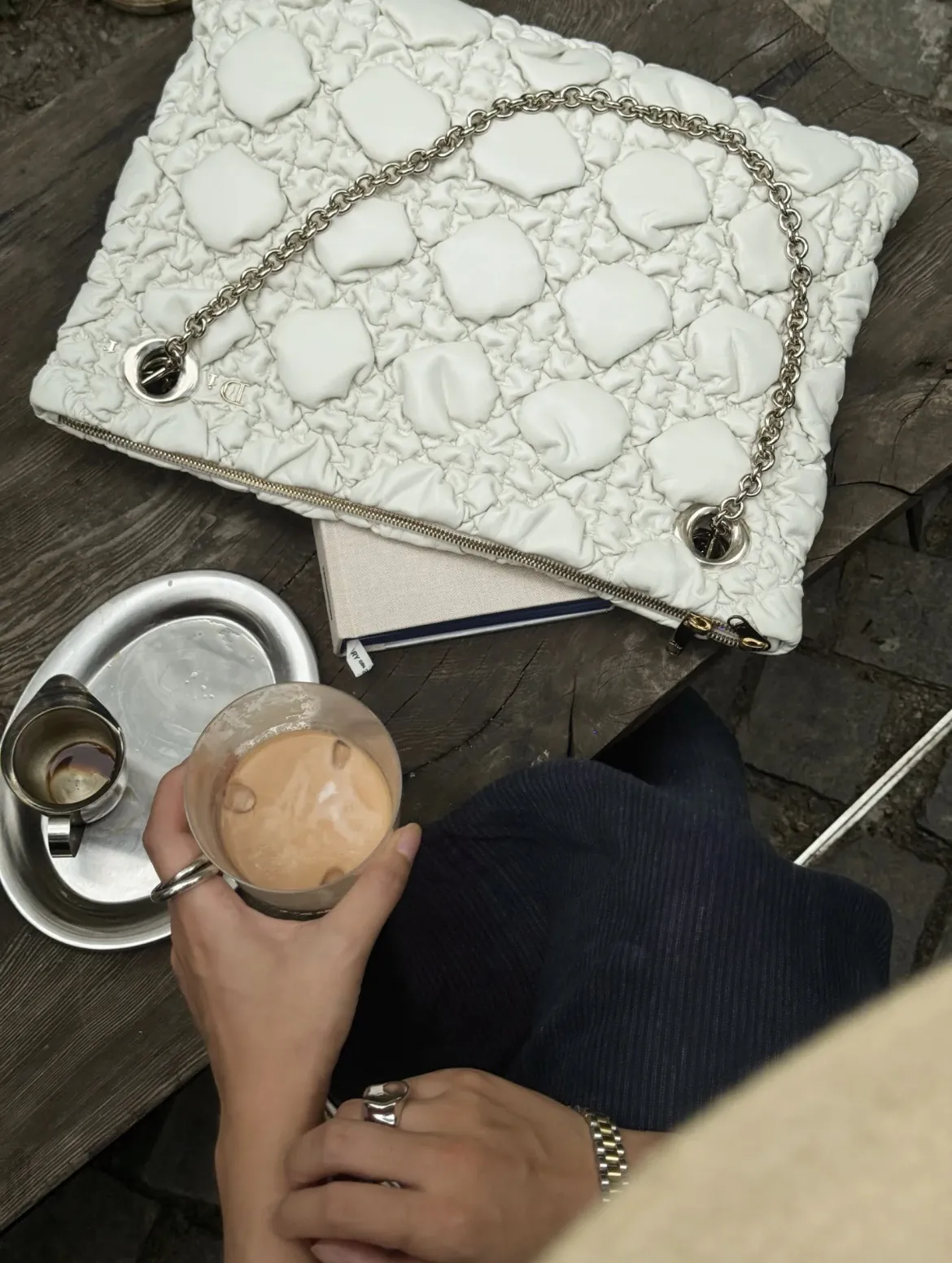
The featured image is an existing Louis Vuitton wardrobe reference, separate from the Le Damier de Louis Vuitton looks discussed here.
Why a bare wrist and a sleeve edge ask for different bracelets
Skin gives a bracelet a quiet ground. A single chain of small repeating links draws a line rather than a band, and that thin line reads clearly when nothing else crosses the wrist. It also lets the bracelet move as you do, which is the point of a chain worn against bare skin: the eye follows it, and it stays a detail rather than becoming an event.
A double row changes that arithmetic. Two lines across the wrist fill more of the space, so the bracelet stops being a thin thread and starts behaving like a small cuff. On bare skin in summer, that can look deliberate and rich; under a sleeve edge it does something more useful. When a cuff stops above the wrist bone or a knit sleeve is pushed back, there is a short band of skin between fabric and hand that looks unfinished with a hairline bracelet and composed with a two-row one. The fabric supplies the volume above, and the double row answers it at the wrist.
Sleeve decisions that belong to the double row
Count the interruptions. A bracelet on a bare wrist is one line on open skin. A bracelet under a pushed-back sleeve is a line between two edges — the cuff above and the hand below — and a single chain can get lost in that corridor. The double-row bracelet gives that gap a stronger horizontal, which is why I would reach for it with a blazer sleeve pushed to the forearm, a knit sleeve rolled once, or a shirt cuff left unbuttoned and turned back. The fuller line also holds its own next to a watch or a wide cuff, though two heavy bands side by side can fight; if you already wear a broad watch, the single chain keeps the stack from turning into a wall.
Conversely, a closed, buttoned cuff that ends at the wrist leaves almost no room for a double row to be seen, and it can catch on the sleeve. On those days the chain bracelet is the easier piece to wear, or you skip the wrist entirely and let the collection's long pendant or earcuffs carry the Damier note near the face.
Keeping the rest of Le Damier quiet
The collection includes a long pendant, large hoops and earcuffs, and it is tempting to wear the set together. Resist turning the bracelet into one more item in a Damier stack. My rule: one Damier piece at the wrist, and at most one other piece elsewhere — the earcuffs for bare-wrist days when a sleeveless or short-sleeve top leaves the ears exposed, or the long pendant when a plain crew neck needs a vertical line. Wearing the hoops, the pendant and the bracelet at once makes the repeating motif read as a pattern rather than an accent.
Clothing should give the metal a quiet field. A plain white shirt, a fine-gauge knit in a solid neutral, a simple tank or a matte wool sleeve all let the Damier grid register. Busy checks, dense prints or a second chain bracelet on the opposite wrist compete with the geometry and flatten it. If you want a second wrist piece, choose something plain and matte — a leather strap or a slim bangle — rather than another patterned link.
Deciding between the two in the morning
- Bare wrist, short sleeves, summer: chain bracelet. It keeps the wrist light and lets the motif read as fine jewelry.
- Bare wrist but a full evening look with a bare arm: either works; the double row gives more presence if the dress is plain, the chain if the dress is already detailed.
- Pushed-back blazer or rolled knit sleeve: double row, to fill the skin between cuff and hand.
- Watch or wide cuff already on that wrist: chain bracelet, or move the piece to the other arm.
For a broader look at balancing a plain shoulder bag with wide-leg trousers, see this guide to a black shoulder bag with wide-leg trousers; the same logic of one clear accent against a plain base applies at the wrist.
Neither bracelet is the wrong purchase, but they suit different wardrobes. If your sleeves are usually long and pushed back, or you like a wrist that looks finished under tailoring, the double-row bracelet earns its place. If you wear short sleeves, bare arms and a watch-free wrist most of the year, the chain bracelet is the piece you will reach for without thinking. Try the one you are leaning toward with the specific sleeve and watch you wear most often before committing.