The style notebook
Louis Vuitton LV Biker Bag: Non-Monogram Outfit and Charm Ideas
Louis Vuitton LV Biker styling: plain clothing bases that let a single charm or keychain cluster lead, plus how hand, shoulder and crossbody carry change the frame.
For the Louis Vuitton LV Biker, meant here as the all-leather, Monogram-free bag with silver-tone hardware, give the charms a calm, unbroken clothing base and let the bag's own hardware stay singular. The strongest setup is a plain black or near-black garment surface with no competing metal at the hip: one charm becomes a deliberate signature, a small cluster reads as considered rather than decorated. The weakness of a busy print or a second hardware-heavy accessory is that it competes with the silver chain and the charm at the same visual weight, and the personalization stops looking personal.
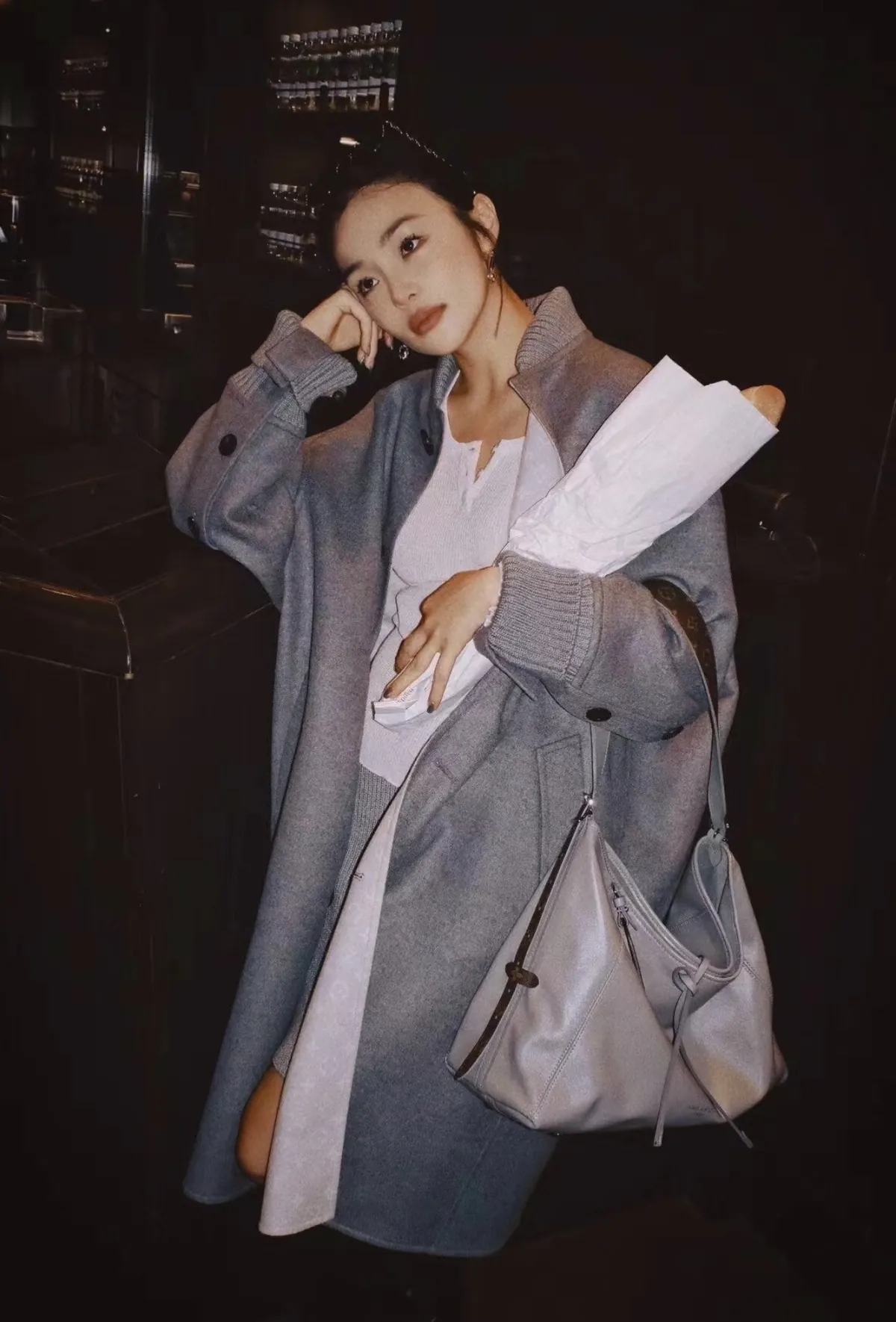
The featured image is an existing Louis Vuitton wardrobe reference, separate from the LV Biker looks discussed here.
What the bag itself actually establishes
PurseBop's Anna McWhirter (published 26 February 2025) describes the LV Biker as abandoning Monogram canvas entirely, with its only visible branding a subtle LV Circle emblem, and notes that silver-tone hardware throughout is a rare departure from the house's usual gold-tone accents for a moto-inspired look. The same report says the minimalist, non-Monogram design makes it a good canvas for bag charms, keychains and jewellery. Those are the reported facts. The matching judgements here are my styling reading of that design, not claims about performance or how the bag wears.
That leaves the bag visually quiet at the leather level but active at the hardware level. The charm is the only thing that introduces a second colour or motif, so the clothing should not introduce a third. Plainness is not a rule imposed on the bag; it is what keeps the added charm legible as the thing you chose.
One charm versus a small cluster
A single charm suits a minimal, near-monochrome outfit where you want the charm to act almost like a piece of jewellery: one shape, one colour, read clearly against plain black leather or a plain coat. A small cluster works better when the clothing is plainer still — a plain knit, plain trousers, no other accents — because three charms give the eye more to resolve and need more empty space around them. As a working rule, the more charms you add, the more muted the rest of the outfit should be; two or three small charms against a striped top or a printed scarf is where it starts to look cluttered.
Jewellery is the third option and the most restrained: a single metal bracelet or a plain silver ring can echo the silver-tone hardware without adding a second hanging element. If you already wear a cluster of charms, keep the jewellery to one quiet piece rather than doubling the metal.
Choosing the clothing base
- Black on black, one charm: the cleanest route. The charm supplies the only colour or motif, and the silver hardware reads as a line rather than an event.
- Neutral contrast, small cluster: cream, oat or grey clothing lets the black leather and silver stand apart from the garment, so a few charms read as a deliberate group rather than blending into a dark outfit.
- Plain leather jacket: the biker reference is already in the bag; a plain leather layer repeats it without adding print. Keep the jacket's own hardware minimal so it doesn't compete with the charm.
What to avoid is a third focal point near the bag: a bold belt buckle, a large printed bag charm substitute, or heavy statement jewellery at the same height. For the leather-and-trouser side of this decision, the black shoulder bag with wide-leg trousers guide covers a plain-base approach that suits the bag's quiet leather.
Hand, shoulder or crossbody: which carry clears the charm
McWhirter reports that the Nano LV Biker has two top handles and a removable, adjustable shoulder strap, and can be carried by hand, on the shoulder or crossbody; those are the reported design facts. My reading of the charm question is a matter of which surface the charm sits against.
Carried by hand, the bag hangs at hand height, slightly away from the body, so the charm is framed against the ground or the lower leg rather than the torso. That is the clearest presentation for a single charm and the choice I'd make when the charm is the point. On the shoulder, the bag sits closer to the ribs and the charm overlaps the sleeve or jacket, so a small cluster can tangle visually with a textured or patterned sleeve; a plain sleeve solves it. Crossbody places the bag across the front of the body, where the charm competes with a belt, a scarf end or the front of a coat, so it is the carry I'd pair with the plainest clothing.
A practical check before committing an outfit: try the bag in each carry with the charms attached and look at where they fall against the clothing. That is a conditional check, not a claim about how the bag will perform for you.
A short decision sequence
Decide the charm count first, then the clothing, then the carry. One charm can take slightly more clothing pattern than a cluster can. A cluster wants plain clothing and either hand or shoulder carry, whichever keeps the charms off the most textured part of the outfit. Jewellery comes last and should echo the silver-tone hardware rather than compete with the charms. Plain clothing is not the boring choice here; it is the frame that makes the personalization legible.