The style notebook
Louis Vuitton x Richard Prince Papillon Frame Bag: Belted Dress and Plastic Coat Outfit Ideas
Belt or no belt with the Louis Vuitton Papillon Frame bag? How a belt, a colourful dress and a see-through coat place the frame bag differently.
The belt is the stronger starting point with the Louis Vuitton Papillon Frame bag when the dress is the vivid part of the outfit. Cinching gives the bag a clear, still waistline to sit beside, so its stiff frame reads as the one deliberate hard shape rather than as another loose element in a soft, busy silhouette. The unbelted version is not wrong, but it changes what the eye does: it lets a long, baggy see-through coat and an uncinched colourful dress blur into one volume, and then the Papillon Frame has to carry the whole structure by itself.
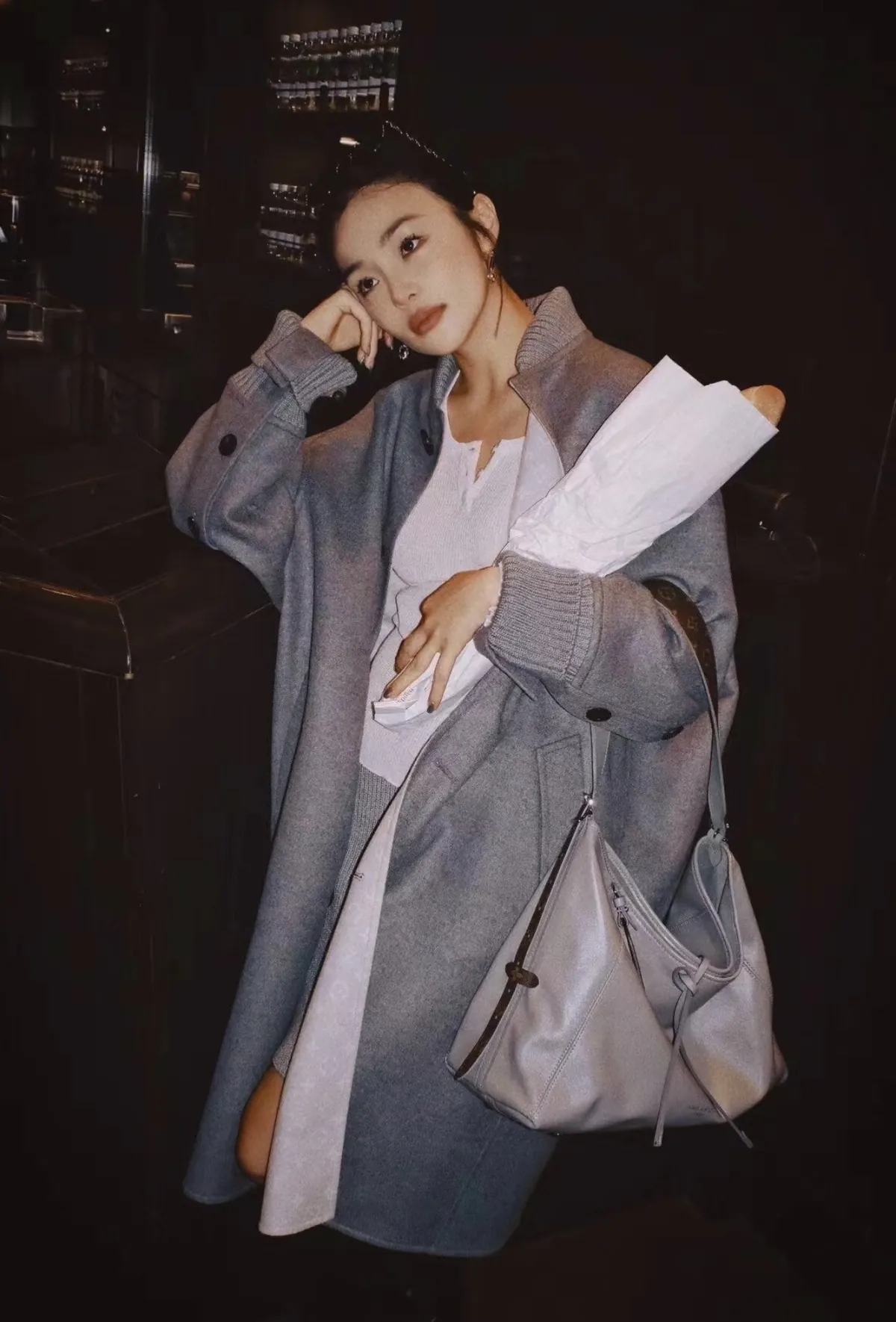
The featured image is an existing Louis Vuitton wardrobe reference, separate from the Papillon Frame bag looks discussed here.
Harper's Bazaar, in Sophie Wang's report, describes the Spring/Summer 2008 Louis Vuitton runway as layering baggy plastic coats over colorful dresses and cinching them with leather belts. The season's Papillon Frame bag, made with Richard Prince, was part of that world. The belt is not merely an accessory in that formula; it is the pinch that stops the loose coat and colourful dress reading as one shapeless block. My suggestions below interpret that reported construction for ordinary dressing — they are not a reconstruction of the runway nurse styling, and the lace masks and white tights are not required.
Belted: give the frame bag a waistline to answer
Fasten a plain leather belt at the natural waist over the dress, then let the see-through coat fall open around it. A visible waist gives the Papillon Frame bag something to balance: the belt is a horizontal line, the bag is a compact horizontal object, and both sit on the body rather than floating in fabric. The effect is close to the reported formula, minus the costume.
Where I would choose this route: a dress whose colour is strong but whose cut is relaxed, and a sheer or plastic-finish coat with enough volume that the silhouette needs one firm interruption. Keep the belt narrow and hardware-light so it doesn't quarrel with the bag's frame. If one of your tailored pieces already does this kind of waist-setting, the same logic applies; the trench-detail dressing ideas are a useful reference for belted layers over a simpler base.
Unbelted: let the frame bag be the only constructed shape
Leave the coat and dress loose and the Papillon Frame becomes the outfit's single defined object. This works when the dress is soft, dark and not especially bright — the belt would add a second decision to a look that is deliberately quiet. It fails, in my reading, when the dress is vivid and the coat is genuinely baggy: two strong shapes plus a rigid bag give the eye no resting point.
If you want the unbelted line, control everything else. A straight, simple dress, a coat that is see-through rather than heavy, and quiet shoes keep the frame bag as the crisp note. The Spring/Summer 2008 coat and dress reading is the deeper source if the layered outerwear is what interests you more than the belt.
The choice narrows to what the outfit is for
- Day, moving around, an outfit that should look finished: belt it. The waistline tidies the volume and gives the frame bag a fixed companion line.
- Evening, a softer dress, a sheer layer worn more like a finish than a coat: leave it unbelted and let the bag be the one hard shape.
- A truly bright dress under a truly baggy coat: belt it, or flatten the colour. Both loose at once is the version most likely to look muddled.
Before committing to the unbelted route, try the coat and dress together with the Papillon Frame on your own frame: a mid-thigh dress and a hip-length sheer layer read very differently from a longer coat, and the belt's necessity changes with that length. Treat that as a check on proportion, not an assumption about how the bag will behave. A dress with a defined waist seam already gives you the belt's work without an extra piece, so the decision is really about whether the outfit, as assembled, has one.