The style notebook
Louis Vuitton Spring-Summer 2027 Semi-Sheer Panel Midi Dresses: Outfit Ideas
For the Louis Vuitton Spring-Summer 2027 semi-sheer panel midi dress, an opaque base and a light shoe keep the panels intentional rather than accidental.
For the Louis Vuitton Spring-Summer 2027 semi-sheer panel midi dress, the cleanest outfit is built from the inside out: one opaque base layer in a tone close to the dress, and a shoe with a light, low line. That combination keeps the panel switches legible as design rather than letting them read as a layering mistake. The dress opened the show in a group of light white looks, which is the right cue for how much else to add — very little.
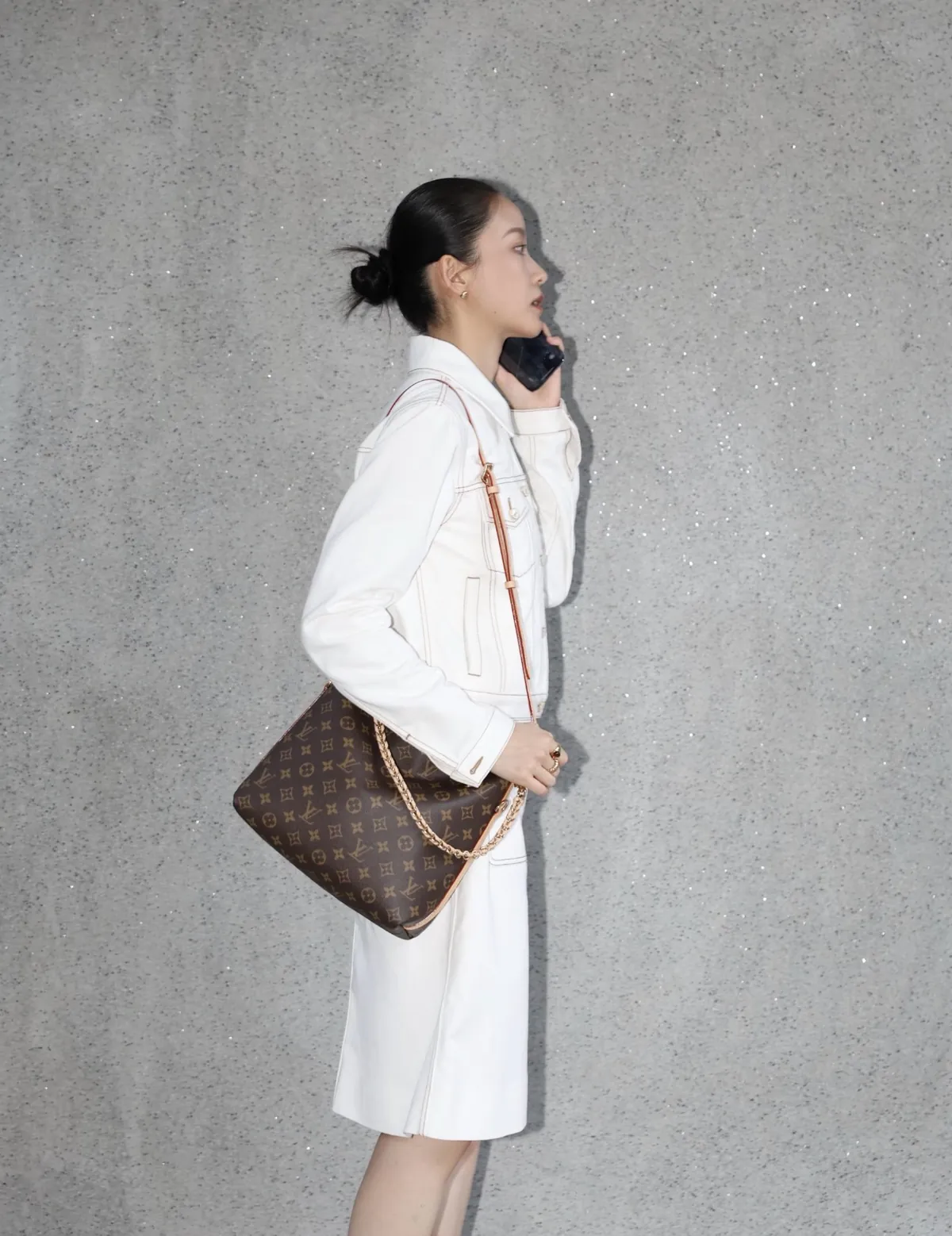
The featured image is an existing Louis Vuitton wardrobe reference, separate from the Spring-Summer 2027 looks discussed here.
ELLE Japan's report, published 14 October 2026, describes the opening group as three light white “amuse” looks, and names among them a semi-sheer midi dress with panel switches (パネル切り替えのセミシアーなミディ丈ドレス). The same report describes a flowing V-neck style with safety-pin decoration and a T-shirt-and-silk-skirt look with a knit cardigan. It also notes that the venue's imagery pointed to the future while the clothes on the runway belonged to the present. My reading of the panel dress treats that present-tense wardrobe as the styling brief. The construction of the panels is not detailed in the report, so the under-layer advice below works from the described effect — a semi-sheer midi with switched panels — not from assumed fabric or seam placement.
One opaque base, not two
The most useful under-layer is a single slip or column dress in a tone that sits within a shade or two of the dress itself. A white-on-white or ivory-on-ivory base lets the panel changes read as faint tonal shifts, which is what keeps them deliberate. A high-contrast base — black under white, or a bright colour — turns the panels into a graphic grid and makes the outfit about the contrast rather than the dress. If you want that effect, treat it as a separate look and accept that the dress becomes a veil over a colour story.
Adding anything beyond that single layer is where the panels start to look accidental. A slip with lace edging, a camisole with a visible strap or a half-slip whose hem stops mid-thigh all introduce edges that compete with the panel switches. Choose a base with a clean, uninterrupted line from shoulder or bust to hem, and keep its length at or just below the dress hem so nothing shows through a sheer panel at the wrong place. Plain matte jersey or a smooth slip fabric reads quieter under a semi-sheer layer than satin, though this is a styling preference rather than a stated rule from the report.
The shoe should stay light
A midi dress with sheer sections is visually light at the lower half, so a heavy shoe — chunky platform, thick lug sole, ankle boot — pulls the weight down and makes the hem look like it is floating above a different outfit. A flat or low-heeled style in white, ivory, bone or a pale metallic stays continuous with the opening look's white palette. A pointed or almond flat, a simple ballet style or a fine-strap sandal all suit the airiness the report describes in the opening group.
For an evening event, a slim pump in the same tonal family gives a little more formality without adding visual bulk. Avoid a shoe that ends at the ankle in a dark colour, because the break between a pale sheer hem and a dark shoe draws the eye to the transition rather than the dress. The report does not describe the runway footwear for this look, so these are my pairing judgements, not a record of what walked with it.
How much else to add
Very little. The opening group's own logic — a T-shirt with a silk skirt and cardigan, a V-neck with safety pins, a panel midi — is a set of single-focus outfits. The panel dress already carries the interest at the surface, so a jacket, a chunky knit or a printed scarf layering over it risks confusing the sheer passages with a second texture.
- A fine-gauge cardigan worn open, in white or a pale neutral, adds warmth without hiding the panels.
- A single small bag, hand-carried or on a short strap, keeps the top half clear.
- Fine jewellery — a thin chain or small earring — suits the lightness; heavy hardware fights it.
- Skip belts at the waist unless the dress's own construction invites one; the report does not describe a defined waist for this piece.
For the broader wardrobe context around this collection, the argyle-detail midi dresses are a separate piece with their own surface interest, and the collection's jackets and dresses show how the show's tailoring sits alongside its lighter looks. Neither changes the under-layer logic here.
What to leave out
Two things tend to make a semi-sheer panel dress look unintentional. The first is a visible under-layer edge — a strap, a lace trim, a hem — appearing at a different point from the panel switch. The second is a second sheer piece over the top, which muddies the clear reading of the dress's own transparency. Keep the base opaque and plain, keep everything over the dress minimal, and let the panel switches be the only interruption in the line. The report's note that the wardrobe belongs to the present supports this restraint: the clothes are designed to be worn now, in ordinary daylight, not staged as costume. Before committing, try the dress over the intended base and shoe together and check where the panel edges and hems fall against one another; that is a conditional check, not a claim about how the dress performs.