The style notebook
Louis Vuitton Velvet Dresses: Crystal Embroidery and Carpet Outfit Ideas
Louis Vuitton velvet dress with crystal embroidery: frame the deep neckline bare, choose one white-gold diamond earring note and plain black pumps for carpet evenings.
For the Louis Vuitton velvet dress with crystal embroidery across the front, treat the deep neckline as the dress's second design feature rather than a problem to solve. Leave the throat bare, put a single white-gold diamond note at the ear, and keep the shoes plain black. Vogue Korea's 오기쁨 (published 17 November 2026) reported that Jung Ho-yeon wore a black Louis Vuitton velvet dress to the 17th Governors Awards, one of five custom looks the house made for the evening. The report describes elegantly draped shoulder straps, a distinctive bustier design and a deep neckline forming the silhouette, with crystal embroidery across the front of the dress adding a glitter like stars in a night sky. Black pumps and white-gold diamond earrings completed the look. Those are the reported pieces; the framing, jewellery-placement and shoe judgements below are my own styling reading of that combination.
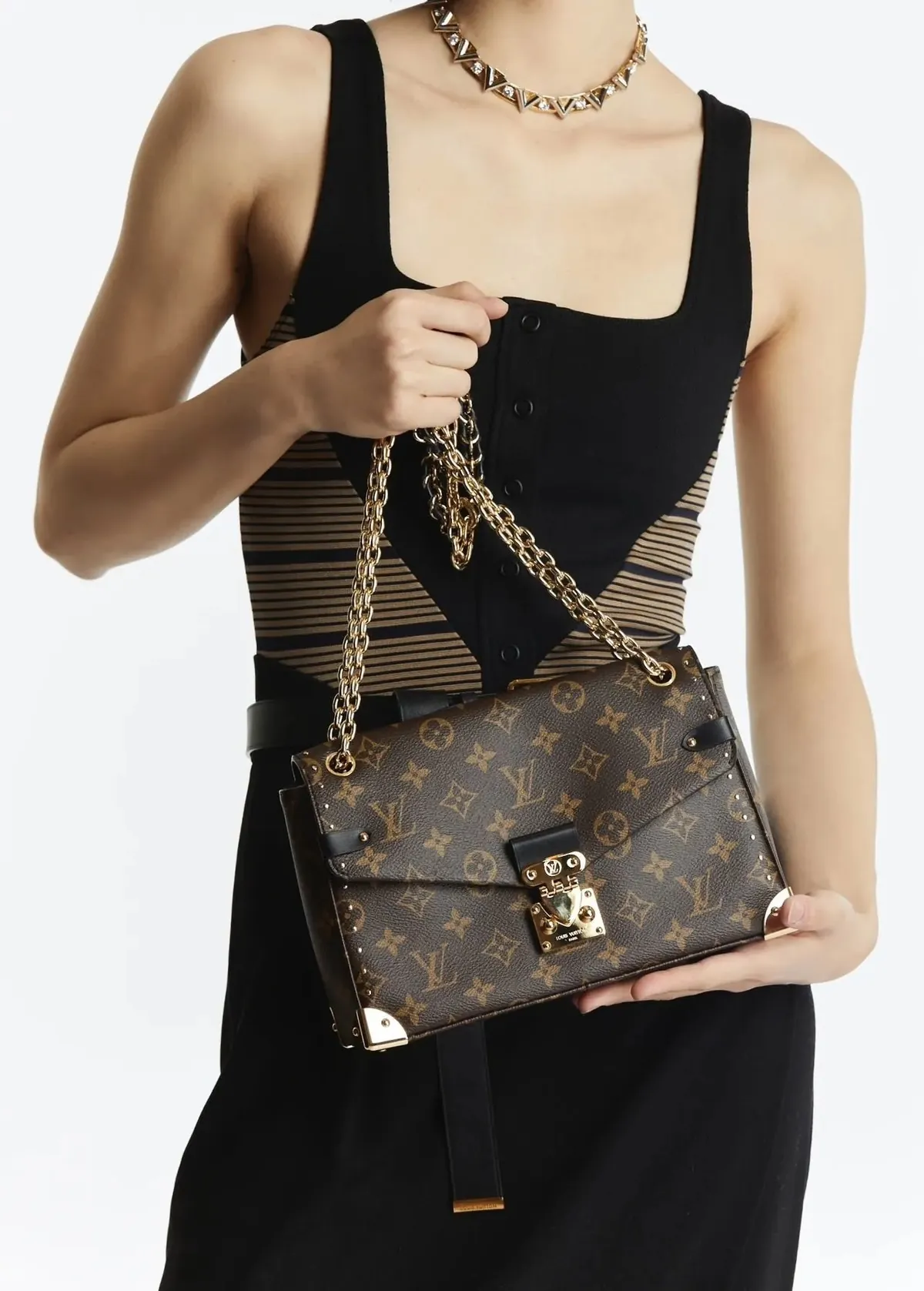
The featured image is an existing Louis Vuitton wardrobe reference, separate from the velvet dress looks discussed here.
The dress divides the eye's work into two zones. Draped straps and a bustier construction give the top edge a defined shape, and the plunge is the opening inside that shape. Below it, the embroidered front is where the light lives. An accessory placed in the wrong zone competes rather than supports: a pendant cuts across the plunge, and a jewelled or metallic shoe plants a second glitter at ankle height, pulling the gaze down and away from the crystals.
Why the plunge is better bare
A deep neckline over a bustier-built bodice is a designed opening, not a gap to be covered. The bare column between collarbone and bustier top separates the face from the embroidered panel and lets the crystals act as the dress's own light source. A necklace lands directly across that column, so the eye reads chain meeting skin instead of the line the draped straps are drawing. If you feel the neckline needs company, the answer is earrings, not a pendant: they sit at face height, beside the cut, without entering the throat or the bodice.
White-gold diamond pieces are the reported choice, and the logic travels. A fine drop, a small hoop or a slim line each holds the same restraint. A yellow-gold pair can work just as well kept spare; the metal matters less than staying close to the ear rather than reaching down into the neckline. A sculptural stud or a short drop that stops well above the collarbone keeps the vertical opening clear.
The silhouette is the frame — let hair and shoulders agree
Draped straps narrow toward the shoulder, and a bustier edge sits below them; those two lines are the dress's architecture, and the neckline opens between them. Hair that sits off the shoulder, swept back or worn long but behind, keeps those lines legible. The reported look's long hair, with ends tinted blue to answer the event's blue carpet, is a useful point about placement: interest can sit at the head without crowding the neckline. You do not need the tint to borrow the idea — a clean, controlled head shape is the frame.
What the dress does not need is a competing horizontal at the neck: a choker, a stiff high collar or a scarf wrapped at the throat all interrupt the plunge. Choose hair and earrings to finish the top, and leave the throat bare.
Plain black pumps, and where texture can shift
Velvet absorbs light rather than throwing it back, which is what lets dense crystal embroidery sit on it without the whole dress becoming a mirror. A plain black pump carries that quiet surface from hem to floor and leaves the embroidered front as the single reflective passage. Crystal ankle straps, metallic sandals or a jewelled buckle each add a rival sparkle at the lowest point of the outfit, exactly where the eye should already be travelling up toward the bodice.
Plain black still leaves shape to you. A pointed toe extends the line under a long skirt; an almond toe softens it; heel height and vamp depth change the proportion without adding shine. A satin or lightly polished finish beside matte velvet is a change of texture, not a second glitter — drop the ornament, not the surface. Before settling the hem, try the intended shoes on with the dress, since the fall of a long skirt over a particular toe is easier to judge on the body than on a hanger; that is a check to run, not a prediction of the result.
Where the restraint goes, and where it can relax
The instinct on a carpet evening is to add one more thing, and each addition — a bracelet stack, an embellished clutch, a statement ring — creates another bright point at another height, fragmenting the single column the dress is built around. If you want more presence, spend it on a slightly stronger single pair of earrings and keep everything else quiet. The clutch is the safest place for calm: carried plain and low, it barely enters the picture.
Coverage is the one place to loosen the rule. If the room is cool, a plain black opera coat or a slim stole closed at the front keeps the bodice visible. A heavily textured or furred wrap laid across the bustier hides the panel the dress is organised around, and that is the move to avoid — choose a coat you can wear open rather than a layer that sits on the embroidery.
- Neckline: leave the throat bare; the draped straps, bustier edge and plunge already frame the face.
- Earrings: one white-gold diamond note, small and close to the ear, instead of a necklace.
- Shoes: plain black pumps; choose toe and heel freely, skip metallic and jewelled finishes.
- Hair: off the shoulder so the strap-to-bustier line stays visible.
- Outer layer: plain black, worn open or closed at the front, never draped across the embroidered bodice.
For a dress where a change of shoe texture does more of the work, see a black dress with suede pumps; for occasions that reward a softer, decorative finish, feather-dress evening styling offers a useful contrast.