The style notebook
Miu Miu Fall 2026 Lingerie Shift Dresses: Chiffon Panels and Scalloped Underlayers
How to wear Miu Miu Fall 2026 1920s-ish lingerie shift dresses with sparkle-embroidered chiffon panels and scalloped underlayers at night, not as sleepwear.
Treat the Miu Miu Fall 2026 lingerie shift as a finished evening garment and let it carry the whole look. The way to stop a sheer, 1920s-ish shift with sparkle-embroidered chiffon panels reading as sleepwear is not to add more lingerie detail on top but to surround it with clothes that belong unmistakably outside the bedroom: a plain, opaque shoe, a small smooth bag with a firm shape, and an outer layer with clean edges and no sparkle of its own. Sarah Mower's Vogue review of the Fall 2026 ready-to-wear show, published 10 March 2026, reports that Prada broke from the collection's grounded day tailoring into "decorative signature 1920s-ish lingerie shift dresses with panels of sparkle-embroidered chiffon floating over scalloped-edge underlayers." Gemma Ward, Kristen McMenamy and Gillian Anderson closed the show in them. Those garment descriptions are the reported facts; the pairing judgements below are my own styling reading, not a description of a single runway outfit.
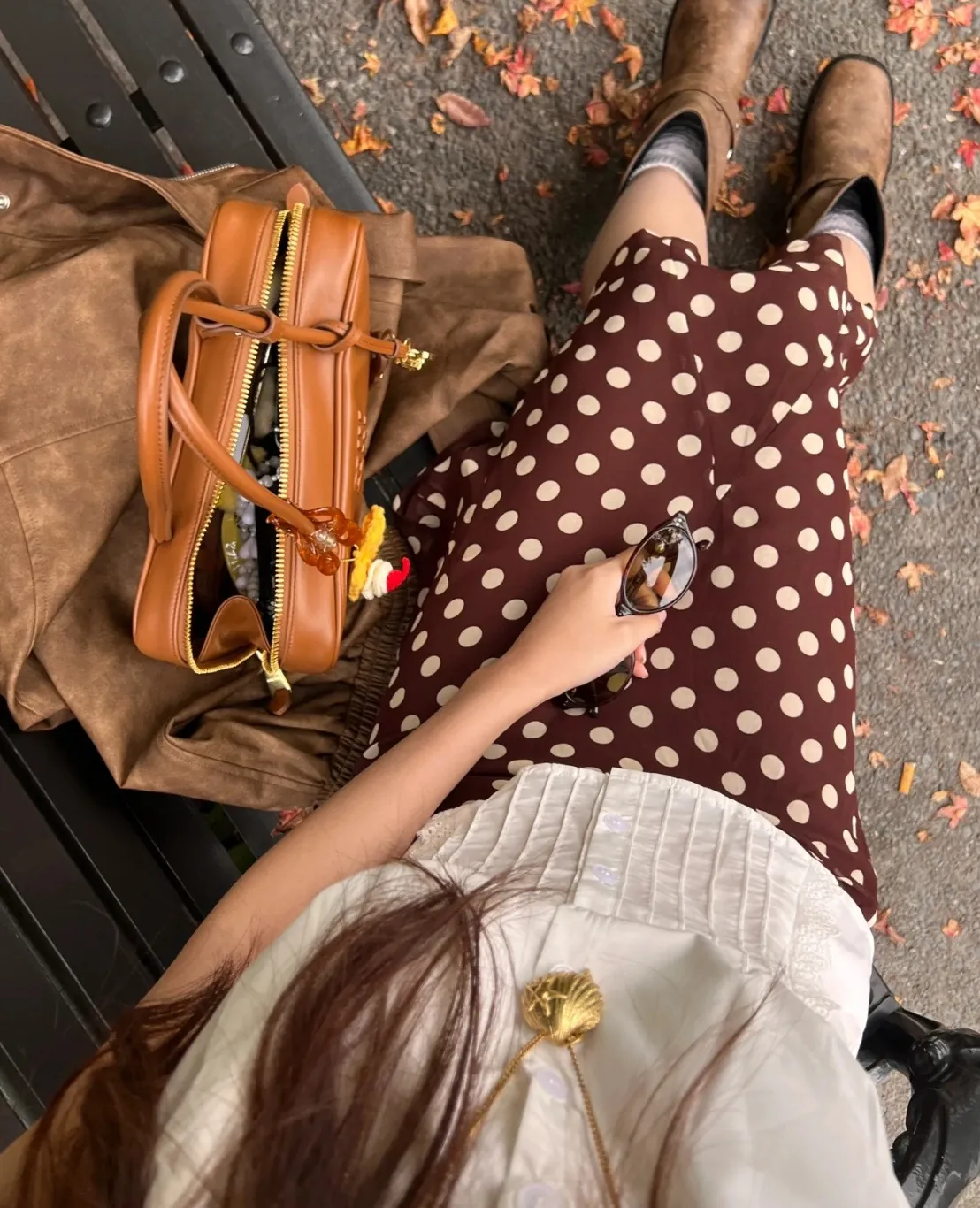
The featured image is an existing Miu Miu wardrobe reference, separate from the Fall 2026 looks discussed here.
Why the dress should stay the only soft thing in the outfit
The reported construction is layered twice over: an embroidered chiffon panel, and beneath it a separate scalloped-edge underlayer. That means the dress already supplies translucency, shimmer, a shaped edge and a soft floating movement. Every one of those qualities points toward boudoir. If you repeat any of them elsewhere — a sheer shoe, a lacy bag, a sparkly wrap, a scalloped cardigan — the total reads as a set of lingerie pieces rather than an outfit.
The fix is contrast, not modesty. Put the dress against something with a hard finish and a fixed shape. A patent or polished leather pump, a small structured clutch, a plain coat with a straight shoulder line: each gives the eye a crisp counterweight so the chiffon looks like a deliberate evening choice rather than the top layer of a bed-jacket situation. I would let the scalloped underlayer be the only scallop in the look. Its edge is what makes the dress interesting, and duplicating it flattens it.
Shoes and bag: what to pick, and where I would switch
A pointed or almond-toe pump in plain leather is the safest partner, because a closed, opaque, unembellished shoe anchors the hem and signals evening. A strappy sandal can work in summer, but the more skin it shows the closer the whole thing moves toward the sleepwear reading, since bare feet under a sheer dress is exactly the visual the underlayer is trying to answer. A satin sandal with a bow or crystal repeats the dress's decoration and weakens the argument.
For the bag, a small, firm shape in a smooth leather — a boxy clutch or a compact top-handle — keeps the register formal. Avoid woven, crocheted or slouchy bags, which pull the dress toward daytime dressing-down. On colour, I would echo the collection's classic palette rather than add a new one: black or burgundy with the dress's pale tones is the cleanest, because a dark, plain accessory reads as evening kit while still staying quiet. If you want the dress to feel less severe, one warm camel note in the shoe or bag is enough.
Outerwear that frames instead of competes
The outer layer is the biggest risk and the biggest opportunity. Anything with fur, sequins, lace or a scalloped trim will fight the panels. What you want is a coat with a simple line — a straight wool coat, a clean tailored jacket over the shoulders, or a plain opera coat — in a flat colour from the same black, gray, camel and burgundy group the review names for the rest of the collection. A short, neat jacket that stops at the hip lets the scalloped underlayer show below it; a longer coat keeps the sparkle contained to the centre of the body and reads more formal. Either can be right depending on the room.
What I would avoid is the collection's day tailoring as a cover-up. A gray pencil skirt and fitted shirt set has its own crisp logic; layering a sheer embroidered shift over it mixes two registers and makes neither clear. Keep the evening dress evening — the review itself frames these dresses as a break from the grounded day clothes, so borrowing them back as a layer muddies the point.
Trims, jewellery and the one thing to leave off
Because the chiffon panels already sparkle, jewellery is the place to subtract. Skip the embellished necklace, the layered chains and the statement earring; a bare neck or a single thin chain keeps the eye on the panel work. The scalloped underlayer does the decorative job at the hem and neckline, so nothing else needs to repeat it.
The one thing I would leave off entirely is any extra sheer or lace layer — a lace-trim camisole peeking out, a sheer cardigan, a lacy sleeve. The dress's underlayer is designed to be seen; adding another one underneath or over it turns a considered evening look into a layering exercise with no clear focal point. If the neckline feels too open, choose a plain opaque slip in a matching tone rather than a trimmed one, and let the dress's own edge remain the only visible finish. Worn this way, the shift reads as the decorative centrepiece the review describes, with the plain pieces around it doing the work of telling the room it is night.