The style notebook
Miu Miu Slouchy Workwear Boots and Structured Topcoat: Outfit Ideas
Balancing Miu Miu slouchy workwear boots with a structured topcoat and black sweatpants: where the coat hem and trouser break should land.
Set the coat hem to clear the top of the slouch instead of landing on it, and let the sweatpant break gather just above the boot. That is the simplest answer for balancing the Miu Miu workwear boots, the structured topcoat and the black sweatpants described by Harper's Bazaar: the coat owns the upper half, the boot owns the ankle, and the trouser break is the quiet third line that keeps them apart.
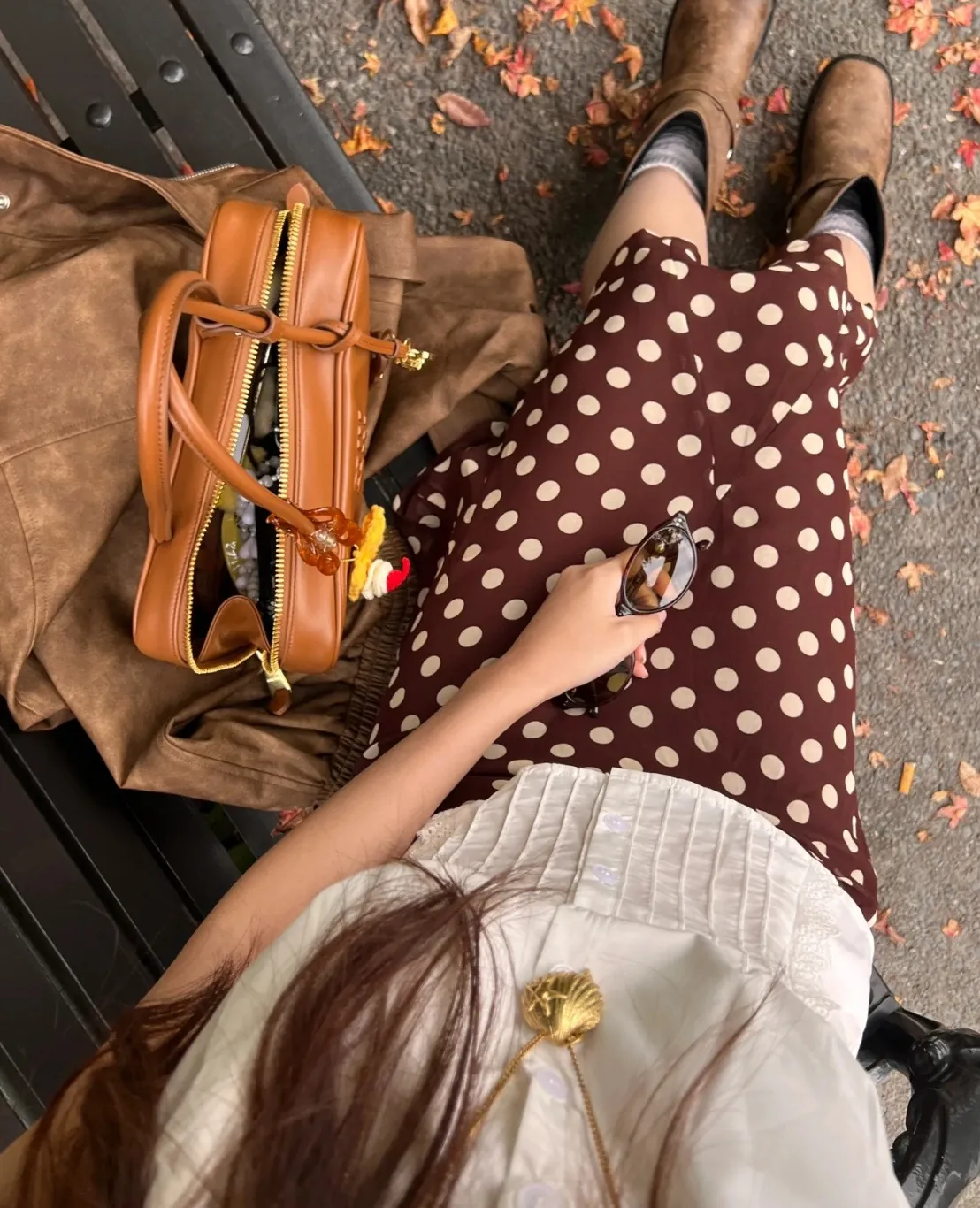
The featured image is an existing Miu Miu wardrobe reference, separate from the Workwear Boots looks discussed here.
Harper's Bazaar identifies Gigi Hadid's slouchy, worn-in leather boots as Miu Miu's take on workwear boots, and reports that she paired them with a structured deep-brown wool topcoat and black sweatpants. Those are the reported garments and their broad proportions. The placement calls below are my styling reading of that combination, not a reconstruction of a specific outfit.
Why the coat hem is the line that matters most
The topcoat is the firmest piece in the set. A structured coat has a defined shoulder and a clean front, and its hem cuts a horizontal across the body at a height you can choose. The slouch on the boot also creates a soft horizontal near the ankle, and the sweatpant break adds a third. Three horizontals at similar heights turn the lower body into a series of short, competing steps. Separating them gives each a job.
My reading is that the coat hem should finish above the top of the boot shaft, with enough clearance that the slouch shows below it rather than being covered. If the hem lands exactly where the shaft begins, the two hems blur into one heavy band around the leg and the boot loses its silhouette. A hem that clears the slouch lets the coat stay tailored and the boot stay casual, which is the contrast that makes the pairing interesting.
A longer coat is not automatically wrong. If it falls well below the boot top, the boot reads as an ankle finish under a long, clean column, and the sweatpant has to stay out of the way. The awkward zone is the middle: a hem that stops just at the boot's slouched edge or a few centimetres above it, where the shaft, the slouch and the coat hem all crowd the same part of the leg.
Where the trouser break should sit
Black sweatpants bring a soft, gathered fabric to a set where the coat is firm. The break is where the trouser hem folds over the boot, and that fold should sit above the widest part of the slouch. A break that lands on the slouch covers the detail the boot is there to show, and it also drags the leg line down at exactly the point where the eye is already busy.
Try the sweatpant over the boot with the hem gathered just at or above the top of the shaft, so a short, clean span of boot remains visible between the trouser and the slouch. If the trouser is loose enough to fall over the shaft, check whether it hides the slouch entirely; if it does, a slight turn-up or a shorter hem restores the break. If the sweatpant is tapered and sits close at the ankle, the boot top will show naturally, and the slouch becomes the soft line under a neat cuff.
A break that pools below the slouch is the one I would avoid. It adds fabric weight at the ankle and makes the boot look as though it is disappearing under the trouser rather than finishing the leg. The useful test is a mirror check in the shoes you plan to wear: the eye should read coat hem, then trouser break, then boot, in that order from top to bottom, without two of those lines sitting on top of each other.
What the slouch does to the rest of the outfit
The slouch is a deliberate softening at the ankle, so it works best when the other soft element, the sweatpant, stays relatively plain and narrow at the hem. Two loose, folded shapes at the same height compete; one soft line above a softly folded boot reads as intentional. The structured coat supplies the crispness that keeps the whole set from becoming unstructured top to bottom.
Colour is doing quiet work here. The reported deep-brown coat gives warmth, and black sweatpants and dark boots keep the lower half continuous. That continuity is useful: it lets the coat hem and the boot slouch be read as shape rather than as separate colour blocks. A lighter or contrasting trouser would put more attention on the break, so the placement would need to be even cleaner. If you want to break the dark lower half, a sock or a sliver of ankle between the trouser and boot is the quieter place to do it than a change of trouser colour.
The structured topcoat and the slouchy boot each have a strong point of view, and the sweatpant is the neutral that lets them meet. Treat it that way: plain black, hem controlled, nothing decorative at the ankle. Similar balance questions come up when a soft bag meets a firm trouser, as in this guide to a black shoulder bag with wide-leg trousers, where the soft and structured pieces also need separating.
Three checks before you settle on the lengths
- Coat hem: stand in the boots and look at where the coat ends relative to the boot top. If it stops within a hand's width above the slouch, try a longer or shorter coat so the hem clears the boot's detail.
- Trouser break: sit, stand and walk a few steps. A break that only looks right standing still will move onto the slouch when you walk; check where the hem sits after a few paces.
- Boot shaft and slouch: with the trouser in place, confirm that some of the slouch is still visible. If the trouser covers it completely, the boot is no longer contributing its shape to the outfit.
Make these checks with your own clothes and boots. The proportions of any coat, sweatpant and boot will differ from the reported pairing.
When to choose differently
If the coat is the piece you want to lead, let it run longer and keep the sweatpant narrow and short at the ankle, so the coat reads as a long column over a small, slouched boot. If the boot is the piece you want to show, shorten the coat to clear the shaft entirely and let the sweatpant break just above the slouch, so the boot gets the full lower leg. The choice is about which end of the outfit you want the eye to rest on; the middle line, the trouser break, should stay quiet in both cases.
For a different approach to balancing a firm coat over softer layers, this guide to a structured overcoat with a slip dress sets out the same one-firm-layer idea in another context. The boots and topcoat question is narrower: it comes down to where the three hems sit relative to one another, and once that is settled the rest of the outfit has room to stay simple.