The style notebook
Prada Handbags: Choosing Against Logo Fatigue and Repeated Bag Shapes
For Prada handbags, logo fatigue favours an understated archival-clasp shape over another repeated-logo bag: the 2017 critique, explained.
For Prada handbags, the choice between an understated archival-clasp bag and another repeated-logo bag usually comes down to one question: what is doing the work in your wardrobe already? A 2017 PurseBop editorial by Chloehadz, published 10 May 2017, gives this debate its historical shape. It reported Prada S.p.A.'s falling 2016 profits — describing the lowest revenue since the group's 2011 initial public offering — and named logo fatigue among the possible culprits, alongside slowing demand in Asia and a decline in European tourism. The same piece noted Prada's stated plan to add “less pricey handbags and accessories aimed at Millennials.” Reader comments under it pushed the other way: one argued that lower prices would “cheapen the brand more and over saturate the market hence making their logo that they feel is already overexposed even more so,” and another wrote that Prada's bags were beautiful but “always same old same old,” urging “new and different bags.” That is the honest 2017 record: a news report, a strategy note and reader opinion, not a product verdict. The styling reading below is my own.
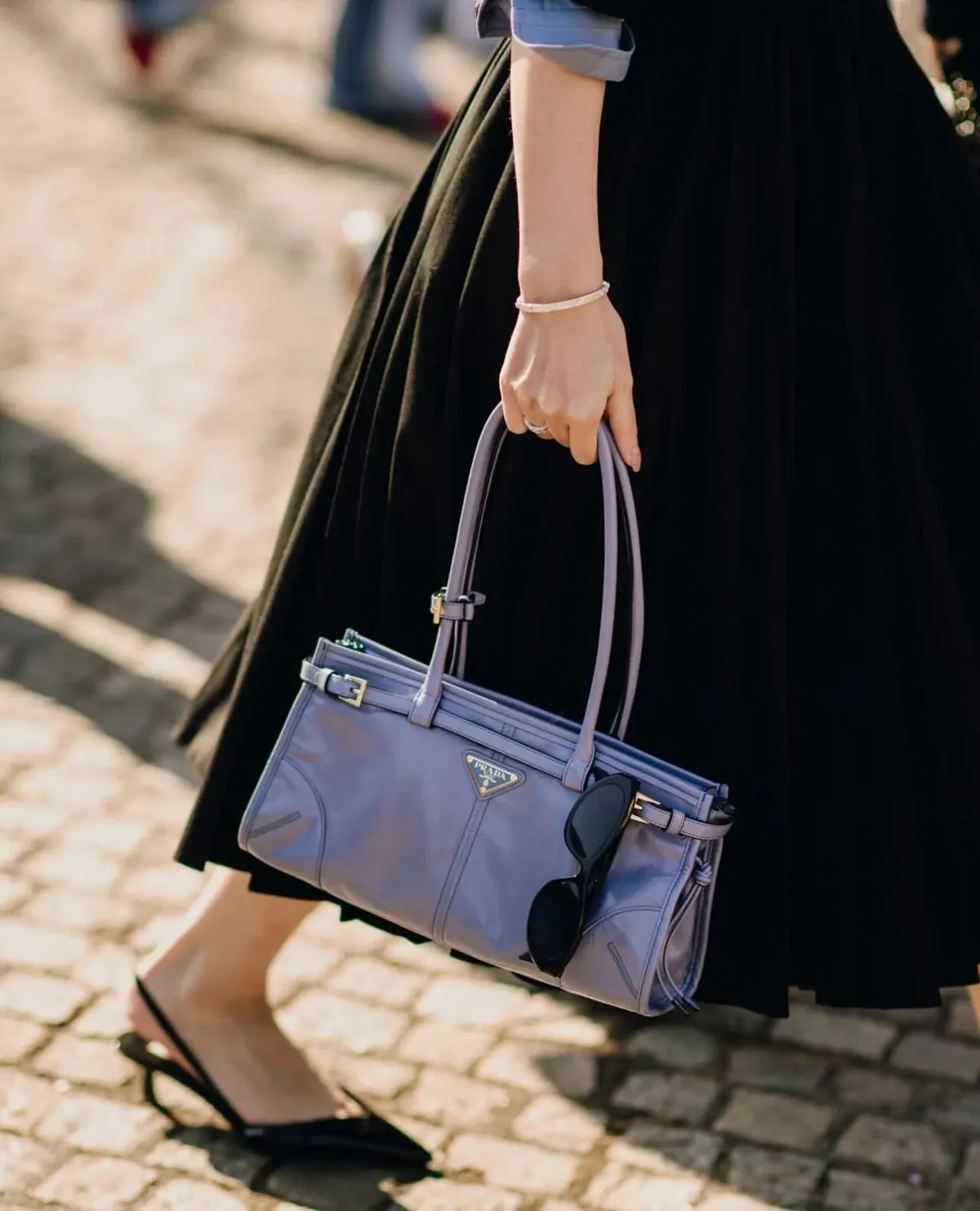
The featured image is an existing Prada wardrobe reference, separate from the handbags looks discussed here.
A word on the image: it is an existing wardrobe reference for the Prada Bonnie Bag, with work and dinner outfit ideas, not a photograph of any handbag debated here.
Why the archival-clasp bag answers the complaint
The 2017 commenters were not really asking for a cheaper bag or a new colourway. They were asking for a bag whose identity comes from its construction rather than its surface. An understated bag built around an archival frame clasp is the direct opposite of a repeating-logo silhouette in that respect. The metal catch at the top edge, the hinge line, the shape the clasp closes — these are the things you notice first, and they are things the wearer handles rather than displays. Nothing about that choice depends on a brand name being legible from across a room.
That matters most when the rest of your wardrobe is already doing a lot. If you wear checks, prints, unusual skirt volumes or heavy hardware elsewhere, a clasp-led bag stays quiet at the hand or under the arm and lets the clothing lead. A repeated-logo bag in the same outfit sets up a second pattern, and the two compete rather than support each other. The clasp bag also ages in a different direction: the logo bag's appeal is tied to a motif, while the frame-and-catch bag's interest is in a mechanism that does not date in the same way.
When another logo bag is still the right call
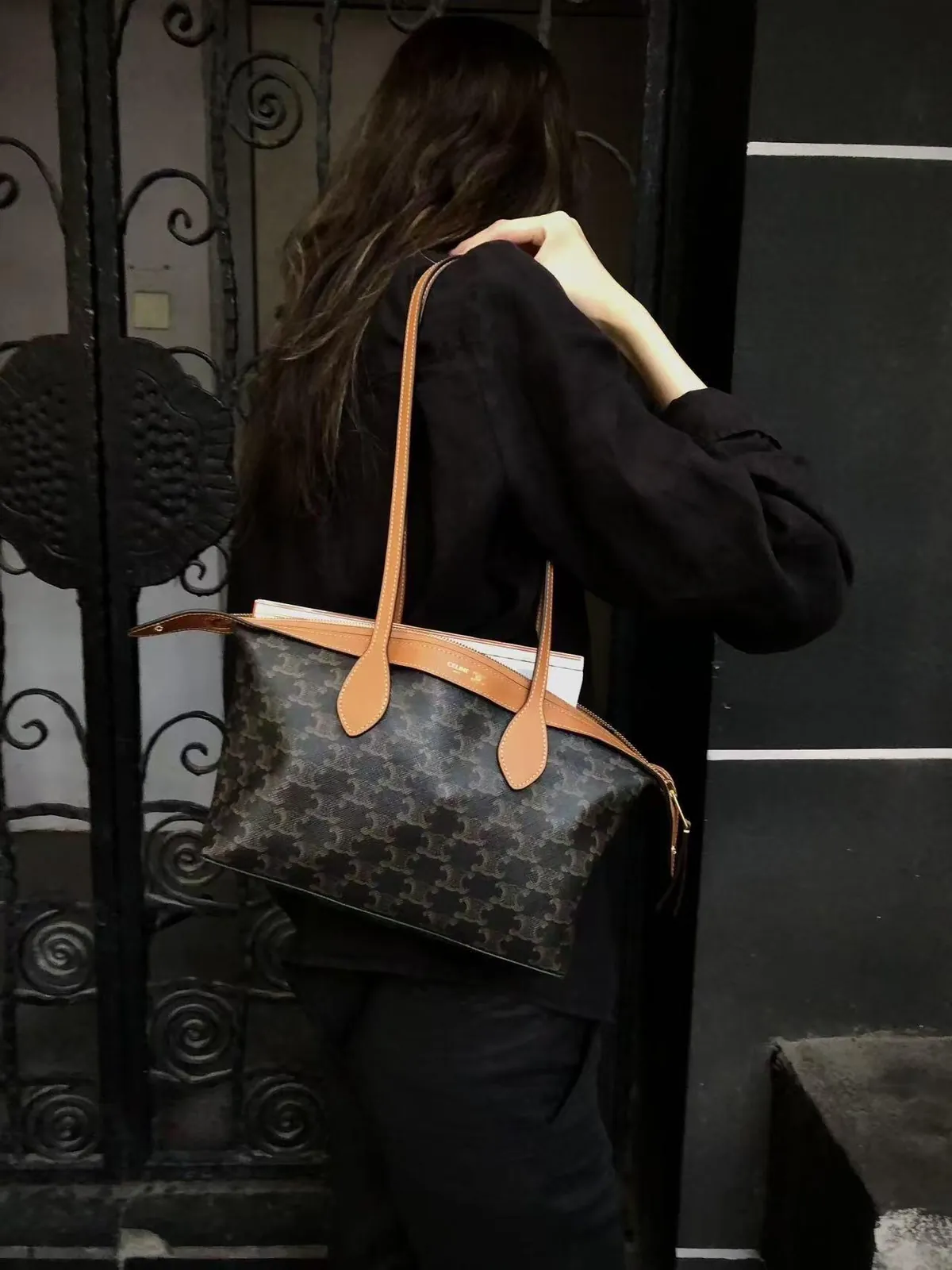
This is not an argument that logo bags are wrong. A repeated-logo bag earns its place when the logo is the outfit's single graphic element and everything around it is plain. Think a logo-print shoulder bag with an untucked white shirt and straight dark trousers, or with a plain crew-neck knit and a simple skirt. In that setting the motif gives the look its one clear idea, and an archival-clasp bag would leave the outfit without a focal point.
The repeated-logo bag also suits a wardrobe that is deliberately branded — a person who wants the bag read instantly as Prada. If that is the intention, choose one and stop there. The 2017 critique was really about saturation, and saturation is a wardrobe problem as much as a market one: two or three logo bags in rotation dilute each other, while a single logo bag and a single quiet shape cover far more situations.
How to decide without relying on labels
Look at what you already carry and count the pieces that announce themselves. If you own several monogram or logo-print bags, the understated archival-clasp shape adds the range you are missing and gives plain tailoring, knitwear and evening dresses something to sit against. If your wardrobe is mostly plain and unbranded, a logo bag may be the missing accent — but the archival shape remains the safer second purchase, because it works with more of the clothes already in the closet.
A practical test worth running before committing is to lay the candidate bag beside three outfits you actually wear — a work outfit, a weekend outfit and an evening one. A repeated-logo bag usually pairs with one or two; a clasp-led, understated bag tends to sit with all three. That is a check to make with your own clothes, not a claim about how any bag performs.
For a broader read on quiet bags against busier ones, the Prada nylon bags and printed skirts guide and the nylon totes and duffels wardrobe comparison both weigh shape against surface. If the archival idea is what appeals, the frame-clasp bag guide explores how a central clasp carries an outfit.
The place of the 2017 argument today
Treat the 2017 editorial as context, not prophecy. It recorded real financial pressure and real customer frustration with repetition, and its reader comments made the case for genuinely new shapes over repeated ones. That case still reads cleanly: when a bag feels overexposed, the fix is usually a shape with its own logic — a frame clasp, a distinct silhouette, a considered proportion — rather than another variation on a familiar surface. The understated archival bag is the more durable answer to that feeling; the repeated-logo bag is the more confident one, and it works best when it is the only loud thing you are wearing.