The style notebook
Prada Spring 2009 Crinkled Bustier Dress: Archive Event Outfit Ideas
Wearing a Prada spring 2009 crinkled bustier dress to an event? Keep jewellery, bag and shoes plain so the bustier line and crinkled surface carry the look.
The Prada spring 2009 crinkled bustier dress is the outfit; everything else on the body should be plain enough that the dress stays the only thing worth looking at. That means a single quiet shoe, a small bag with no hardware competing for attention, and jewellery kept to one piece or none. Kristen Bateman's ELLE article, published 27 August 2025, frames archival Prada as a deliberate taste choice and notes Rita Ora wearing the crinkled Prada spring 2009 bustier dress in Saint-Tropez. The styling judgments below are my own reading of that dress as the focal object.
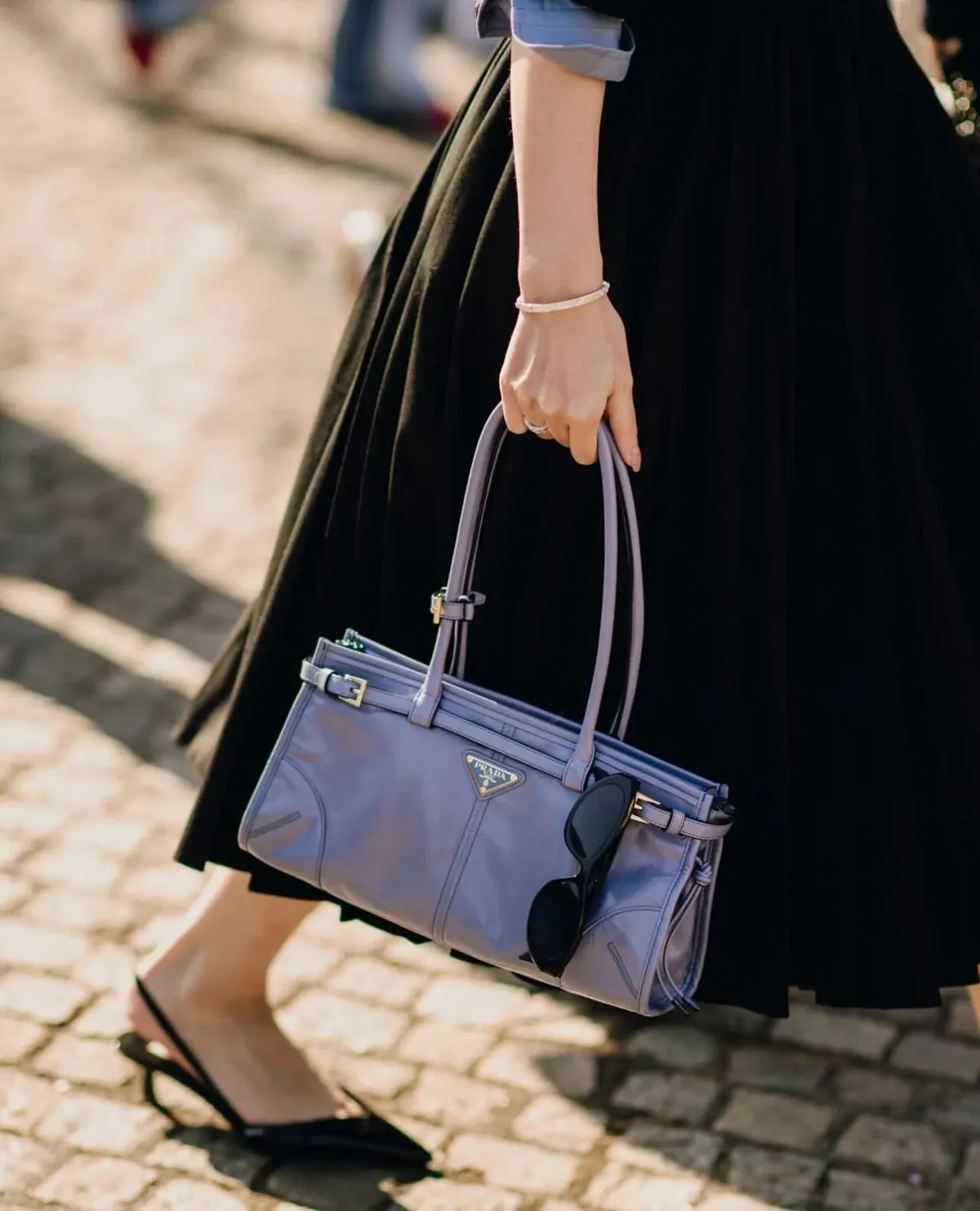
The featured image is an existing Prada wardrobe reference, separate from the spring 2009 looks discussed here.
Why the dress needs a plain frame
A crinkled bustier dress already carries two kinds of information: the structured bustier line across the torso and a textured surface across the whole garment. Those two elements don't need a third voice. When you add a beaded necklace, a logo bag and a metallic shoe, the reader's eye has four places to land and the texture gets lost between them.
ELLE's account treats archival Prada as a statement in itself. Valerie Steele, quoted in the article, calls it “a kind of very sophisticated fashion sensibility.” The dress is doing that work already. You don't need to add proof of intent through accessories; the archive piece is the proof.
What counts as quiet, and what doesn't
Quiet does not mean boring or underdressed. It means one visual idea per zone.
- Shoes: a plain pointed pump, a slim sandal or a simple ankle-strap heel in a solid colour that either matches the dress or sits far from it. Avoid ankle details, heavy buckles and contrasting platforms, which compete with the hemline.
- Bag: a small clutch or a compact evening bag in a smooth surface. If you want to relate it to Prada, a plain leather or satin shape reads better beside a crinkled dress than a nylon or logo-covered bag does.
- Jewellery: one small earring or a single thin chain. A bare neck suits a bustier line; a heavy necklace sits on top of it and fights the neckline.
- Outer layer: if the event is cold, a plain tailored coat or a simple shawl in a solid, matte fabric. A trench or a coat with visible hardware draws attention to the shoulders, which is where the bustier strap already sits.
Where I'd choose differently: if the dress itself is a muted or neutral crinkle, a single saturated shoe can work because it adds one clear colour without adding a second texture. If the dress is a strong colour or has visible surface variation, I'd keep the shoe neutral and let the dress speak alone.
The bag and shoe question
A crinkled bustier dress is formal or semi-formal, so the bag should be small and the shoe should read as evening wear rather than day wear. A structured mini bag with a plain clasp is the safest choice. A soft pouch clutch in a smooth material works too, because the contrast is between smooth and crinkled rather than between two kinds of pattern.
Shoes matter more than people expect because they sit at the bottom of the outfit's silhouette. A pointed toe lengthens the line below the hem; a round or square toe changes the proportion. If the dress falls above the knee, a slightly higher heel keeps the look in balance. If it falls to midi length, a low or flat shoe can work with a plain front.
A fit check before you commit
Try the dress on with the shoes and bag you plan to wear. Check three things: whether the bustier line lies flat against your torso when you sit down, whether the hem clears the shoe when you walk, and whether the coat you will wear over it changes the shoulder line. Those three checks answer most of the outfit question before the event.
For readers who want to compare how a Prada dress works with a plain supporting wardrobe, the spring 1994 knit military and slip dress guide shows the same logic in an earlier archive piece: let the garment's cut do the work and keep the supporting pieces plain. That principle applies here too.
The dress is the event. Everything else should be quiet enough that you forget what you put with it.