The style notebook
Prada Spring 2026 Embellished Dirndl Dresses: Outfit Ideas
How to wear Prada Spring 2026 embellished dirndl dresses so the conventional shape reads deliberate: neckline, outer layer and plain accessory choices.
For a Prada Spring 2026 embellished dirndl dress, the question is not how to make the dirndl feel modern — the embellishment already does that work. The decision is whether you dress it as clothing or as costume, and the answer that keeps it deliberate is to leave the bodice line alone, put a plain layer over it only where the occasion asks, and strip the accessories of every folk signal. What the dirndl needs is not rustic companions but the ordinary things you already wear.
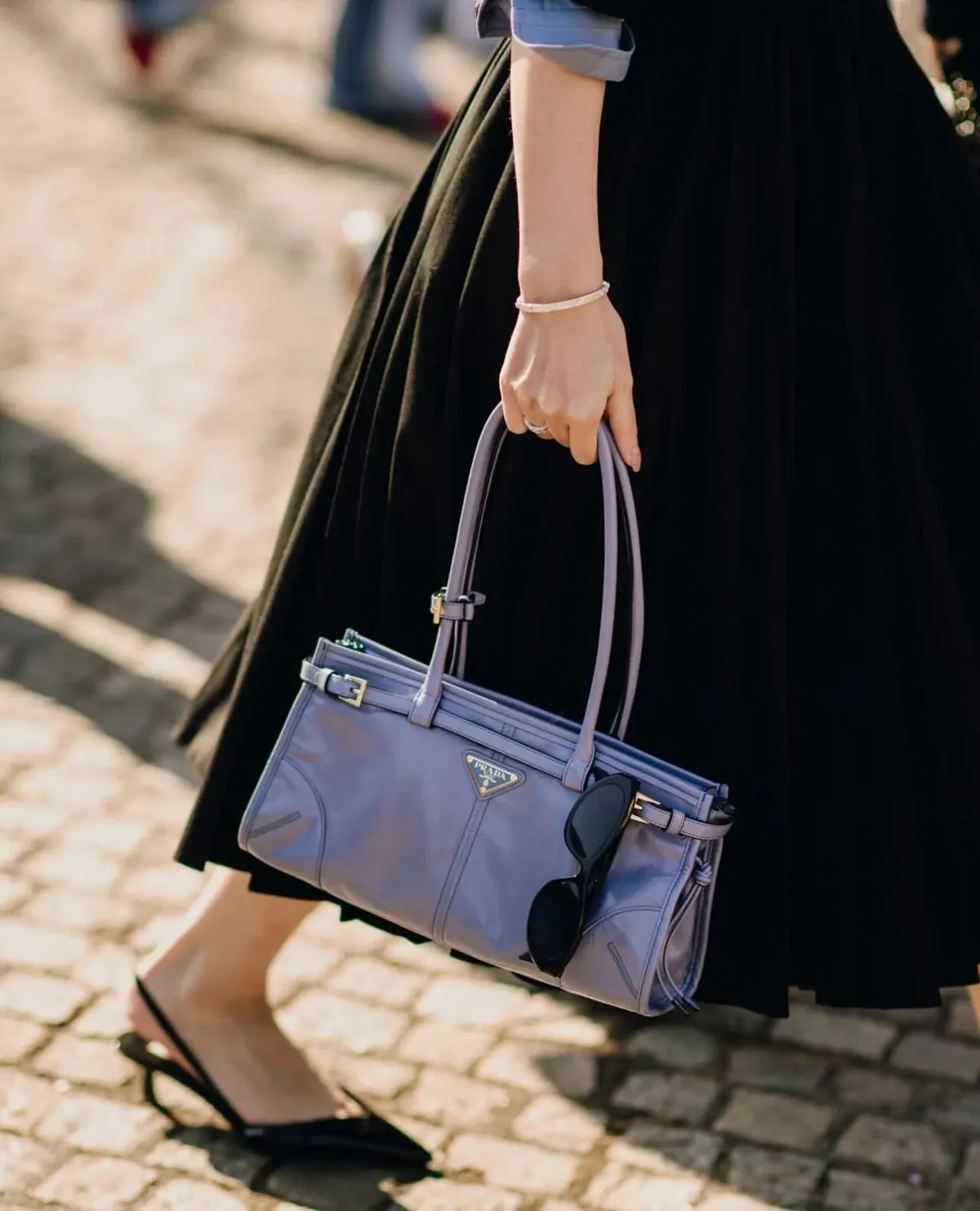
The featured image is an existing Prada wardrobe reference, separate from the Spring 2026 looks discussed here.
Vogue's Nicole Phelps, reporting on 25 September 2025, gives the only direct description of this garment: "The embellished dirndl dresses surprised because of their would-be conventionality." She says nothing about the neckline, the sleeves, the embroidery itself or the shoes worn with them. The pairing judgements below are my own styling reading of that phrase, not a Prada instruction.
What "would-be conventional" means for getting dressed
Phelps's word is surprised, and the surprise is that a familiar, slightly old-fashioned silhouette appeared without irony. That tells you the dress is doing the odd thing already; your job is to stop the outfit doing a second odd thing on top. A dirndl reads as costume the moment the styling agrees with it — a laced detail at the bust, a high frilled blouse, a braid, a wooden-heeled sandal. When the styling disagrees by being plain, the shape becomes a decision you made rather than a theme you entered.
Think of the embellishment and the apron-like skirt as the two things the dress is saying, and let nothing else in the outfit speak at that volume.
Neckline: two routes, and one to avoid
The bodice is the feature, so treat the space above it as either empty or plainly filled:
- Bare. No scarf, no collar, no layered blouse underneath. Best for evening or a warm day, and the cleanest way to make the bodice read as a designed line.
- One flat high shape. A fine-gauge knit or a plain shirt collar close to the neck in black, cream or navy, with no ruffle, lace or contrast trim. Useful when the weather or the occasion wants more coverage, and it works because it is unremarkable.
The half-measure is the trap: a small printed scarf knotted at the throat, a tie, a frilled collar. Each adds a second decorative idea near a bodice that already has one. If you want a neck accent, keep it to a single fine chain.
Outer layers that leave the bodice intact
A fitted jacket, a cropped cardigan or any belted coat compresses the bodice and cuts the silhouette at the waist — the exact place the dirndl reads as dirndl. If you need a layer, take one that doesn't argue with the dress:
- A long straight coat or trench worn open. The vertical line runs past the bodice, and a dark neutral keeps the dress as the only decorated element. The logic is the same one behind holding a plain outer layer over a decorated skirt — the coat supplies structure, the garment underneath supplies interest.
- Nothing at all for evening. The dress, one plain shoe and a small plain bag is the most decisive version, because there is nothing to manage.
- A short plain knit over the shoulders, unbuttoned. For warmth without waist structure, in one flat colour, never closed across the bodice.
Shoes and bag are where costume enters
Folk dress usually arrives through the accessories. A braided or laced boot, a basket, a headscarf or anything with a rustic texture repeats the signal and makes the whole outfit read as a look. My reading is that the accessories should be the least folkloric things you own:
- Shoes: a plain pointed flat, a simple low pump or a clean ankle boot in black or a neutral. No lacing, braiding or fringing.
- Bag: small, smooth and single-coloured. A quiet leather shoulder or top-handle bag leaves the dress loud; the reasoning in this guide to a plain black shoulder bag applies directly.
- Nothing mirrored: no embellishment at the wrist, waist or hair that echoes the dress.
Day and evening differ by layer, not by dress
For daytime, wear the plain coat open with a clean high neckline underneath if it is cold, and a flat shoe — the dirndl then reads as a considered piece in a real wardrobe. For evening, drop the coat, keep the neck bare and let the embellishment be the only shine. A useful check before you commit: put the dress on with your plainest coat and plainest shoes and add nothing, then decide honestly whether anything is missing. Most of the time it isn't.