The style notebook
Prada Spring/Summer 2023 Paper-Based Dresses: Torn-Body Styling Ideas
How to layer and finish a Prada Spring/Summer 2023 paper-based dress so the torn-body rift stays the outfit's one irregular surface.
A Prada Spring/Summer 2023 paper-based dress is a garment with a built-in interruption: the tear, the twist, the crease. Prada's show statement for the Spring/Summer 2023 women's collection, published 22 September 2022, says a paper-based fabric was used for a series of dresses, “torn against the body, intimate and impulsive,” with intentional rifts, twists, creases and folds animating the surface. The styling job follows from that. The dress should be the only place in the outfit where irregularity happens, so every layer and finish around it has a plain, matte, calm job to do.
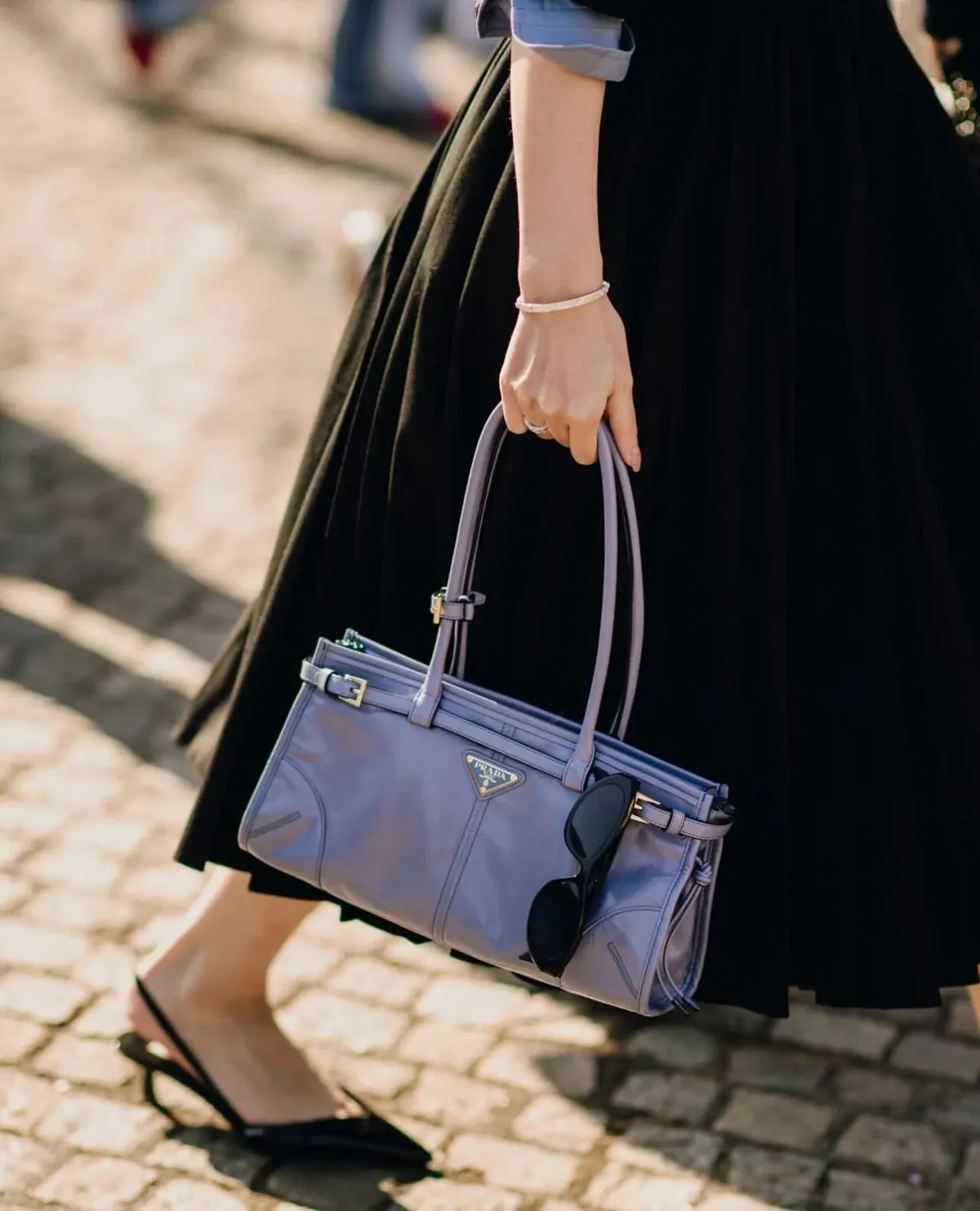
The featured image is an existing Prada wardrobe reference, separate from the Spring/Summer 2023 looks discussed here.
Why the dress has to win the texture argument
A torn surface is a small event in the middle of the garment, and it reads only if nothing else is competing at the same scale. That rules out textured knits, heavily washed denim, frayed hems and printed layers near the tear. A smooth cotton shirt or a fine-gauge knit beneath the dress gives the rift a clean backdrop; a jacquard or bouclé does the opposite, turning a deliberate tear into one more bump among many.
The show statement also groups creases and folds with the rifts, framing all of them as “traces of life” that shape the garment. Read that as a warning about ironing rather than a licence to add more fabric. Leave the garment's own folds where they fall and keep your own clothes out of that register.
Layering: quiet beneath, plainer still above
Underneath, the useful layer is a matte base in a colour close to the dress but not identical, so the edge of the tear stays visible. Black under black works if the two materials differ in finish; black under a dark neutral is safer and gives the rift a faint frame. Avoid sheen under the tear, because a satin slip or a glossy camisole catching light behind an opening pulls the eye past the dress's own gesture.
Over it, a coat or jacket should be smooth and matte, with a clean shoulder and no hardware at the chest. A long, quiet coat worn open keeps the torn section visible; buttoned, it hides the whole reason for the dress. If spring weather insists on a layer, choose one with a straight hem and let a few centimetres of dress show beneath, so the irregular edge of the garment remains the last thing seen.
Where a top layer is unavoidable at the neck, keep the collar low and unadorned. A plain crew neck or a flat shirt collar stops before the tear's likely territory on the chest, while a high or ruffled collar crowds the same area. The lace-shirt layering guide covers the same principle for another Prada season: the visible layer decides everything, and the one beneath should not argue.
Finishing pieces: matte, minimal, small
Metal is the fastest way to break the spell. Necklaces, bag chains and shoe buckles all sit at eye height or below the hem, and each one introduces a hard reflection against a soft, papery surface. Choose leather with no chain, shoes in a matte finish, and jewellery at most one small piece — and none at all if the tear crosses the collarbone.
For a bag, the Galleria rule in the single-focus accessory guide applies neatly: one accessory carries the outfit, and it should not be the one you add last. If the dress is the focus, the bag is a quiet companion in a single flat colour, carried by hand or worn short, so it sits away from the rift. A chain strap crossing the torso competes with the tear on its own terms — two lines of interruption instead of one.
Where a crease should sit, and where it shouldn't
The dress's own creases are part of the design, so resist pressing them out. What you can decide is what sits on top of them. Belts create a deliberate horizontal fold at the waist, which can sharpen a loose paper-based dress — or cut across the garment's vertical tear. Try the belt at the natural waist and again at the hip, then judge which one leaves the rift running fairly uninterrupted. Shoes matter here too: a pointed flat or a simple sandal keeps the hem line clean, while a heavy tread or an ankle strap adds a second gestural detail near the floor.
Before committing to the layering, try the dress over the base you plan to wear for a full day at home, then sit, walk and raise your arms. Paper-based fabric behaves differently from jersey, and how the tears sit when you move is the real test of whether the base underneath is quiet enough.