The style notebook
Saint Laurent Fall 2026 Rubber Raincoats: Layering Over Body Dresses
How a Saint Laurent Fall 2026 high-shine rubber raincoat layers over a silicone-covered lingerie-lace body dress: length, closure and matte accents.
For a Saint Laurent Fall 2026 high-shine rubber raincoat over a silicone-covered lingerie-lace body dress, the pair works when the raincoat is the outer shell everyone reads first and the dress is a narrow, deliberate flash beneath it — not when both surfaces fight for the same highlight. The raincoat should be the long piece, worn open or partly closed so a vertical strip of the body dress stays visible, and everything around them — hair, bag, shoes, lip — should go matte or soft so only two gloss surfaces are in play. Sarah Mower, writing for Vogue on 3 March 2026, reports that Vaccarello showed a long series of silicone-covered lingerie-lace body dresses, interspersed with two high-shine rubber raincoats, and that the sequence landed as “fetish-y, decadent hard-core chic.” Those are her reported observations of the collection; the proportion and pairing judgements below are my own styling reading of two separate runway pieces, not a claim that the show styled them together.
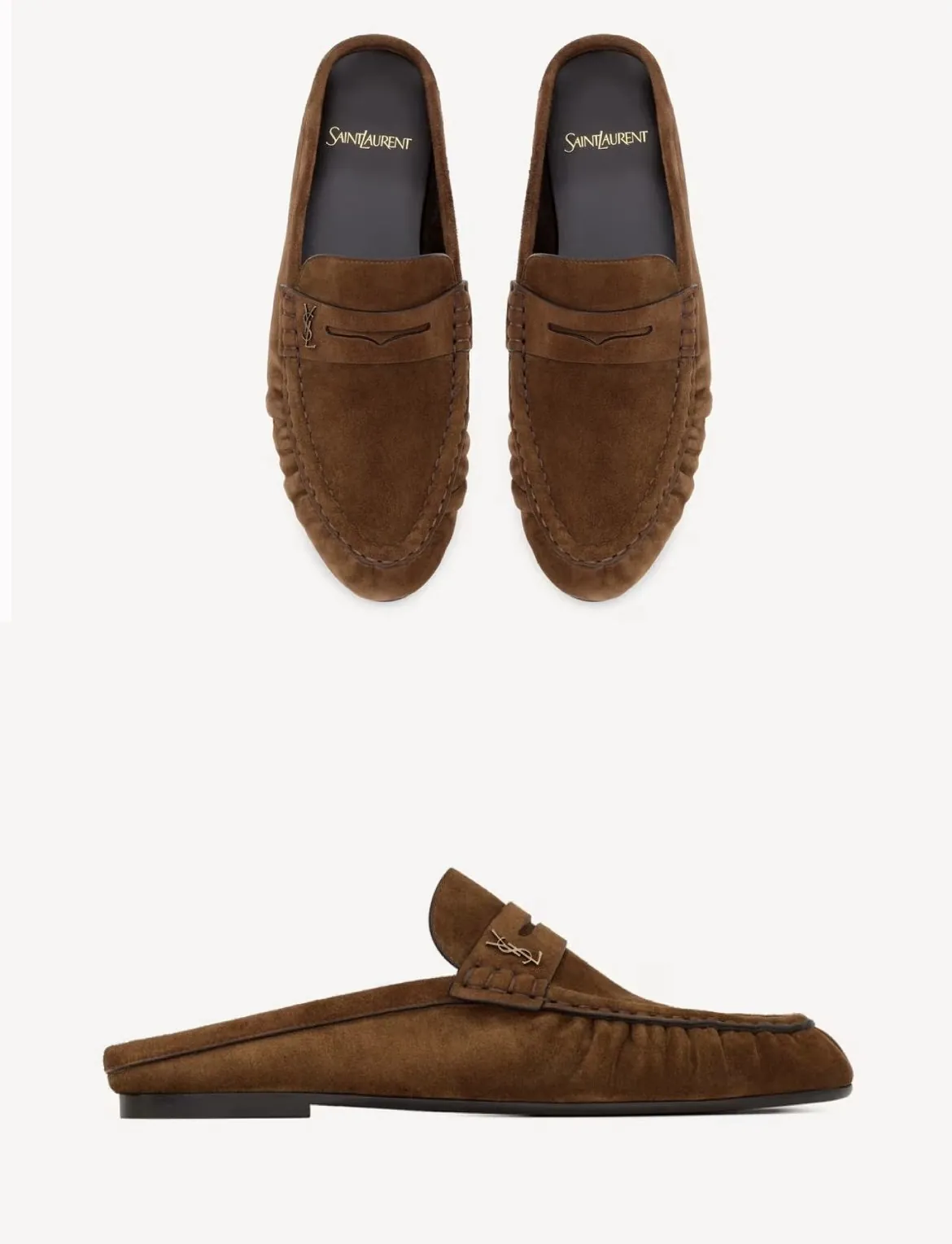
The featured image is an existing Saint Laurent wardrobe reference, separate from the Fall 2026 looks discussed here.
Let the raincoat be the longer, looser layer
The first decision is which piece sets the outer silhouette. Here it should be the raincoat: cut long, it reads as weather protection and gives the body dress a dark, moving frame. If the dress hem drops below the coat, the dress stops being a reveal and becomes the main event, and two glossy surfaces compete at eye level with nothing containing them. My reading is that the coat should finish at or below the dress hem, or at minimum cover the hip and upper thigh, so the dress appears as a slick column inside the coat rather than a separate shiny garment doing its own thing.
The coat's looseness matters as much as its length. A rubber raincoat worn snug turns the whole outfit into one glossy sheath — the two surfaces merge and neither reads. Left to hang away from the body, the coat catches light in broad panels while the silicone lace underneath catches it in small, close glints. That contrast in scale is the useful part: large shine outside, fine shine inside.
Open, half-closed, or closed — and what each does
The closure is the real styling lever on a high-shine coat, because it controls how much of the second surface is exposed.
- Worn open: the strongest choice with a body dress. Two parallel vertical gloss lines — the coat fronts — frame the dress, and the dress reads as a strip of texture rather than a second full shiny garment. This is the version I would pick for evening.
- Half-fastened, one or two closures done: keeps the coat's structure legible while leaving a wedge of dress visible at the neckline or lower front. Good if the evening is cold and you want the coat to do more work.
- Fully closed: turns the raincoat into the outfit and the body dress into a lining. That can be a clean, severe look, but it only succeeds if the coat's own line is strong and you accept that the dress is essentially hidden. If the point of the dress is its lace, closing the coat defeats it.
Keep the neckline honest, too. A high, closed collar on rubber reads as outerwear; if you want the lingerie-lace to register at the throat, leave the top fastening undone rather than layering a scarf, which would add a third texture to a neckline that already has two.
Keep hair, hands and feet matte
With two reflective surfaces already present, the surrounding details should absorb light rather than bounce it. Hair pulled back smoothly — the show's side-parted, gelled, bun-finished styling, as Mower reports it — keeps the face and neck clear and stops loose shine near the coat's collar. A matte or low-sheen lip and skin keep the beauty register quiet so the surfaces carry the look.
For accessories, I would choose brushed or grained leather, suede, or a plain matte fabric bag and shoe over patent, metallic or another lacquered finish. A pointed matte boot or a plain closed shoe keeps the hem line clean under a long coat. If you want a single polished accent, let it be one — a slim metallic earring, say — and keep everything else dull. The goal is not to banish shine but to give the two garments a monopoly on it.
Where I would choose differently
The open long coat is the answer when the dress is the point. But if the evening is genuinely wet or the coat is the piece you want to lead, I would treat the body dress as a plain dark base and skip the fuss of exposure entirely; the silicone lace is wasted under a closed rubber shell. Conversely, if the dress is short and the coat is very long, the proportion can tip — check that the hem relationship reads as a frame rather than an accident. For weather-led layering with a long coat, the proportion logic in padded leather jackets for night-out dressing is a useful cross-reference for how a heavy outer layer should sit relative to what shows beneath. And if you would rather keep one surface dominant and let clothing stay quiet, the plain-base approach in Saint Laurent gold-tone outfit decisions makes a good comparison.
The clean version of this pairing, then: long rubber coat worn open, body dress narrow and mostly hidden, matte hair and matte accessories, one shiny thing on each side of the coat's opening and nothing else competing for the light.