The style notebook
Chanel Cruise 2027 Barefoot Heels vs Covered Cap-Toe Shoes: Which Shoe for a Resort Outfit
For coverage under a fringe maxi or patterned dress, Chanel Cruise 2027 offers a Mary Jane, a candy-coloured cap-toe or a fishnet-textured finish. Here is how to choose.
If you want the look of Chanel Cruise 2027 without the toe-baring barefoot heel, the cleanest covered substitute under a fringe maxi or a patterned resortwear dress is a traditional cap-toe, and the plainest version—a black-and-white Mary Jane—gives the least busy line. ELLE’s Matthew Velasco, reporting on 29 April 2026, describes the show’s incomplete sandals as the subversive option and notes that “for the less adventurous, there were plenty of traditional cap-toes on offer, from black-and-white Mary Janes to styles in bright, candy-colored hues and textured finishes like fishnet.” That sentence is the useful inventory: three covered routes, each doing a different job under a full skirt or a printed dress.
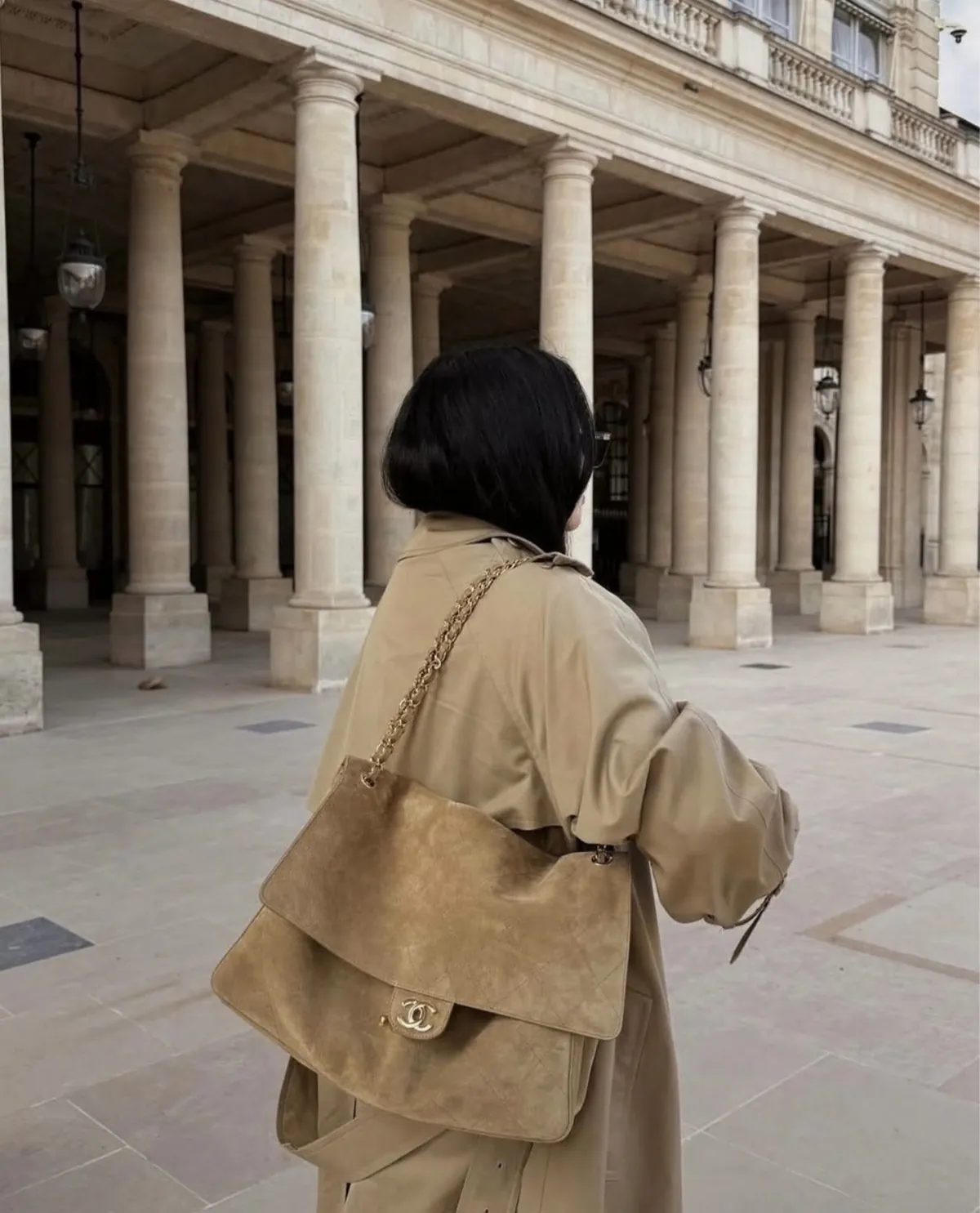
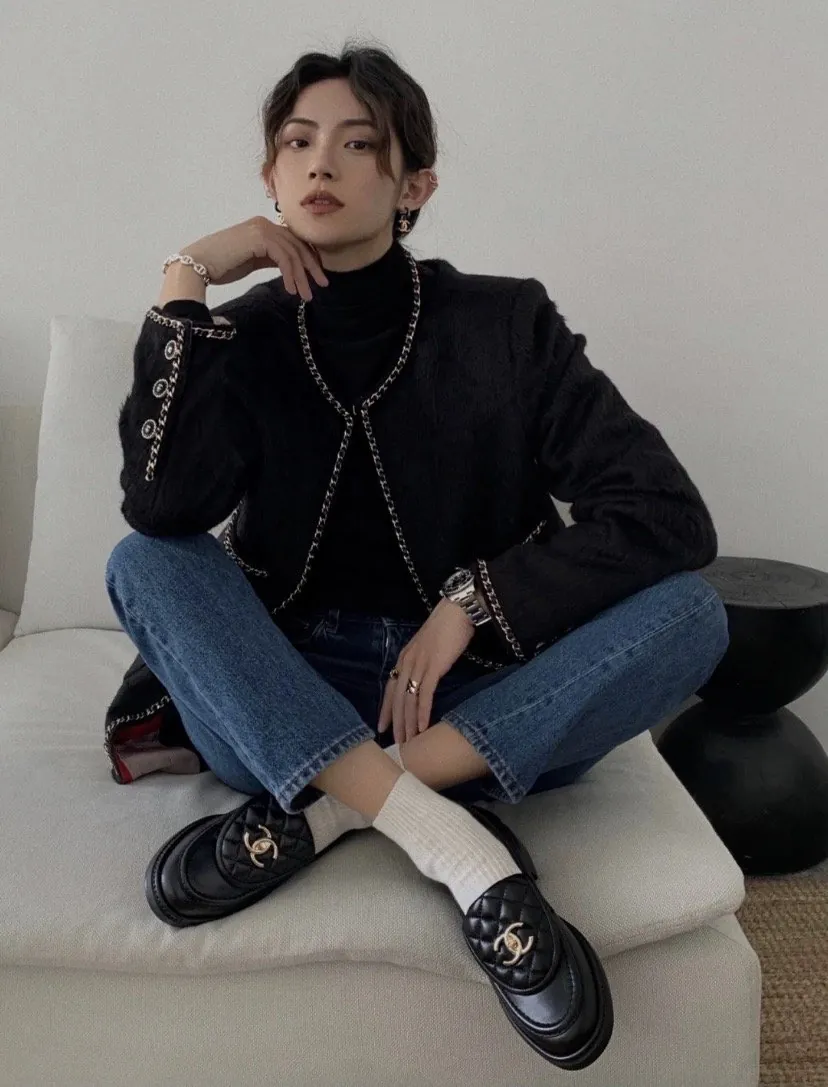
The featured image is an existing Chanel wardrobe reference, separate from the Cruise 2027 looks discussed here.
My styling reading is that the fringe maxi and the patterned dress are not one problem. A fringe skirt is already textured and moving; a patterned dress is already carrying colour and motif. The shoe should answer whichever of those is louder.
Fringe maxi: let the Mary Jane stay quiet
Under a fringe maxi, the hem is the event. Fringe breaks the vertical line at every strand, and the shoe below it is mostly glimpsed rather than displayed. A black-and-white Mary Jane keeps that glimpse orderly: the contrast reads as a crisp edge at the foot, and the closed vamp means no second kind of bareness competes with the swinging hem. This is where the Mary Jane is the steadier choice over a candy-coloured cap-toe, which would add a third idea—bright colour—to a skirt that is already busy.
Keep the rest of the outfit plain in colour so the fringe and the shoe’s contrast are the two things doing work. A simple top in a solid tone, or the washed cotton canvas pieces the house showed alongside the resort looks, leaves the shoe to finish the line cleanly.
Patterned dress: one bright note, used once
The patterned resortwear dresses need a different answer. A print already supplies colour and rhythm, so a second bright element can either sharpen the outfit or scatter it. The candy-coloured cap-toes are the obvious candidate for a single bright note, and the discipline is to use them only once: no bright bag, no bright scarf, no second candy colour elsewhere. Let the print run, and let the shoe be the one solid, saturated point at the bottom.
If the print is itself colourful, the black-and-white Mary Jane is the safer partner, because its contrast is graphic rather than chromatic and it will not fight the dress’s palette. Choose the candy cap-toe when the dress is patterned in a quieter way—small motifs, tonal prints, or a pale ground—so the shoe has room to register.
Fishnet: a texture decision, not a colour one
Fishnet-textured finishes behave differently again. Texture on the foot reads as a fine pattern rather than a block of colour, so it sits more comfortably under a patterned dress than a bright cap-toe would. The risk is doubling: fishnet near a fish-scale look or a heavily textured skirt can make the whole outfit read as one continuous surface. My reading is to use the fishnet cap-toe sparingly, with a smoother dress or a fringe skirt whose texture is vertical rather than netted. It is the option for someone who wants coverage with a little visual interest, not for a look that already has layers of surface.
What the barefoot heel offers that the cap-toe cannot
The show’s own logic explains the substitutes. Velasco reports that Matthieu Blazy showed “toe-baring shoes that were intentionally incomplete,” with the cap-toe dropped in favour of what the brand called a “barefoot heel cap.” Most of the sandals had “a heel element secured by dainty ribbons” and were nearly hidden under fringe maxis, patterned dresses and the fish-scale looks that closed the show. He also notes the history: Gabrielle Chanel introduced the cap-toe shoe in 1957 as a sling-back with a contrasting vamp. The covered substitutes are therefore not a compromise invented for this guide; they are the house’s own long-running shoe, offered alongside the more extreme idea.
Where the barefoot heel makes the hem the only thing in view, the cap-toe gives the foot its own defined shape. If you want the dress to be the whole story, the barefoot heel is the purer route; if you want a finished shoe at the bottom of a full skirt, the covered cap-toe is the answer. The barefoot heel versus cap-toe Mary Jane comparison sets out that split in more detail.
The short version
- Fringe maxi, textured hem: black-and-white Mary Jane for the cleanest line.
- Patterned dress in quiet or tonal print: candy-coloured cap-toe as the single bright note.
- Patterned or fish-scale dress with strong surface: fishnet-textured cap-toe, used once and kept away from other netted textures.
- Print that already carries several colours: plain Mary Jane rather than a second bright element.
The decision is really about how much the hem and the print are already saying. The more they carry, the plainer the covered shoe should be. For the looser, beach-side register, the barefoot heel with maxi skirts and dresses covers the uncovered route.
CHANEL Cruise 2026/27 Show — CHANEL Shows — CHANEL official video.
The CHANEL Cruise 2026/27 Collection — CHANEL official video.