The style notebook
Chanel Cruise 2026/27 Dresses and Two-Tone Outfits: A Biarritz Wardrobe Guide
A Chanel Cruise 2026/27 wardrobe guide: wearable black dress formulas, two-tone splits and single-stripe outfits, with rules for hems and contrast placement.

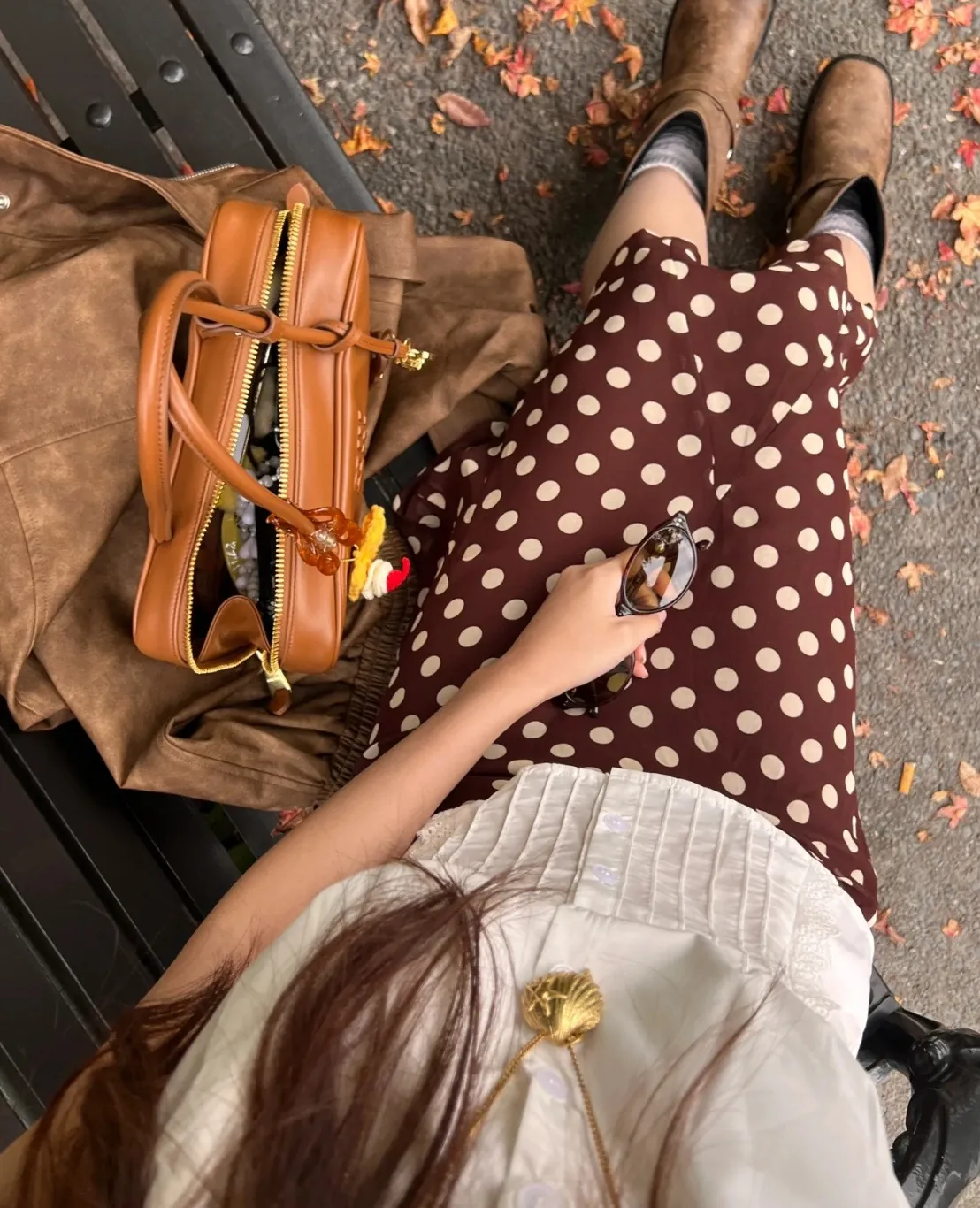
Chanel Cruise 2026/27 takes Biarritz as its starting point, and the house's editorial framing keeps returning to three ideas: a black dress, two-tone dressing and stripes. This guide treats Chanel Cruise 2026/27 as three separate wardrobe directions rather than a set of looks to reproduce. Build one direction per outfit and let the other two wait. The reference photograph shows the Chanel 25SS loafers, an existing wardrobe reference rather than a piece from this collection.
Pick one direction before you open the closet
The three threads collapse when stacked. A black dress with contrast panels and a striped bag reads as costume; a black dress with one pale accessory reads as a wardrobe. Name the focal point first.
- Direction A: the dress line leads, accessories step back.
- Direction B: the light/dark break leads, everything else stays quiet.
- Direction C: the stripe leads, nothing else is patterned.
If two elements compete for attention, remove one. That single rule does more work than any shopping decision.
Direction A: the black dress and the hem as the hinge
The black dress earns its place because the hem decides the mood. Three formulas to adapt to what you already own:
- Knee-length shift, tonal shoe. A straight or softly A-line dress ending at or just above the knee reads crisp and daytime. Keep the shoe close in tone so the hem carries the line, not the footwear.
- Midi with a defined waist, structured flat or low block heel. A mid-calf hem needs a clean waistline or it reads shapeless. A flat or low block heel keeps the hem clear of the ground and the proportions deliberate.
- Long column, cropped layer. A floor-skimming dress pairs with a jacket or knit ending at the waist or higher, preserving one long vertical line.
Contrast accessories belong here one at a time: a pale belt, a small light shoulder bag, a metallic scarf. A second contrast point quietly converts Direction A into Direction B. The 25SS loafers sit naturally with the midi formula, and the loafer outfit guide covers the details. For flat shoes under a longer skirt, borrow the hem-length checks for wide-leg trousers and loafers.
Direction B: two-tone dressing and where the division sits
Two-tone dressing is a placement problem more than a colour problem. Picture the body in horizontal bands and change the colour of exactly one band.
- Light top, dark bottom. The calmest split. A cream knit over black or navy trousers or a skirt lets the eye read light first and dark as grounding.
- Dark top, light bottom. Stronger and less forgiving. Keep the top simple and the bottom crisp; black fine-knit over cream wide-leg trousers is the clean version, and a black shoulder bag with wide-leg trousers finishes it without adding a third tone.
- Two-tone within one garment. A contrasting panel moves the line by its position: placed high it lengthens the leg, placed low it draws the eye to the waist. Choose the panel to serve the proportion you want, not the reverse.
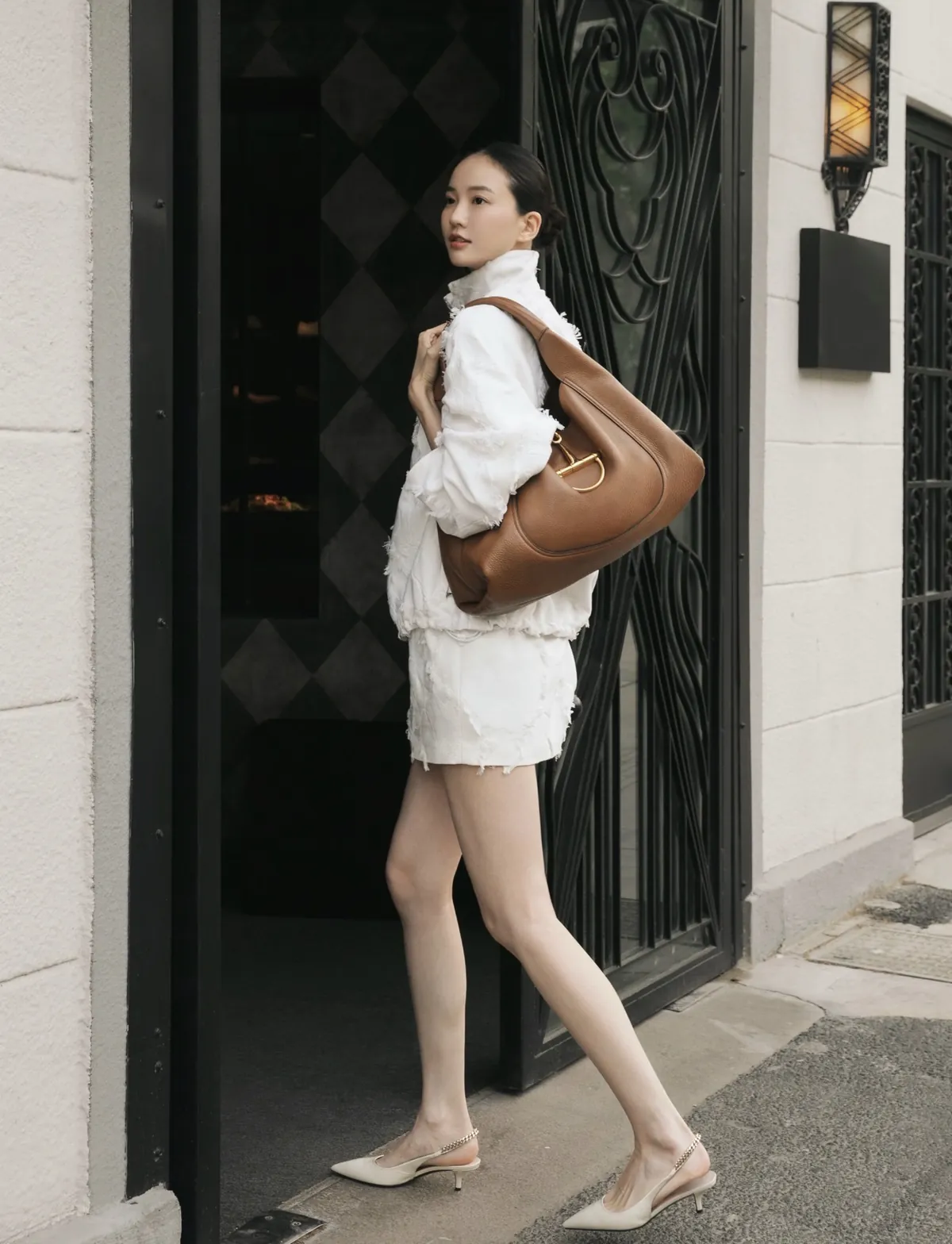
Then check the ankle. If the lower half is light and the shoe dark, the ankle becomes a third tone. Sometimes that is deliberate punctuation; often it is noise. Matching the shoe to the lower half keeps the single break clean at the waist. If you want depth without breaking the two-tone logic, a burgundy bag with cream, grey and black shows how one deep tone can substitute for a light/dark contrast.
Direction C: stripes kept to one garment and away from the handle
Stripes are the thread most likely to overpower. One striped garment per outfit, and keep the pattern away from the bag handle, where hardware and the hand already draw the eye.
- Striped knit, plain bottom. A Breton-style top over solid trousers or a plain skirt is the most wearable formula. Fine stripes read quieter; broad stripes are bolder. The striped knit cardigan guide shows how to keep the pattern contained.
- Striped skirt or trousers, plain top. Put the stripe below the hand and away from the handle, and keep top and bag solid.
- One striped accessory. A scarf or small bag in stripes works only when everything else is plain and the stripe sits away from the shoulder and handle.
Watch stripe direction against where the bag rests. Horizontal stripes at the waist and a bag carried at the same height compete; a shorter shoulder strap worn higher clears the pattern.
Shoes and bags across all three directions
A few cross-cutting rules keep the directions coherent.
- One element carries contrast. In a two-tone outfit, keep bag and shoes close to one of the two tones; a third tone fragments the split.
- Black dress, one light accessory. A pale bag or scarf is enough; the dress does the rest.
- Stripes with solid accessories. Solid shoes and a solid bag preserve the stripe's clarity.
- Footwear follows hem. Under a midi dress, a structured flat or low block heel keeps the line; under a knee-length shift, a tonal loafer or simple flat is the calmest choice.
Selection criteria before you add anything
Answer three questions before buying. First, do you own a black dress with a hem you actually like, whether knee, midi or long? Second, can you form a light/dark pair from separates you already wear, and does the break land where you want it? Third, is there one striped piece you reach for often enough to build around?
Fill gaps with plain, well-cut pieces rather than copies of specific looks. Prefer fabrics that hold a clean line and colours that repeat something you already own. The Biarritz spirit is ease and clarity: a black dress, one clean contrast, a single stripe. Treat the collection as inspiration for proportions and placement rather than a shopping list.