To choose a hem for wide-leg trousers and loafers, put on the shoes first and check three things: how the fabric meets the front of the shoe, whether the back clears the ground, and what changes when you walk or sit. Pin a trial length before committing to an alteration.
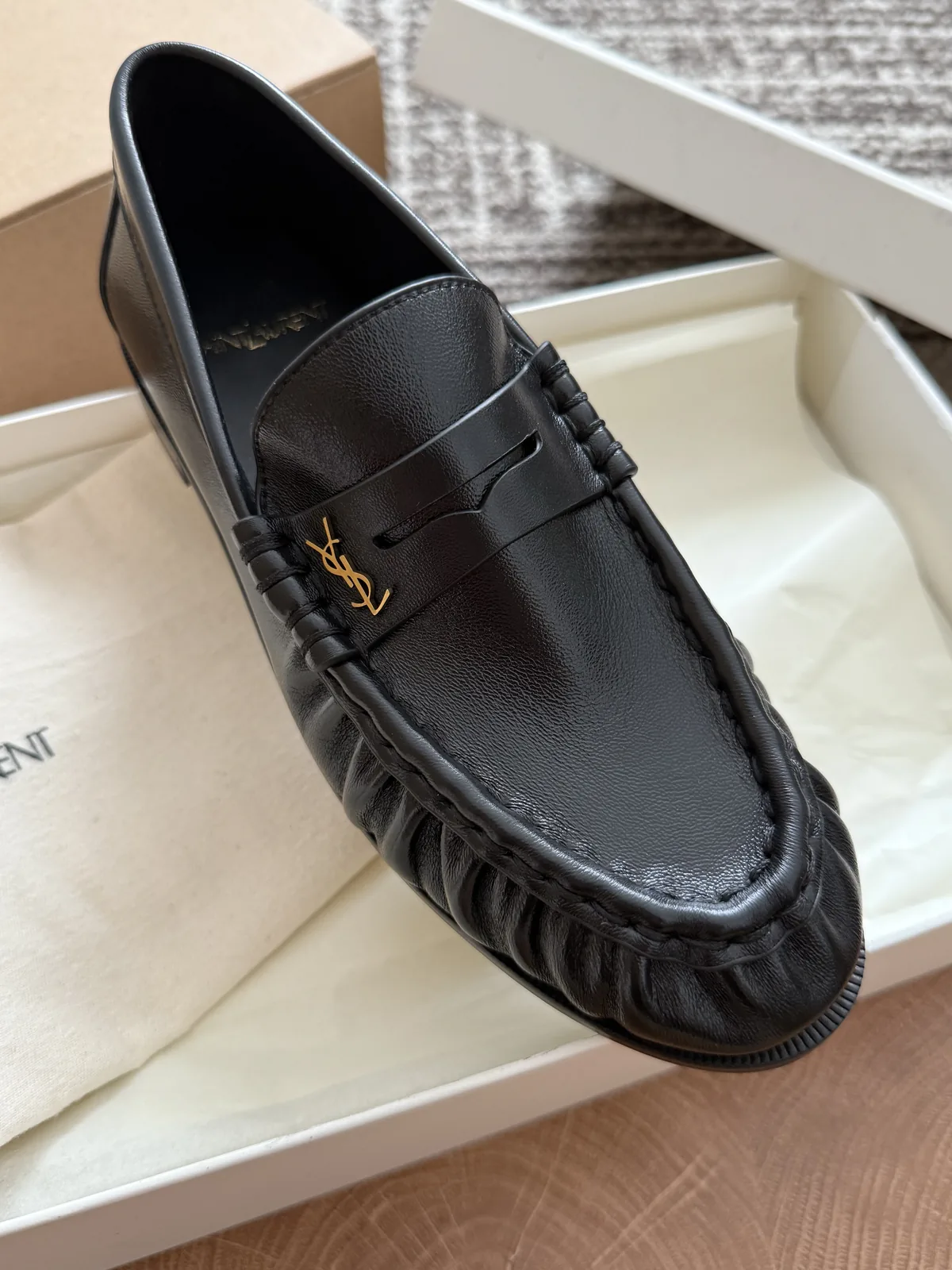
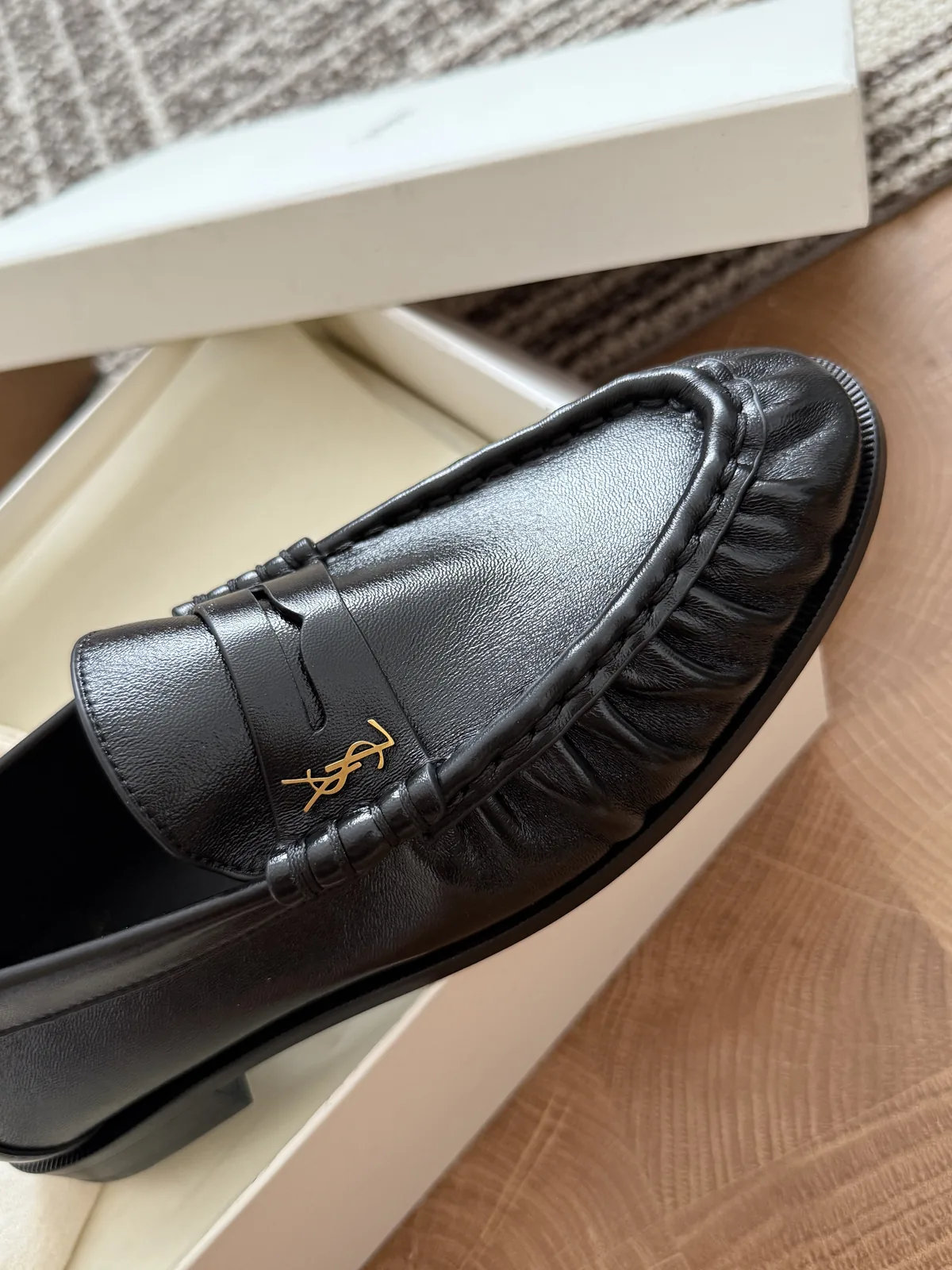
The reference photographs show a black loafer with a rounded front and a small gold tone detail. The trouser combinations below are styling suggestions to try with your own clothes.
1. Check the front without losing the shoe
Stand naturally with the waistband where you normally wear it. For a full length finish, try a hem that reaches towards the shoe without collecting in several folds across the front. You should be able to see enough of the toe to understand how the trouser leg ends.
A cropped finish creates a different line: more of the loafer and ankle area remains visible. Neither finish is automatically better. Compare both in a mirror, then decide whether you want a continuous trouser line or a clearer separation above the shoe.
2. Check the back with the exact pair of shoes
Look from the side and behind, or ask someone to take a quick photograph. The back hem should stay clear of the ground and out from beneath your heel. A length chosen with a higher shoe can behave differently with a loafer, even when the trousers look similar from the front.
If the back catches, pin the fabric and try again before cutting it. Check both legs rather than relying on one measurement. A tailor can assess the final alteration with the trousers sitting correctly and the intended shoes on your feet.
3. Check movement, not just a standing photograph
Take several ordinary steps, turn and sit down. Watch whether the hem slips under the back of the shoe or gathers over the toe. Sitting also shows how much sock or ankle will be visible. Repeat the check after adjusting the waistband, since its position changes the length at the floor.
A wider opening can cover more of the shoe than a narrower one at the same length. If the loafer seems lost, first compare a slightly shorter trial hem or a clearer waist position. You can then decide whether a different shoe shape would suit the trousers you want to keep.
Build one of three simple combinations
- For relaxed tailoring: charcoal trousers, a white shirt and black loafers. Keep the shirt partly tucked if you want the waist to remain visible.
- For a lighter palette: cream trousers, a navy knit and black loafers. A dark belt or bag can repeat the shoe colour without making every piece identical.
- For a casual day: wide-leg dark denim, a plain T-shirt and a short jacket. Test the hem again, since a firmer denim can sit differently over the shoe.
Decide what happens above the loafer
If a cropped hem leaves a visible gap, choose socks as part of the outfit. Plain dark socks can continue the line of dark trousers; a contrasting sock makes the ankle area a deliberate detail. Check how the fabric behaves when you sit instead of judging only the standing view.
Take the actual shoes, intended socks and a photograph of your preferred trial length to a fitting. That gives you a more useful starting point than a universal measurement copied from a different outfit.
Images shared by B·Y Team. Styling notes prepared by BinYue Club with AI assistance.