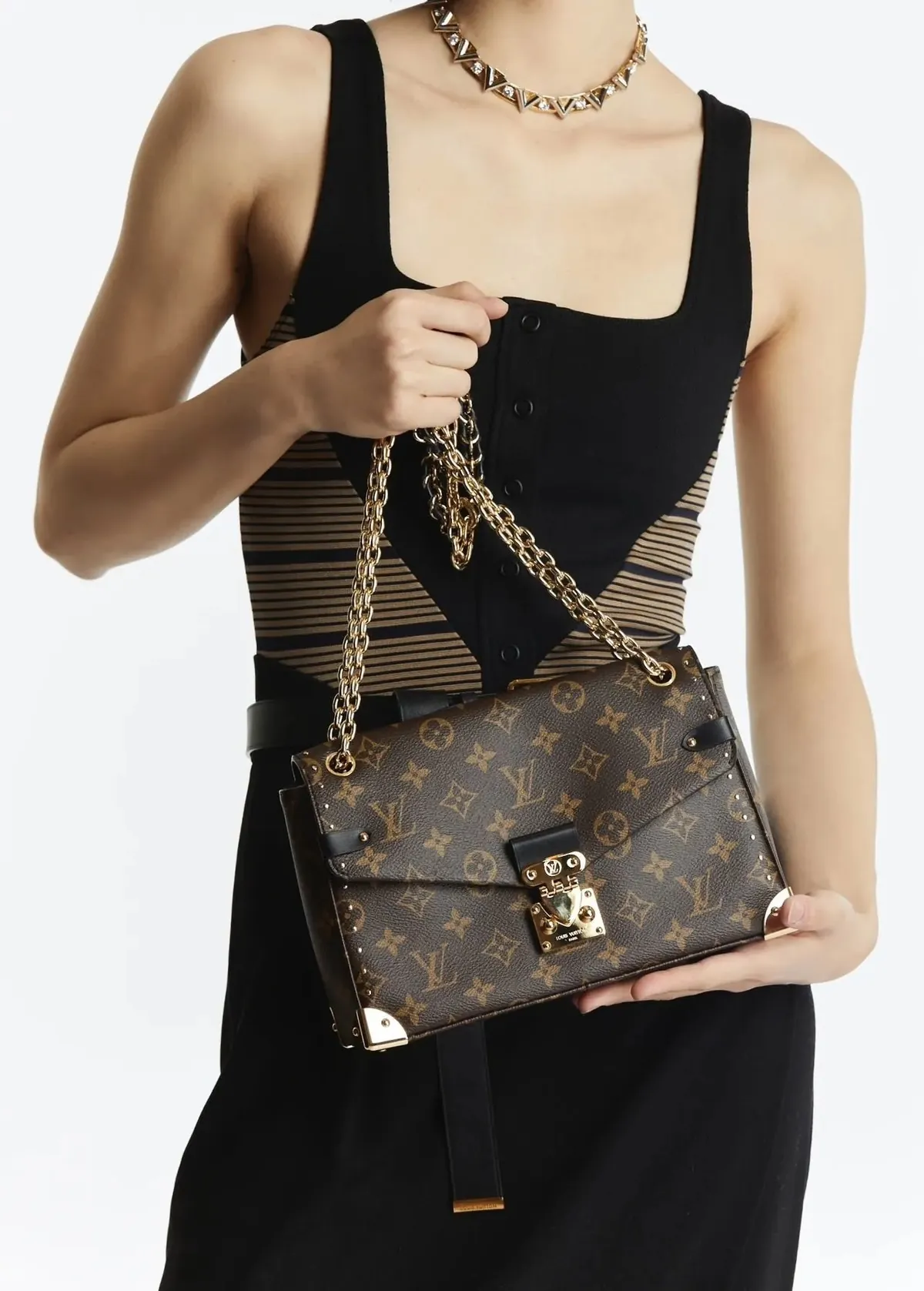
The style notebook
Chanel Spring-Summer 2026 Maxi Flap Bag: Two Maxi Sizes Carry and Outfit Choice
Chanel Spring-Summer 2026 Maxi Flap Bag: the wide 7.7 x 12.6 flat and the taller 10.2 x 5.2 body, and which suits your shoulder and outfit.
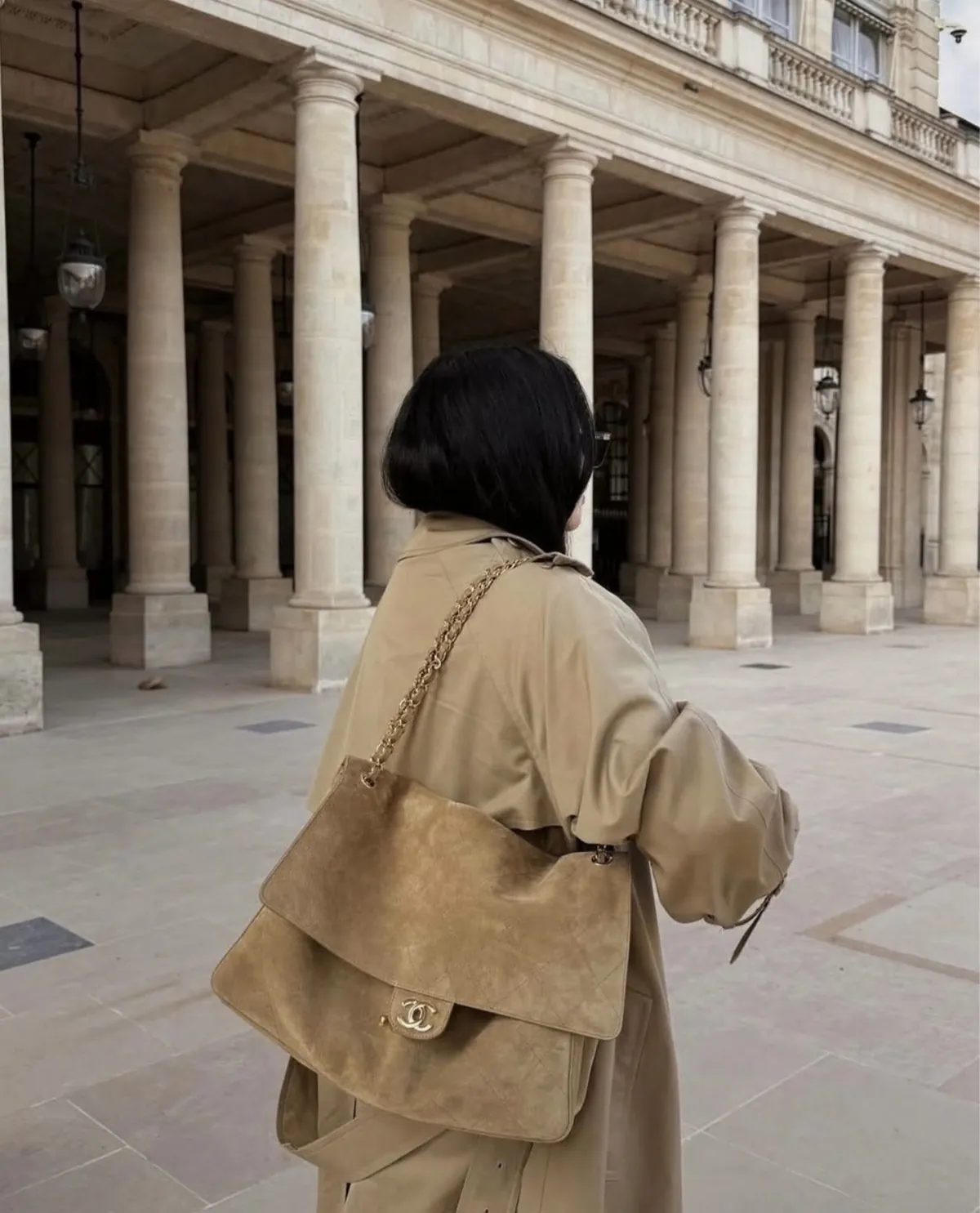
The Chanel Spring-Summer 2026 Maxi Flap Bag comes in two sizes that share one name: a wide, shallow body measuring 7.7 x 12.6 x 3.9 inches, and a taller, deeper one at 10.2 x 5.2 x 4.3 inches. The first is the bag for a horizontal, under-the-arm line; the second is the one that reads as a compact vertical block. Everything below is about which rectangle you want sitting against your clothes, because the construction is the same in both: grained calfskin, no quilting, no chain, slim adjustable leather straps threaded through four eyelets, and the double-flap construction and Mona Lisa Smile pocket carried over from the Classic 11.12 (design facts from Anna McWhirter's PurseBop report, published 23 September 2026; the proportion and outfit reading is my own).
The featured image is an existing Chanel wardrobe reference, separate from the Spring-Summer 2026 looks discussed here.
The width-first body: 7.7 x 12.6 x 3.9 inches
At 12.6 inches across, this is a bag that follows the ribcage sideways and sits flat at just under four inches deep. On the body, it creates a long horizontal band, and that band is its most useful feature. A wide bag flatters a long torso or a narrow shoulder line, because it adds width where the frame is slight and stops short of the waist. It is also, in my reading, the easier of the two to wear over a tailored jacket: a flat panel pressed under the arm sits against the side seam rather than fighting the jacket's own shaping.
Where it gets awkward is with a cropped jacket or a belted waist. A 12.6-inch panel runs out past the narrowest point of a short jacket hem, so the bag tends to hang below the garment's edge and split the silhouette rather than sit within it. If your coats are long and straight, this width reads cleanly. If they stop at the hip, expect the bag to extend the line further down.
The height-first body: 10.2 x 5.2 x 4.3 inches
The second size is a different creature: 10.2 inches tall but only 5.2 across, and at 4.3 inches it is the deeper bag. That combination gives you a vertical block with real front-to-back volume. Against the body it reads as a compact rectangle, which leaves more of the torso visible and tends to suit shorter jackets, blazers with defined waists, and anything worn open over a vertical column.
The extra depth changes how it sits. A 4.3-inch-deep body projects further from the torso than the flat version, so it holds its position against the side of the body rather than lying flush. With a soft, unstructured sweater the bag will appear to push the fabric; with a smoother woven fabric or a jacket with a defined side seam, the block reads more deliberately. This is a styling observation, not a claim about how the bag behaves in wear.
Jacket width and the shoulder line
The honest question is not which dimensions are bigger but which rectangle belongs on your frame. A narrow shoulder line takes the tall size better: the vertical edge gives the eye something to hold against a small frame, and the shorter width stops it dominating the chest. A broader shoulder or a long torso takes the wide size, where the horizontal band balances rather than extends the line.
If you live in oversized tailoring, the flat, wide bag is the more forgiving partner because it slides along under a generous armhole instead of competing with the volume above it. If your tailoring is fitted and precise, the upright bag suits better: it echoes the vertical seams rather than cutting across them. Both carry the same slim adjustable leather strap through four eyelets, so the strap's adjustment, not a chain, is the only hardware story. A plain, unembellished strap means the clothing can carry texture instead — a ribbed knit, a grained tweed, a brushed wool — without a chain adding its own line.
What each size asks you to carry
Both are called Maxi, but the word describes the grid, not the capacity. The flat 12.6-inch body gives you length to lay things out along one plane: a slim wallet, a flat pouch, a phone, a folded scarf. The taller body trades length for depth, so it stacks things vertically — a sunglass case standing on end, a small notebook, a compact wallet below. That is the practical difference in my reading, drawn from the dimensions alone.
What I cannot tell you is whether your particular laptop or folio will pass through either opening, or whether each flap closes over a full daily load. The dimensions describe the outside only. Before deciding, test that yourself: bring your actual everyday contents, check the opening, and confirm the flap shuts without strain. A bag that measures wide enough but closes awkwardly is not the one you will use.
A fit check on your own shoulder and coats
The measurement that matters most is not on the spec sheet: how the strap sits once adjusted, and whether the bag hangs where you want it. Fit the straps and try it on over the coat you wear most often — a long wool coat changes where the bag falls compared with a light jacket. A wide bag under a heavy sleeve may sit lower and further back than it does over a shirt; the tall bag may catch on a thick lapel. Neither problem is visible in a number.
My recommended order: put on the coat, adjust the slim leather strap to the length you would actually wear, and look at where the bag's bottom edge lands against your waist and hip. The flat 7.7 x 12.6 body should finish as a horizontal line you can see past; the 10.2 x 5.2 body should form a column that stops before your hand. If one of those lines feels like it belongs on your frame, that size is the answer — regardless of which is nominally larger.
For the same bag with its narrow strap, see the narrow leather strap outfit guide; for the plain-tailoring context around the Souplissimo name, the plain tailoring guide covers it.