The style notebook
Dior Fall 2003 Lace-Up Leather Trousers: Outfit Ideas with a Black Trench
Dior Fall 2003 lace-up leather trousers: keep the white tank plain and let the black belted trench sit open so the laced front and waist belt stay legible.
Yes. The white tank should stay plain, and the black trench should hang open. The Dior Fall 2003 lace-up leather trousers already carry three competing gestures: the corset lacing running down the front of each leg, the mid-rise waistband, and the skintight glossy leather. Sophie Wang, writing for Harper’s Bazaar on 21 November 2026, describes the Fall 2003 Galliano-era trousers worn by Kim Kardashian as glossy red leather with a mid-rise, skintight fit and corset-like lacing down the front of each leg. She also notes the black leather trench was tied at the waist with a matching belt, cinching an hourglass shape. My reading: the belted waist is the outfit’s anchor, and everything above and around it should support that, not duplicate it.
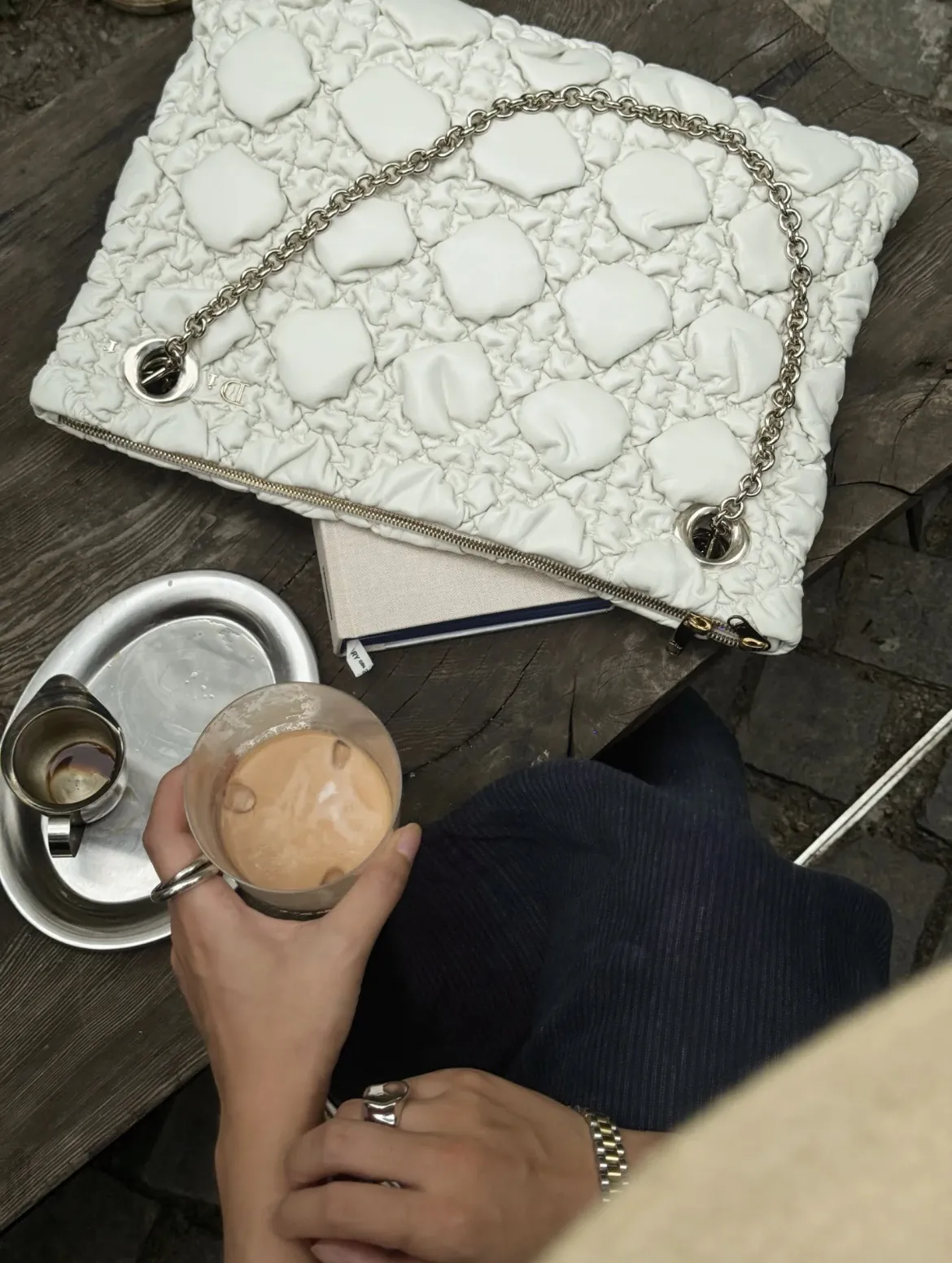
The featured image is an existing Dior wardrobe reference, separate from the Fall 2003 looks discussed here.
Why the tank stays plain
A white tank does two things here. It gives the eye a flat, unbroken plane above the laced trousers, and it keeps the neckline open for the pop of red Wang describes peeking out between the top and the coat. A printed tee, a lace top, or anything with its own hardware at the centre front would add a third system of lines to a body that already has the trouser lacing and the belted waist running at two different scales. Plain white is not the timid choice; it is the one that lets both mechanical details read.
A tank with a wider neckline sits better than a high crew here, because the red at the neckline is a deliberate interruption. A high neck covers it. If you prefer a tee, keep it fitted and plain; a boxy or cropped tee above skintight leather breaks the vertical proportion the trousers are cut for.
Where the coat sits
The trench should be open at the front with the belt tied loosely at the natural waist, not cinched tight. Wang reports that the waist belt was what created the hourglass shape, and that shape is the point. A trench left entirely unbelted loses that definition, while a tightly knotted belt competes with the laced trouser front and makes the whole outfit read as one continuous corset. Loose tying keeps the belt visible as a waist marker while letting the tank and trouser lacing show through the open front.
Sharp shoulders with epaulettes and wide, pointed lapels, as Wang describes the outerwear, are already a lot of structure at the top. That is why the coat should stay open: the shoulder and lapel architecture frames the upper body, while the open front reveals the waist and the laces. Buttons closed at the waist would hide the one line the outfit is built around.
Hardware discipline
The trouser lacing is the focal hardware. A belt that matches the coat at the waist is already one metal or leather gesture; adding a statement buckle does not add information, it clutters the centre front. The same goes for the neck: a delicate chain or no necklace at all lets the red peek at the neckline do its work. A wide pendant or a layered collar lands in the same zone as the laces and the lapels. Keep the wrists simple too, since the belted cuffs on the trench are their own detail.
What changes if you swap the colour
The formula survives a red trouser replaced by black or oxblood, because the contrast comes from the white tank against the dark leather, not from red alone. The white tank and open black trench carry the same logic. Where you would break the formula is a trouser without lacing: then the belted trench can be cinched tighter, because there is no second corset system to compete with. Wang’s description is specific about the lacing, and the styling advice here hinges on that detail. The Dior cropped leather jacket and black dress guide shows a different leather outerwear proportion worth comparing if you want a shorter jacket over the same trousers.
Testing the layers
Before committing, try the trouser with the tank and trench together and check whether the open front reveals the waist belt clearly when you move and sit. The laced front on each leg is described as running the length of the leg, so a tank that ends at the waistband or just below keeps the top of the lacing visible. This is a fit check, not a guarantee of how the trousers or coat will behave on you.
The reference image is an existing Dior wardrobe reference, separate from the Fall 2003 looks discussed here.