The style notebook
Chanel Comète Necklace: Styling a Plunging Dress Neckline
How a Chanel Comète necklace can frame a plunging silver gown without crowding it, using Vogue's reports on Céline Dion's 1997 and 2026 looks.

A Chanel Comète necklace works best against a plunging silver dress when it sits above the plunge rather than inside it. Let the necklace draw the top edge of the open line and the neckline carry the rest. Vogue's Lilah Ramzi, writing on 23 November 2026, reports that Céline Dion wore a Chanel Comète necklace with a plunging silver Chanel gown at the 1997 Oscars, and that Matthieu Blazy reimagined that gown for her 2026 Paris residency, paired with a new version of the Comète necklace. Those are the reported facts. Where the jewellery should sit, and when the bare line should win, is my styling reading.
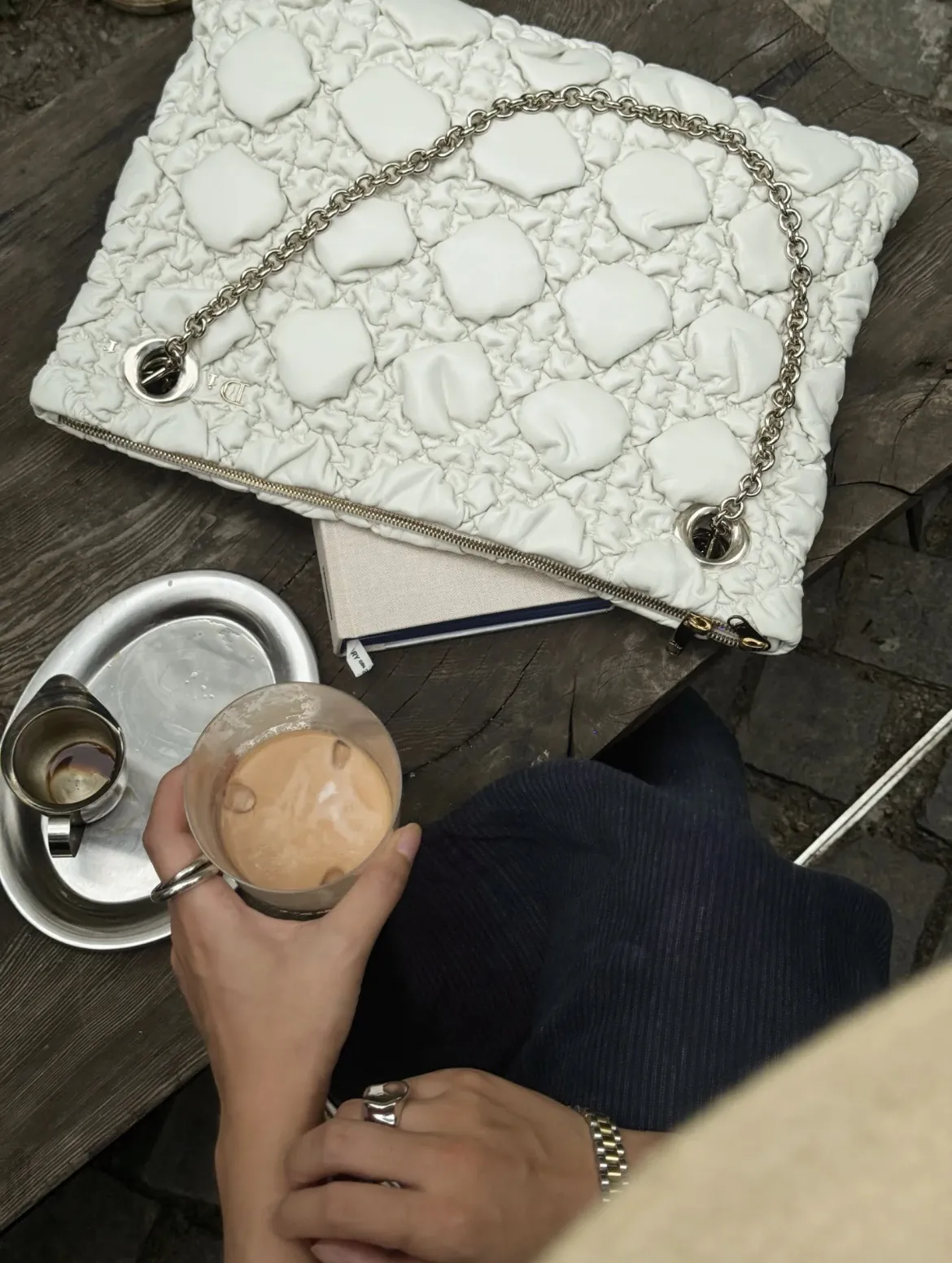
The featured image is an existing Chanel wardrobe reference, separate from the Comète necklace looks discussed here.
A 1997 red-carpet gown and a 2026 Paris stage look differ in lighting, distance and movement. The comparison is useful for separating the two styling jobs.
Let the plunge stay open at the throat
A deep V works by creating one long, narrow triangle from the collarbone down. A necklace that drops into the point of that triangle chops the shape into two shorter pieces. A necklace that rests at or just below the collarbone, or across the top of the V, gives the line a starting edge and leaves the drop below it uninterrupted.
That is the first decision: anchor the plunge from above. On a stage, where the body is seen at a distance and under moving light, a necklace placed near the collarbone also gives the eye a bright reference point that stays put even when the fabric moves. On a carpet, the same placement keeps the face and the neckline in one frame for photographs taken from several angles.
Match the metal, then decide on scale
Because Vogue describes the gown as silver, a silver-toned Comète is the quieter pairing: metal and fabric share a family of light, and the necklace reads as jewellery set into the dress rather than applied over it. My reading is that a strongly contrasting metal would introduce a second colour event at the neckline, which a plunging silver dress does not need.
Scale is the real question. The Comète form is star-based, and stars read as points. A necklace built from several of them around the neck draws a cluster of separate lights; a version closer to a single arc reads as one line. For a plunge, the second is easier to wear: the dress already supplies the drama, so the necklace only needs to cap it.
When the dress line should lead
If the gown's neckline is the point of the look, the useful move is to leave the front of the neck bare altogether. Earrings and a bare chest keep the V clean, and the silver fabric carries the eye from jaw to waist without interruption. The 2026 stage context makes this the stronger option when the performance involves a great deal of movement: fewer pieces at the front mean fewer points of light to keep track of.
The reverse also holds. A necklace earns its place when the neckline is formal but plain and needs a defined edge. Decide which is doing the work — the dress cut or the jewellery — and let the other one stand down.
What else stays quiet
- Earrings: small studs or a simple drop. Anything long competes with a necklace that already sits under the jaw.
- Hair: worn up or swept back exposes the plunge and keeps the neckline visible.
- Wrists: a bare or minimally jewelled wrist keeps the shine around the face and shoulders, where the plunge directs attention.
- Bag: a small, quiet shape. A second metallic gesture at hip level pulls the eye away from the neckline.
If you are choosing between a necklace and a dramatic earring, keep the necklace and keep the earring small. The plunge is a vertical line, and the necklace is what completes it at the top.
A trial before you commit
The safest way to judge placement is on your own body. The length of the V and the width of the shoulder differ from one dress to the next, so a necklace that finishes the neckline on one gown can land inside the plunge on another. Try the necklace on with the actual dress and check the mirror at the sitting and standing height of the occasion. If the necklace slides into the point of the V, it is too long for that neckline, or the neckline wants no necklace at all.
For more on how Chanel jewellery is used as a single focal point, see the Coco Crush jewellery outfit guide. Blazy's other design decisions are covered in the Fall/Winter 2026 black dress guide.