The style notebook
Dior Médaillon Bucket Bag: Open Top and Outfit Ideas
How the Dior Médaillon Bucket Bag's clip-secured open top and detachable zipped Oblique pouch change carry habits, plus Small versus Medium checks and outfit ideas.
The Dior Médaillon Bucket Bag asks you to decide two things before you dress around it, and neither is really about the bag's exterior. The first is what you will entrust to an open top closed by a clip. The second is whether the detachable zipped Oblique pouch, rather than the bucket itself, will be the real organiser. Anna McWhirter's PurseBop report, published 19 June 2026, identifies Small and Medium versions of the Dior Médaillon Bucket Bag and describes an open top secured with a clip and a removable zipped Oblique pouch. Those are the reported design points; the carry habits and outfits below are my styling reading, not a claim about how much the bag holds or how the closure behaves in use.
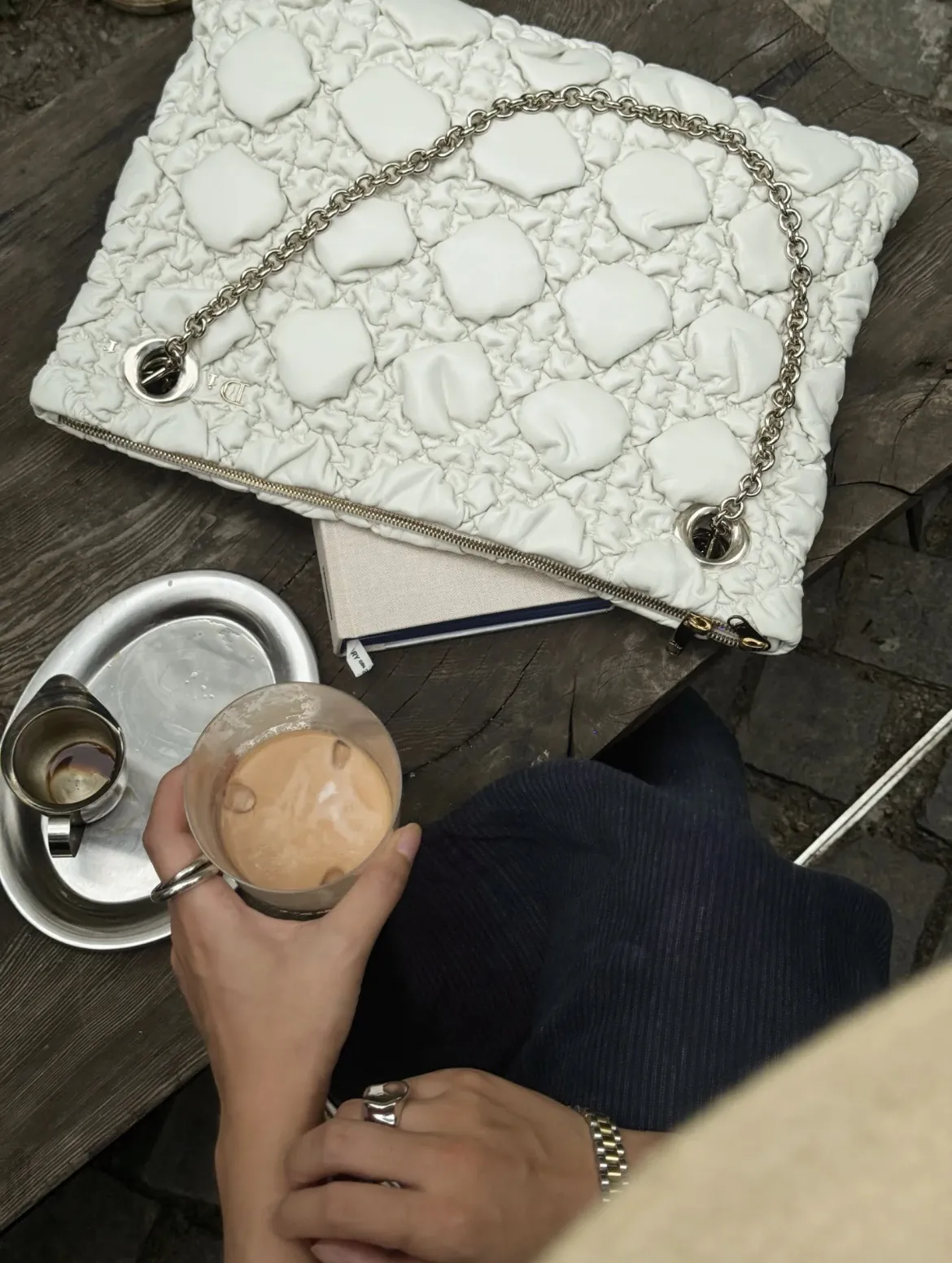
The featured image is an existing Dior wardrobe reference, separate from the Dior Médaillon Bucket Bag looks discussed here.
Start from a useful distinction. A zipped bag lets you close the whole container once and stop thinking about it. A clip-secured open top works differently: it is a partial restraint, useful for keeping the mouth of the bag from gaping, while the zipped pouch gives smaller items a sealed home inside. Treat the pair as a division of labour—the pouch for anything you would mind losing, the open section for items you want to reach into quickly. That is not a performance promise; it is a way to plan what goes where.
What belongs in the pouch and what belongs in the open section
The detachable pouch is the most valuable part of the design for daily use, because it can carry the things that need a zip: keys, a cardholder, a small mirror, a folded note, earphones. When it is inside the bucket, it also stops small objects from drifting to the bottom of a soft body. Detaching it turns it into a separate small case for an evening or a quick errand.
Reserve the open top for things that are safe to be less secured and easy to grab: a folded scarf, a paperback, a compact umbrella, sunglasses in a case, a phone if you are holding a coat or bag close to your body. The clip is what keeps the mouth tidy when you set the bag down. My reading is that the open section suits a short trip where you are not asking the bag to be a vault—not a full workday with a laptop and loose valuables.
Small or Medium: test the load, not the label
The report gives two sizes but no measurements, so the honest way to choose is to rehearse a real day. Pack what you actually carry—not an aspirational version of it—and see which size leaves the clip able to close and the bag still comfortable against you. Put the pouch in first, because it will occupy space that the open section otherwise appears to offer. Then add the largest single item you use daily. If the bucket has to stay visibly open or the items sit above the line of the clip, the size is wrong for that load.
That test matters more with an open top than with a zip. A zipped bag can be overfilled and still closed; an open bucket cannot conceal a load that sits too high. Try the bag with the clothes you plan to wear it with, because a soft bucket silhouette hangs against the body and reads differently over a coat than over a shirt. Do not take a stated size as a promise of capacity; the only useful answer is the one your own belongings give you.
Dressing around a soft bucket shape
A bucket bag pulls its weight low and rounded, so the outfit's job is to give it a clear line to sit against. My preferred pairing is vertical tailoring that stops near the bag: a straight trouser, a narrow coat with a clean hem, a column dress in a firm fabric. The bag supplies the curve and the softness. Jackets with a defined shoulder keep the whole silhouette from rounding off.
Where I would choose differently is in a very soft outfit. A loose linen shirt, wide cropped trousers and a slouchy knit together can leave the bucket with nothing to define it, and the open top reads as more casual than intended. If you want that relaxed register, keep one piece crisp—a pressed shirt or a flat-front trouser—so the bag still has an edge to play against. For a smarter day, a structured blazer and a fine-gauge knit is enough; a second rounded accessory, such as a soft hobo or a pebbled pouch carried outside, competes with the bucket's shape.
The reference image is an existing Dior wardrobe reference; it shows one Dior look, not the Médaillon Bucket Bag. Use it as a reminder of the clean vertical proportions that suit a rounded bag.
Carry habits that match the closure
An open top changes how you move through a day. If you commute with the bag on your shoulder in a crowd, the clip and the pouch help, but the open section still suits a bag you keep in front of you. Rehearse the gesture: put the pouch in, clip the top, then reach for a phone without undoing the clip. If that motion feels awkward with your actual belongings, you have learned what matters before buying.
The detachable pouch is also a decision about dressing for evenings. If you plan to leave the bucket at home after work, a pouch that carries a card, keys and a phone turns one purchase into two carry options. For more on removable-pouch logic, the Initials Hobo pouch guide covers the same organising idea in another Dior shape. If you want a closed Dior bucket alternative, the Médaillon Flap guide addresses the central-clasp version. And if the softness of this bag is what attracts you, the Cigale guide shows how a more sculptural Dior bag is pared back in dress.
Choose the pouch as your organiser, the clip as a tidy finish, and the size by what you genuinely carry. Dress around the bucket's low, round line with at least one clean vertical or crisp edge, and the open top becomes a practical part of the outfit rather than an afterthought.