The style notebook
Hermès Adage Bracelet and Ring: Wrist and Sleeve Outfit Choices
A wardrobe guide to wearing the Hermès Adage bracelet with the double-finger Adage ring: sleeve clearance, bare wrist and hand-focused styling.
The Hermès Adage bracelet in rose gold and diamonds and the double-finger Adage ring work best when the wrist is treated as the bracelet's territory and the hand as the ring's. That means a sleeve that stops short of the wrist or pushes up cleanly above it, nothing else on the bracelet arm, and a second hand kept free of competing metal. PurseBop's Anna McWhirter, writing on 20 July 2024, describes seeking the rose gold Adage bracelet to match her existing Adage ring and "make it a full set." The sourcing is a personal anniversary account, and the styling decisions below are interpretation rather than claims about how the pieces perform.
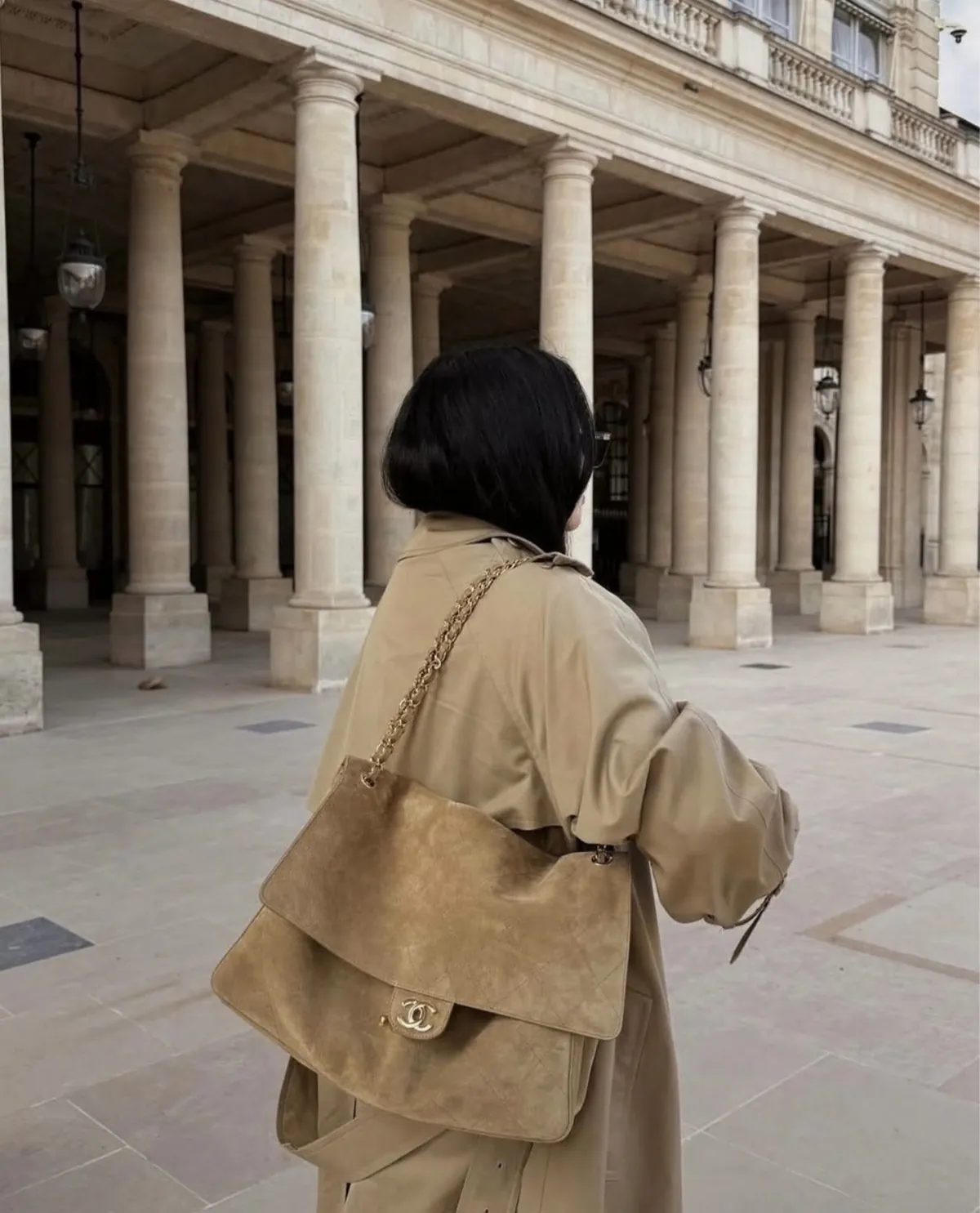
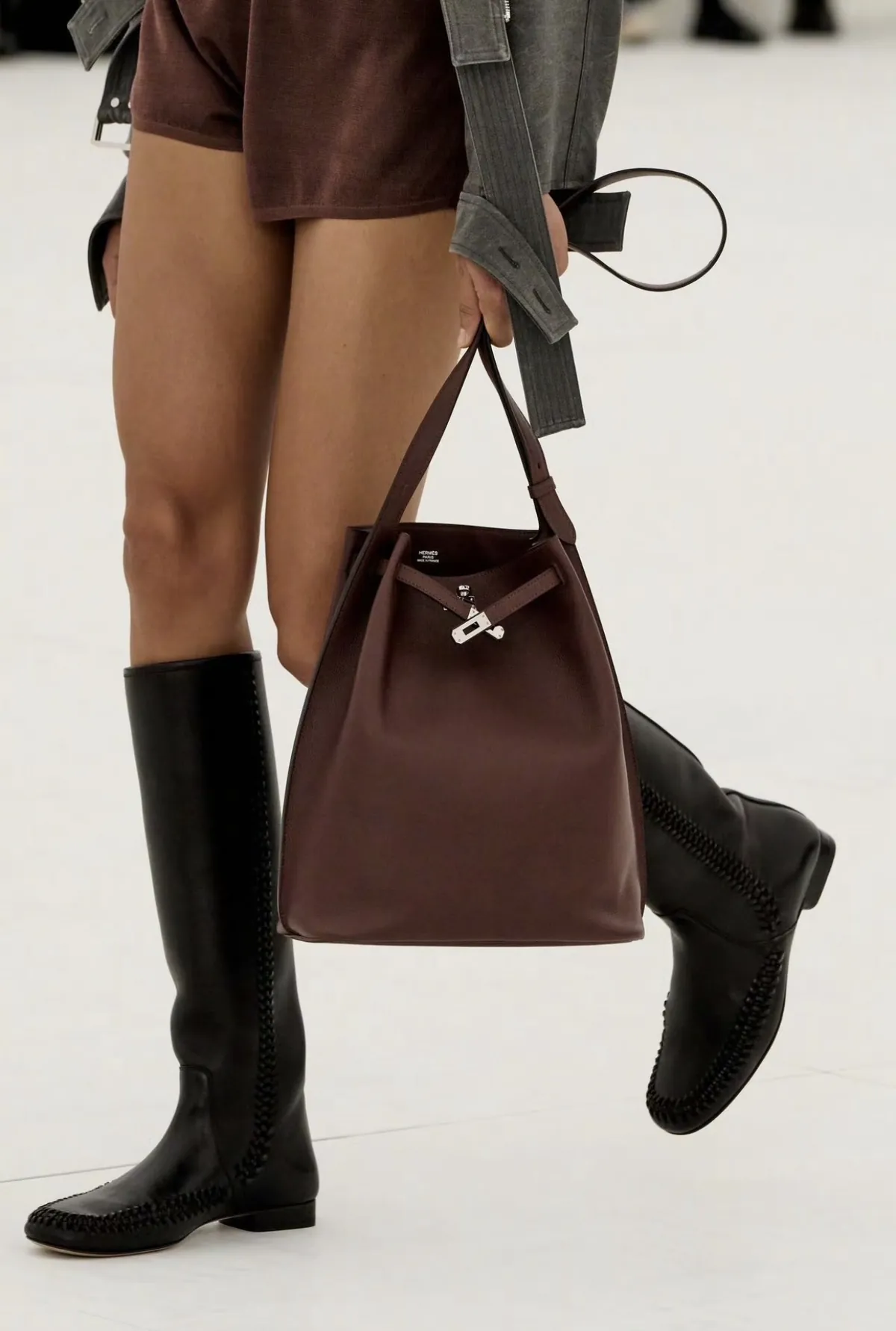
The featured image is an existing Hermès wardrobe reference, separate from the Adage looks discussed here.
Give the bracelet a clear stretch of wrist
McWhirter's account is useful precisely because it treats the bracelet and the ring as one project with two locations. She describes the bracelet as a piece she looked down at on her wrist, and the ring as one that spans two fingers. Those two facts set the wardrobe problem: a bracelet occupies the wrist circumference, and a double-finger ring occupies the whole visible hand.
So the sleeve should finish above the bracelet rather than meeting it. A bracelet-length sleeve that ends two or three centimetres up the forearm leaves the wrist open. A cropped or pushed-up sleeve does the same job. Where a long sleeve stays down, it covers the piece entirely, which defeats the point of wearing it. If the outfit is a fine knit, a cuff rolled or pushed back once is enough; resist the instinct to fold it into a thick band that crowds the wrist.
- Three-quarter sleeves, bracelet-length sleeves and pushed-up shirt cuffs all clear the wrist.
- Long, fitted sleeves that reach the wrist bone hide the bracelet; leave them for days the bracelet stays home.
- A wide, unstructured sleeve opening gives the bracelet room without pressing on it.
Keep the bracelet arm quiet
A watch on the same wrist competes with the bracelet for the same stretch of skin, and the bracelet has no room to read as a distinct object. Leave the wrist bare apart from the bracelet. If you want a watch, wear it on the other arm, and even that second arm should stay simple so the hand and the wrist divide the attention between them.
The ring does more work than a single-finger ring because it spans two fingers. McWhirter calls it "a statement in every sense of the word" and notes over three carats of diamonds; her description of it as a piece that catches the eye "even from afar" is a useful guide to how much it asks of the hand. A second ring on the same hand, or stacked bands on the neighbouring fingers, would divide a space the double-finger design already fills.
Match the two pieces by leaving them alone
Because both share the rose gold and diamond language, the pieces belong together. They do not need help from other jewellery. The easy register is the one McWhirter describes wearing to dinner after receiving the bracelet: a considered outfit, long sleeves that end before the wrist, a bag carried close. Her companion look for the Ginza store — a long black deerskin trench, gloves and a shoulder bag — is a useful reminder that long sleeves can work with the bracelet if the glove and the cuff are chosen with the wrist free in mind. That is my reading of her account, not a description of how the outfit was actually worn to display the piece.
The existing Adage double-finger ring guide deals with the ring's own cuff and second-ring question. Read this page as the companion decision: it is about clearing the wrist for the bracelet and keeping the hand single-minded for the ring.
Where I would choose differently
If only one piece is worn at a time, the rules relax. The bracelet alone tolerates a slim watch on the opposite wrist and a simple band ring on the hand, because there is no second statement to share space with. The ring alone can carry a short sleeve and a bare wrist, since the hand is the only focus.
What I would avoid is a long, narrow cuff at the wrist bone, a chunky watch on the bracelet side, or a second ring on the ring hand. None of these is forbidden by the pieces themselves; they simply make the pairing harder to read. Before committing to an outfit, try the sleeve and the jewellery together, and try the bracelet with the clothing you actually plan to wear, since fit at the wrist is a personal matter the sources do not settle.