The style notebook
Hermès Birkin Bags: Retourne or Sellier for Your Wardrobe
Compare Hermès Birkin Retourne and Sellier silhouettes, with outfit formulas for relaxed layers, sharp tailoring and wardrobes that mix both.
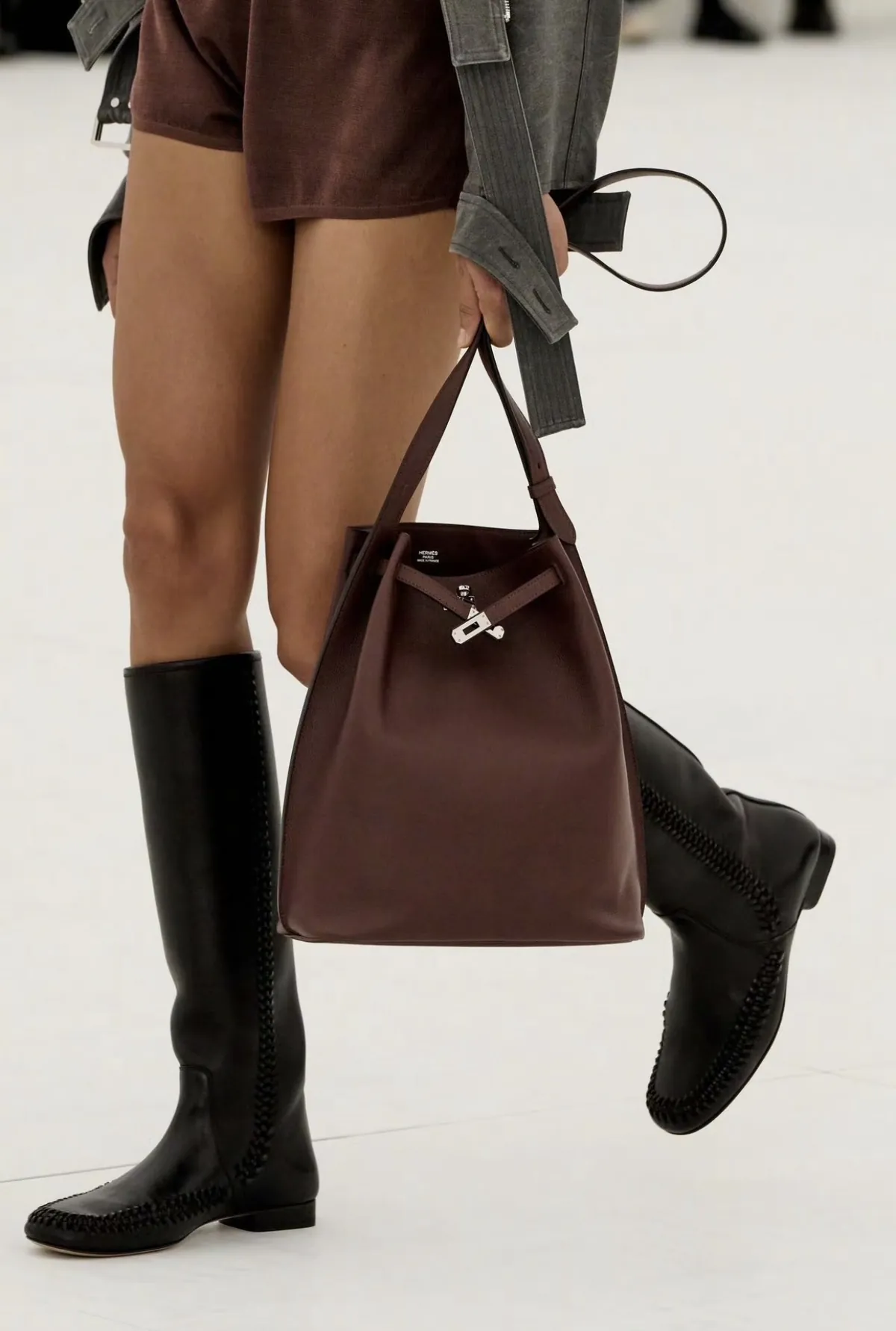
The Hermès Birkin can play two distinct roles in a wardrobe: Retourne’s rounded outline complements relaxed clothing, while Sellier’s defined edges echo structured tailoring. Either can also work in contrast. Choose Retourne to soften a suit, or Sellier to give jeans and knitwear a sharper finish.
The existing Hermès So Kelly 22 day-and-evening outfit image is a separate wardrobe reference, not an image of the Birkin construction discussed here.
What changes in the silhouette?
According to specialist publication PurseBop, Retourne is stitched from the inside and turned right side out, concealing the seams and creating a softer, rounded profile. Sellier has visible exterior stitching and defined edges, producing a more architectural outline.
That construction distinction is design context rather than a dress code. The suggestions below are styling interpretations: repeat the bag’s lines for a harmonious look, or contrast them for a more deliberate mix. When comparing the two, start with the outline and edges rather than letting color make the decision for you.
Retourne with relaxed clothing
Start with straight-leg blue jeans, a white shirt worn loosely at the waist and flat loafers. A Retourne Birkin continues the easy line of the shirt without making the outfit feel overly coordinated. Add a long, open coat for a cleaner vertical line, or substitute a cardigan when you want a softer effect from head to toe.
For a skirt alternative, pair a fluid midi skirt with a fine knit and ankle boots. Partly tuck the knit if the skirt has volume; that small definition at the waist keeps the softer pieces from feeling shapeless. A bag close in color to the skirt creates a quiet column, while a contrasting shade makes the rounded silhouette more noticeable.
For another adaptable casual base, see the white-shirt-and-jeans outfit guide. Swap the shoes or outerwear to suit your day, keeping the shirt’s relaxed fit as the common thread.
Sellier with structured clothing
Try a single-breasted blazer, straight trousers, a simple crew-neck top and pointed flats. Sellier’s crisp outline reinforces the jacket’s clean shoulders and the trouser crease. Leave the top plain so the outfit has a clear hierarchy: tailoring first, defined bag second, accessories last.
For an alternative to a suit, wear a fitted knit with a straight midi skirt, a belted coat and low-heeled boots. Choose a coat that ends below the skirt or clearly above it, rather than at nearly the same point. The separation between the two hems gives the look an intentional rhythm, while the bag adds another geometric element.
Wide trousers work too: choose a shoe with a visible toe and check the hem while standing and walking. The wide-leg trouser and loafer guide offers useful proportion checks.
Use contrast instead of matching lines
Retourne can soften a structured wardrobe. Wear it with a dark trouser suit, a relaxed open-neck shirt and simple flats: its rounded outline breaks up the straight lines without undermining the suit. This is a useful approach when you want tailoring to feel less formal. A knit top in place of the shirt makes the transition even gentler.
Sellier can bring definition to casual pieces. Combine an oversized sweater, straight jeans and understated sneakers, then use the bag as the crisp counterpoint. To balance the contrast, let one other piece have a clean edge: a neat shirt collar, a straight coat or a sharply folded cuff will do. Not every item needs to be structured.
Choose for the wardrobe you wear
- Mostly soft layers and denim: Choose Retourne for a continuous, relaxed effect; choose Sellier if you want the bag to introduce contrast.
- Mostly suits and straight coats: Choose Sellier to repeat those lines; choose Retourne to introduce a gentler shape.
- A mixture of both: Assemble one casual and one tailored outfit from clothes you already own. Decide whether you prefer the bag to blend into each look or stand apart.
- Color and scale: Consider whether you want a tonal bag or a contrasting accent, then judge its visual size against your usual coat and trouser proportions. Treat those choices separately from construction.
For a practical color exercise, try a dark red bag with cream, grey or black rather than matching every accessory. The burgundy bag outfit guide offers combinations to adapt to either silhouette. Ultimately, choose the outline that gives your most-worn clothes the balance you prefer, not the one that fits a single idealized outfit.