The style notebook
Loro Piana Spring 2027 Tailoring: Tie and Scarf Choices with Soft Suits
Loro Piana Spring 2027 tailoring: how a tie or a scarf finishes the neckline of a pale-neutral soft suit, and which one keeps the look uncluttered.
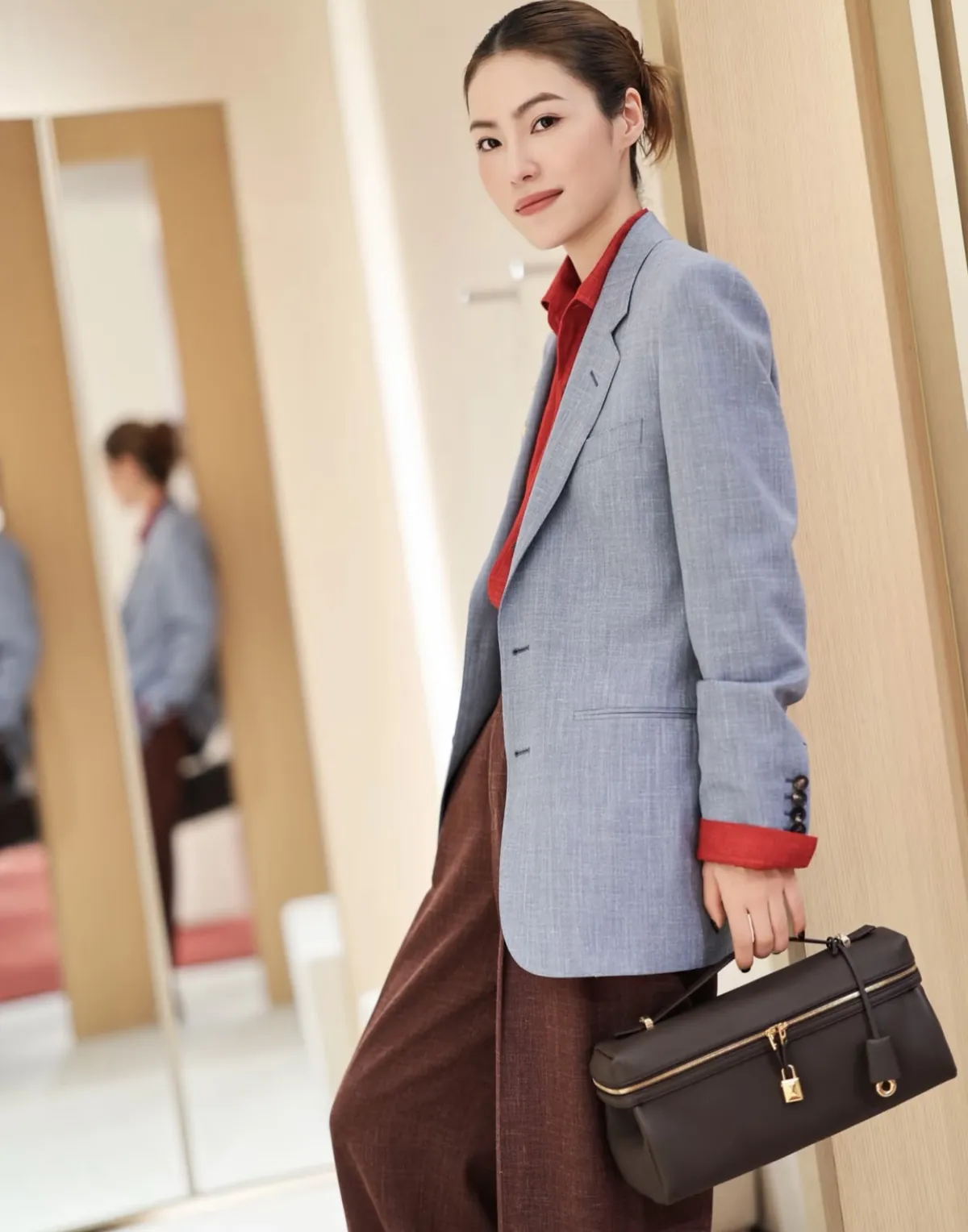
For a soft, pale-neutral Loro Piana Spring 2027 suit, the tie and the scarf do genuinely different jobs at the neckline. A tie gives the jacket a crisp vertical anchor and makes the tailoring read as considered and formal. A scarf breaks the same vertical line into a softer curve, which suits daytime and travel better than a desk. Pick by occasion rather than by habit: if the suit needs to look decisive, tie; if it needs to look relaxed but still intentional, scarf. That choice is my styling reading of the season, not a reported house instruction. The featured image is an existing Loro Piana wardrobe reference, separate from the Spring 2027 looks discussed here.
The featured image is an existing Loro Piana wardrobe reference, separate from the Spring 2027 looks discussed here.
What the season actually tells us
Vogue's Luke Leitch (25 September 2026), reporting the presentation among the leather-bound books of Milan's Biblioteca Nazionale Braidense, notes that Spring 2027 included a display dedicated to scarves, "as is usual here," and to ties, "which is not." A representative said this reflected a detected renewal of consumer appetite for tailoring. Leitch also places soft tailoring and pale neutrals among the house's familiar codes, joined this season by brighter colour accents. Those are the reported facts. What follows is how I would use them to decide the neckline.
Two implications are worth holding onto. First, the tie is not an old habit being restated; its appearance among the displays is the less expected element, so it carries a little of the season's argument. Second, the scarf remains the house's established gesture, which means choosing it is the quieter, less self-conscious option. Neither is a correction of the other.
The tie: sharpening a soft suit
Soft tailoring is forgiving through the chest and shoulder. A tie restores some structure precisely where the jacket has given it away: a clean knot and a straight blade draw the eye down the centre of the body and make the lapels look deliberate rather than loose. On a pale-neutral suit — sand, oat, putty, warm grey — a tie in a deeper, quieter tone does this most efficiently. Navy, charcoal, deep olive or a muted brown sit against pale cloth without competing with it, and they keep the neckline reading as one piece.
- Texture over pattern. A lightly textured tie in a single dark tone gives the neckline weight without introducing a second focal point. A strong stripe or a busy print fights the softness of the suit and starts to clutter the upper body.
- Keep the shirt plain. A white or very pale solid shirt lets the tie do the whole decorative job. A striped or checked shirt plus a patterned tie plus pale suiting is three voices at the neck.
- Knot modestly. A compact, four-in-hand-style knot suits a soft collar better than a large, symmetrical one; a big knot on a relaxed lapel looks like two ideas pulling apart.
Where I would choose differently: if the jacket is cut very softly and the trousers wide and fluid, the tie can read a little forced. That is the point at which the scarf, or an open collar, makes the more coherent outfit.
The scarf: softening the same suit for daytime
A scarf answers the daytime version of the question. Where a tie tightens the neckline, a scarf introduces a soft mass of cloth under the collar or around the throat that reads as travel and ease — consistent with the field wear and travel clothes Leitch lists among the house codes. Against pale neutral cloth, a scarf offers colour where a tie would offer authority. A warmer accent — rust, ochre, a muted green — adds the brighter colour accents the report mentions without turning the suit into a colour story.
Placement matters more than the knot. Folded into a narrow band and set inside the jacket's open collar, a scarf finishes the neckline and still leaves the lapels visible. Draped with longer, loose ends, it becomes an outdoor layer and the jacket should close over it or stay open accordingly. Tucking it away so only a sliver shows at the throat is the subtlest version and the easiest to wear with pale suiting.
How to keep either finish uncluttered
The neckline only leads if nothing else argues with it. Against pale-neutral tailoring, that means a plain shirt beneath a tie; a simple collared shirt or fine knit beneath a scarf; and restraint in the pocket square. If a square appears at all, keep it plain or faintly textured and let the tie or scarf set the tone. Skip a second strong pattern, whether in the shirt, the square or the jacket.
The rest of the outfit should stay quiet: the trousers and jacket already carry the suit's line, and the shoes only need to be plain and dark or tonal. If you want a reference for keeping wide or fluid trousers clean at the hem, see wide-leg trousers with loafers, where the hem length, not the accessory, does the work.
Choosing between them
Reach for the tie when the suit is carrying a decision — a meeting, a formal lunch, an occasion where the tailoring should be noticed. Reach for the scarf for daytime, travel and any setting where the softness of the cut should lead and the neckline should support it. The scarf also gives you more flexibility in shirts, since it tolerates an open collar. If you already own a dark textured tie and a warm-toned scarf, you have both answers and neither needs replacing: the pale suit is the constant, and the neckline finish is the variable you change by occasion.