The style notebook
Louis Vuitton Fall 2026 Split Moc-Toe Shoes: Trouser and Hem Outfit Ideas
Louis Vuitton Fall 2026 split moc-toe shoes: trouser widths, hems and plain uppers that keep the split toe and easy Soft Goodyear sole readable.
For the Louis Vuitton Fall 2026 split moc-toe shoe, the trouser plan is a straight or gently tapered leg that finishes just above the shoe with a clean, uncuffed hem — enough break to show the shoe is being worn, not enough fabric to sit on the split. Vogue's Luke Leitch (published 20 January 2026) describes "gorgeous split moc toed shoes—a little bit Paraboot, a little Russell Moccasin" in Pharrell Williams's Fall 2026 menswear collection, built in a Soft Goodyear construction "that allowed their gel-buttressed leather soles to bend like the lightest of sneakers." Those are the reported pieces; the trouser, hem and upper judgements below are my own styling reading of how that kind of shoe behaves under a leg.
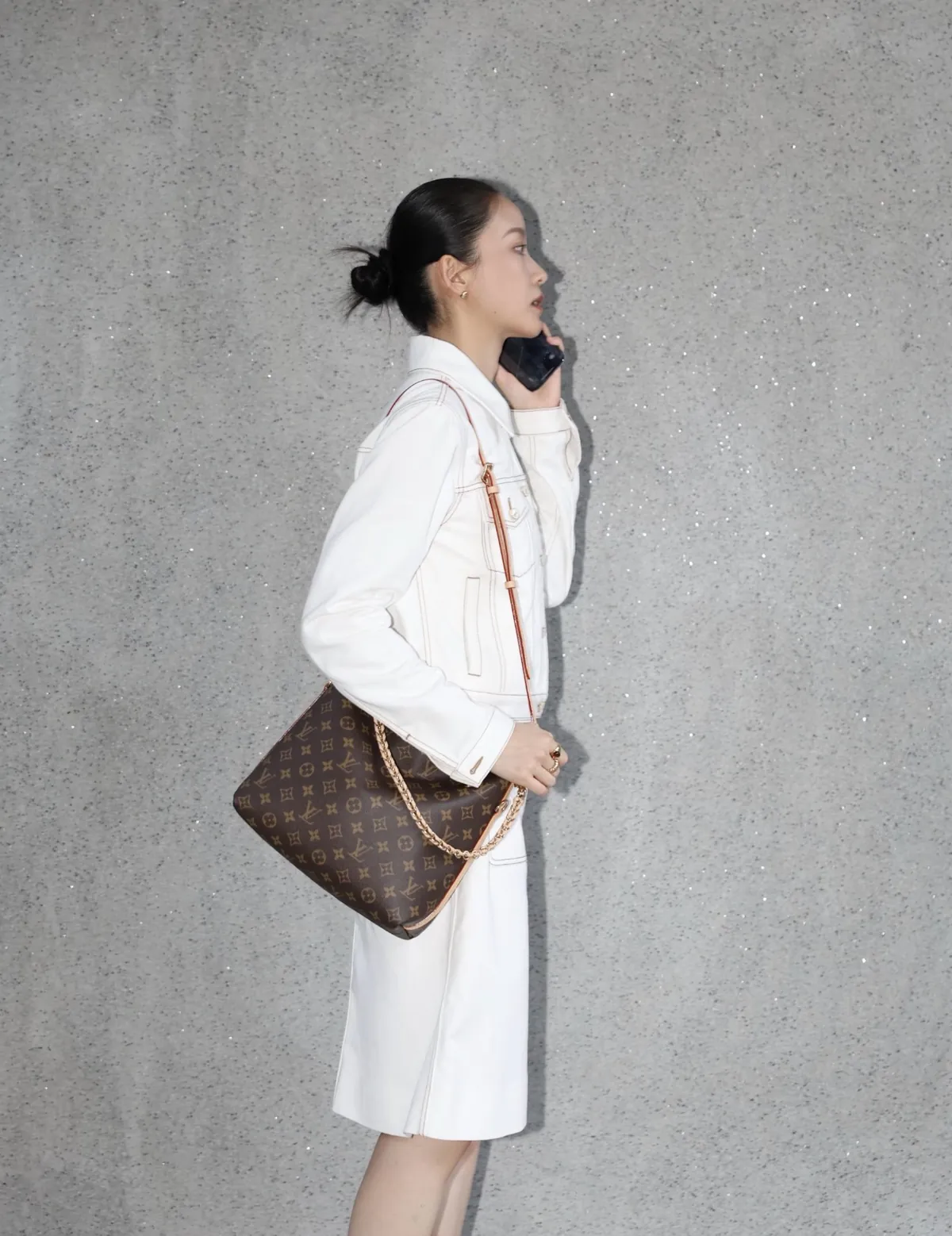
The featured image is an existing Louis Vuitton wardrobe reference, separate from the Fall 2026 looks discussed here.
The split toe is a small seam running forward from the vamp and dividing the toe box. It is the detail that gives the shoe its moccasin character, and it disappears under any hem that drapes low and wide enough to hover over the foot. The easy, bending sole adds a second consideration: this is a shoe that wants to be seen in motion, so the trouser should let a little of it show rather than masking it. The featured image is an existing Louis Vuitton wardrobe reference, separate from the Fall 2026 shoes discussed here.
Width: straight is safer than wide, and very wide asks for a cropped hem
A straight-leg trouser in wool, cotton twill or a fine corduroy is the default. Its line falls cleanly past the ankle and stops short of the shoe, leaving the split toe visible from a standing angle and from the side. A gently tapered leg — narrow at the ankle but still roomy through the thigh — does the same job with a slightly sharper finish and suits the moccasin's low, rounded toe.
A wide-leg trouser can work, but only if you take the hem in. A full, floor-skimming wide leg swallows this shoe: the split seam and the bending sole simply are not in the picture. If you want the volume, hem it to a cropped length that ends above the ankle bone, so the hem swings clear of the shoe. That turns the wide leg into a deliberate silhouette choice rather than an accident. Between the two, I would choose the straight leg for everyday wear and reserve the cropped wide leg for the days when the leg volume is the point.
Hem: no cuff, minimal break, and a clean edge
The trouser should break once, lightly, over the shoe — or not at all. A sharp centre crease above a no-break hem is the most classic reading of a moc-toe shoe, and it echoes the heritage references Leitch names. A slight break softens it without hiding the split.
Avoid a deep stack of fabric at the ankle. It puts a fold of cloth directly over the seam you are trying to show, and it also visually contradicts the shoe's easy, bending sole by making the bottom of the outfit look heavy. If your trousers are long, turning up a small cuff is one option, but keep it shallow and unfussy; a wide, deep turn-up adds weight at exactly the wrong place. A plain hem is the cleaner answer for this shoe.
Plain upper halves: let the shoe be the quiet interest
The split toe is a small, subtle detail, so it works best when the rest of the outfit does not compete for the same visual attention. Plain, solid-coloured trousers — charcoal, navy, dark brown, stone, olive — give the eye one place to rest. If there is a pattern, keep it in the upper half: a simple checked or striped shirt, a plain knit. A boldly patterned trouser, a busy print or heavy embellishment at the ankle will draw the eye away from the shoe and make its split seam read as clutter rather than craft.
The same logic applies to the shoe's heritage reference. A moc-toe shoe sits naturally with a plain trouser and a plain shirt; it does not need a matching heritage jacket to justify itself. A simple top half — a shirt, a light knit, a plain overshirt — keeps the shoe as the outfit's quieter point of interest, which is the right register for a small seam.
Where I would choose differently
If the day involves a lot of walking, I would lean toward the straight leg with a no-break hem and a plain upper half, because the easy sole is the reason to wear the shoe and the trouser should not distract from it. If I wanted a more formal line, I would take the same straight trouser in a darker solid and keep the shoe visible with a slightly cropped hem. If I were trying a wide leg, I would test the hem length against the shoe before committing — crop it above the ankle, then check in a mirror that the split seam still reads from a standing angle. That is a fit check, not a claim that the shoe will perform a certain way.
For related trouser-and-shoe decisions, see wide-leg trousers and loafers: three checks for the right hem and how to style a black shoulder bag with wide-leg trousers.