The style notebook
Louis Vuitton Handbags Outlet: Authenticity Check for Bag Buyers
Before buying from a Louis Vuitton handbags outlet online, test the seller against the brand's own channel list and no-markdown rule, then choose calmly.

A Louis Vuitton handbags outlet that presents itself as an authorised discount source fails the source question before you examine a single photograph. Louis Vuitton's own outlet page states that outlet stores claiming to sell authentic Louis Vuitton handbags are not associated with Louis Vuitton. That settles the brief's opening question quickly, and it points to where the real work sits: separating a legitimate secondhand purchase from an unaffiliated seller wearing outlet language, then deciding what to buy and how to wear it. Everything below about screening sequence, resale and clothing is my own judgement.
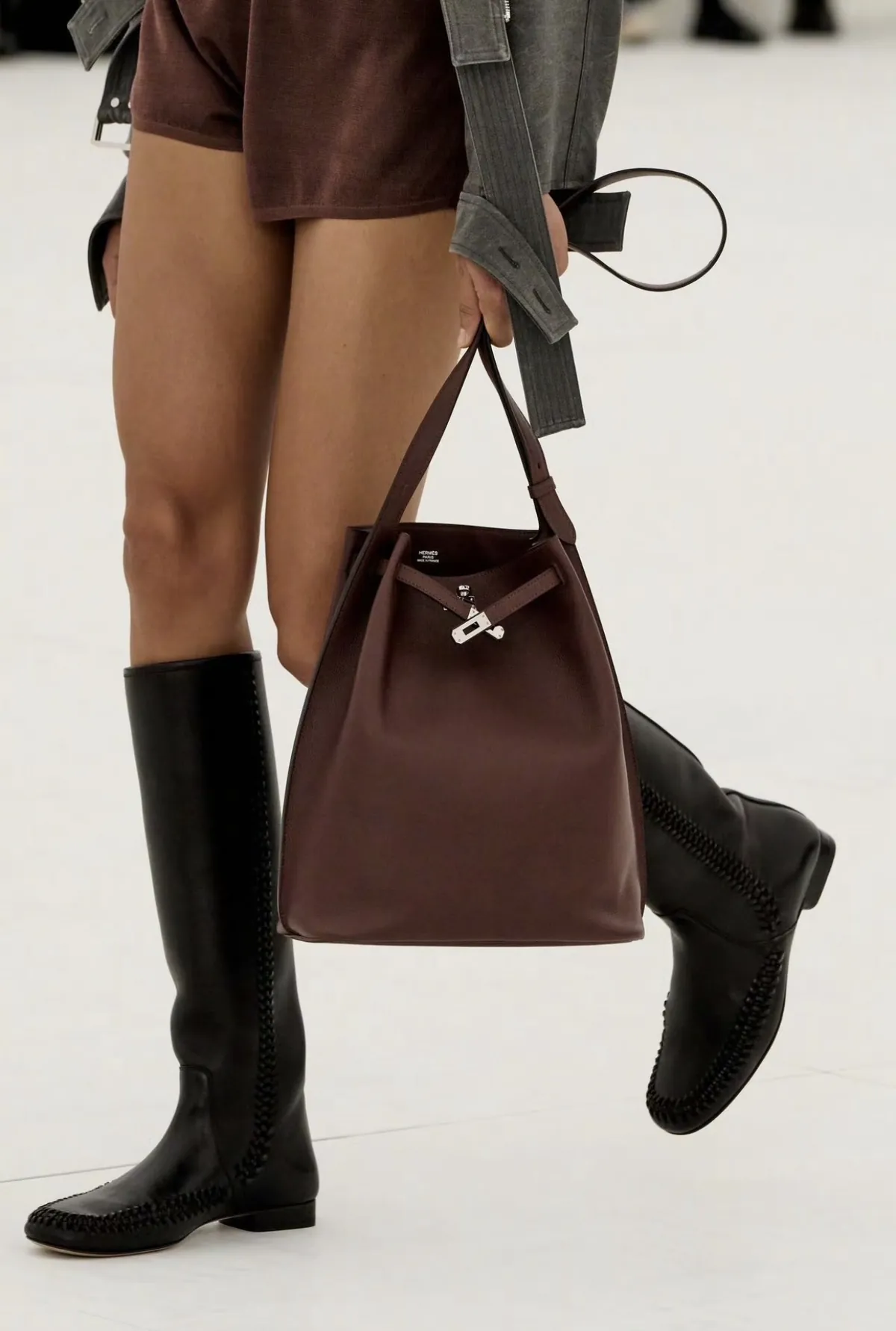
The featured image is an existing Louis Vuitton wardrobe reference, separate from the Louis Vuitton handbags outlet looks discussed here.
The channel test, before anything else
The brand's published position lists three routes: official Louis Vuitton stores, the official website, and 24S.com. The same page notes that Louis Vuitton Malletier and 24S.com both belong to the LVMH group, and that 24S.com carries only a limited range of Louis Vuitton products no longer available in Louis Vuitton stores or on the main site. It also states that Louis Vuitton never marks down its prices, and that unless an item is secondhand, discounted Louis Vuitton merchandise found online is described by the brand as highly suspicious. The page carries no visible publication date, so read it as a standing position rather than a dated announcement.
That gives a one-minute check you can run before opening the listing's photo gallery:
- Is the seller one of the three named routes? If not, the brand has already said it does not associate with that seller.
- Is the piece offered as new or as used? The no-markdown statement concerns new stock. A resale price is a different question about condition and seller terms, and you should know which conversation you are in.
- If it presents as new and below full price, what explains the gap? Outlet, overstock and clearance wording all sit against a published no-markdown policy.
Fail the first point on a piece sold as new and the matter is settled. You are not being asked to out-inspect a professional; you are being asked to notice that the seller was never an official route.
What the brand says about the discounted goods
The page goes past denying affiliation. It states that a bag claiming to be a Louis Vuitton handbag bought from a fictitious online outlet will quickly deteriorate or show noticeably poor construction, and that the low prices on sites claiming to be a Louis Vuitton outlet store are reduced for a reason: the wallets, watches and handbags are made with cheap, poor materials that will not stand wear or use. It also frames imitation as stealing craftsmanship from the artisans responsible for the brand's success and infringing its designers' creativity. These are the brand's stated positions, not a verdict on any particular listing.
The usable point is about information rather than inspection. A steep reduction on new-looking stock tells you something about who is selling. You can establish that before any payment clears.
The pre-payment checklist across bags, wallets and watches
Because the brand's warnings cover wallets and watches alongside handbags, the same test carries across small leather goods and timepieces offered at outlet pricing. Treat a failed step as final rather than something a second photo can cure.
- Match the website address against the two online routes the brand lists. Anything else styling itself a Louis Vuitton outlet is, on the brand's own account, unaffiliated.
- Ask what the reduction is for. Overstock, clearance and outlet-exclusive wording all contradict the no-markdown position.
- Separate new from secondhand deliberately. A genuine pre-owned bag is a different purchase, decided by condition, completeness and the seller's terms.
- Do not treat packaging or polished photography as proof. Presentation is easy to stage; verification lives in the seller's identity.
Two routes I would take instead
If the aim is a genuine piece at a lower entry point, two paths hold up better than an unaffiliated outlet. The first is a smaller object through an official channel — a wallet, card holder or other small leather good — where the price is lower because the object is smaller, not because someone is discounting a bag. The second is a clearly pre-owned bag whose condition and seller terms you can examine, entered into openly as a used purchase. One route asks you to accept a smaller item; the other asks you to accept a used one. The outlet route asks you to trust an unknown seller on price alone.
Keep the channel question and the resale question apart. Treating every reduced price as wrongdoing makes you miss legitimate resale; treating none as a signal makes you easy to mislead. The channel test answers the official-source question. Condition and terms answer the resale one.
Dressing around the bag once it is genuine
With the purchase settled, the clothing decision is usually about not building a rival focal point. Monogram canvas, embossed or quilted leather, or prominent hardware already supplies surface interest, so a plain knit, shirt or fine-gauge top in a solid neutral, a straight or wide trouser with a clean hem, and a simple shoe let the bag hold the eye. If yours is a shoulder style, the black shoulder bag with wide-leg trousers guide works through that proportion logic, and the wide-leg trouser and loafer hem checks are useful at the shoe end. For a deep colour rather than monogram, the burgundy bag outfit ideas piece takes up the pairing question.
Where I would choose differently: on a day you carry a strongly patterned or logo-covered bag, save the printed scarf and the large jewellery for a plainer bag on another day, because two assertive surfaces compete for the same attention. That is an editorial preference, not a claim about how any bag wears.