The style notebook
Miu Miu Spring/Summer 2027 Spaghetti-Strap Dresses: Raglan and Bralette Layering Ideas
Miu Miu Spring/Summer 2027 spaghetti-strap dresses: choosing a raglan shirt for day coverage or a tight bralette for evening tension, and what to reveal.
For Miu Miu Spring/Summer 2027, the tight bralette is the sharper partner to a spaghetti-strap dress and the raglan shirt is the more practical day layer. The choice hinges on one question: do you want the dress strap to stay legible, or do you want a new neckline to take over? ELLE Japan's Spring/Summer 2027 report, published 14 October 2026, states that spaghetti-strap dresses were layered with raglan shirts and tight bralettes. That layered pairing is the reported fact; how to split it into a day route and an evening route, and how much of the dress to leave visible, is my own styling reading rather than a description of one runway exit.
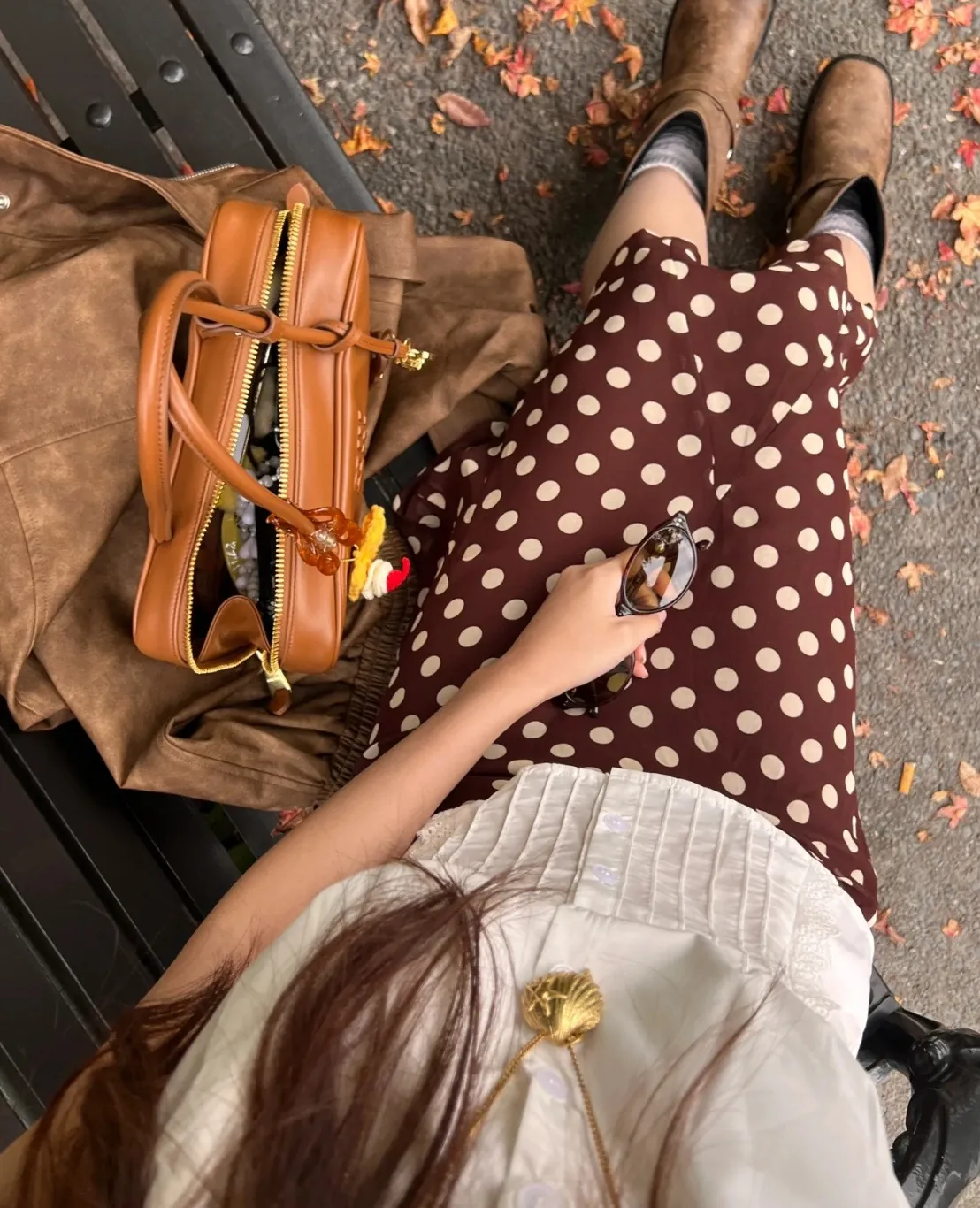
The featured image is an existing Miu Miu wardrobe reference, separate from the Spring/Summer 2027 looks discussed here.
Why the bralette suits the spaghetti strap, and the raglan changes it
A spaghetti strap is a thin vertical line running from the dress bodice over the shoulder. A tight bralette sits in roughly the same zone, so when it is worn with the dress the two thin straps can read as a deliberate doubled line rather than an accidental underlayer. That is why the bralette feels like an evening tension move: it adds a second narrow strap without building a new shoulder, sleeve or collar. The dress remains the outer garment and the bralette behaves as a second skin-close band.
A raglan shirt does something different. Its defining seam runs diagonally from the underarm to the neckline, creating a shoulder and sleeve where the dress has none. Over a spaghetti-strap dress, that sleeve is the day coverage you wanted, but it also means the dress strap is no longer the only line crossing the shoulder. If the raglan's neckline sits high and narrow, the dress strap can slip out of view; if the raglan opens wide, the dress strap can still show beside it. ELLE Japan does not specify the neckline, sleeve length or fit of the raglan, so treat the neckline as the variable you control when you try the combination.
The raglan-over-dress day route
Wear the raglan as a top layer when the dress should read as a skirt, a slip base or a colour block below the shirt hem, and when you want the outfit to look covered through the shoulder and upper arm. A short-sleeved or three-quarter raglan whose hem lands near the waist keeps the dress identifiable from the waist down. A longer raglan that covers the hip changes the proportion more decisively, and it works best when the dress beneath is narrow enough that the extra length does not create a second silhouette.
The neckline decision matters most. A crew or high round neckline will largely hide the dress straps and make the shirt the visible top; a wider or open neckline lets the straps reappear at the sides and keeps the spaghetti detail part of the outfit. If you want the Miu Miu athletic signal to stay subtle, keep the raglan plain and let the dress supply the only decorative note. If you want the sporty element to lead, a raglan with contrasting sleeves does that without a second athletic garment.
The bralette-with-dress evening route
Keep the bralette close and minimal so the dress still defines the silhouette. Because the source describes the bralette as tight, the useful styling logic is to let it sit inside the dress rather than over it: a narrow band that adds a second strap line and some tension at the neckline, while the dress remains the outer layer. A bralette worn over the dress would invert that relationship and turn the dress into a base, which is a different, louder look.
Colour is the simplest control. A bralette in a tone close to the dress makes the layering read as texture and shadow; a contrasting bralette makes the second strap a graphic detail. Either can work, but only one of those is happening at a time, so decide before adding jewellery or a bag. The same caution applies to the neckline: if the bralette comes up high, the dress neckline and the bralette edge compete for the same space, and a lower bralette line leaves the dress neckline as the frame.
One athletic layer at a time
The strongest reason to choose between the raglan and the bralette rather than combine them is that each already supplies the sporty reference. A raglan shirt plus a bralette plus a spaghetti-strap dress puts three athletic or near-athletic layers in one outfit, and the dress stops being the subject. The ELLE Japan report frames the season around mixing sportswear with polish; one sporty layer against a polished dress is the clearest version of that idea. If the day turns into evening, removing the raglan and revealing a bralette underneath is a cleaner transition than wearing both from the start.
Where I would choose differently
Choose the raglan when the dress is the piece you want to wear in daylight and you need shoulder coverage more than you need a bare neckline. Choose the bralette when the dress is the evening piece and you want the strap detail to stay visible. If the dress itself is already busy, a plain raglan or a tonal bralette keeps the complication low; if the dress is plain, the second layer can carry more of the visual interest. Before committing to either, try the actual dress with the actual layer you plan to wear, checking where the raglan neckline falls relative to the dress strap and where the bralette edge sits relative to the dress neckline. For a broader read on how Miu Miu balances athletic pieces with polish, the Spring 2027 sportswear and elegance guide is a useful companion.