The style notebook
Olive Shoulder Bag Outfit Ideas with Black, Cream and Taupe
Style an olive shoulder bag with black, cream and taupe. Start with one photographed look, then adjust colour, texture and carrying position.
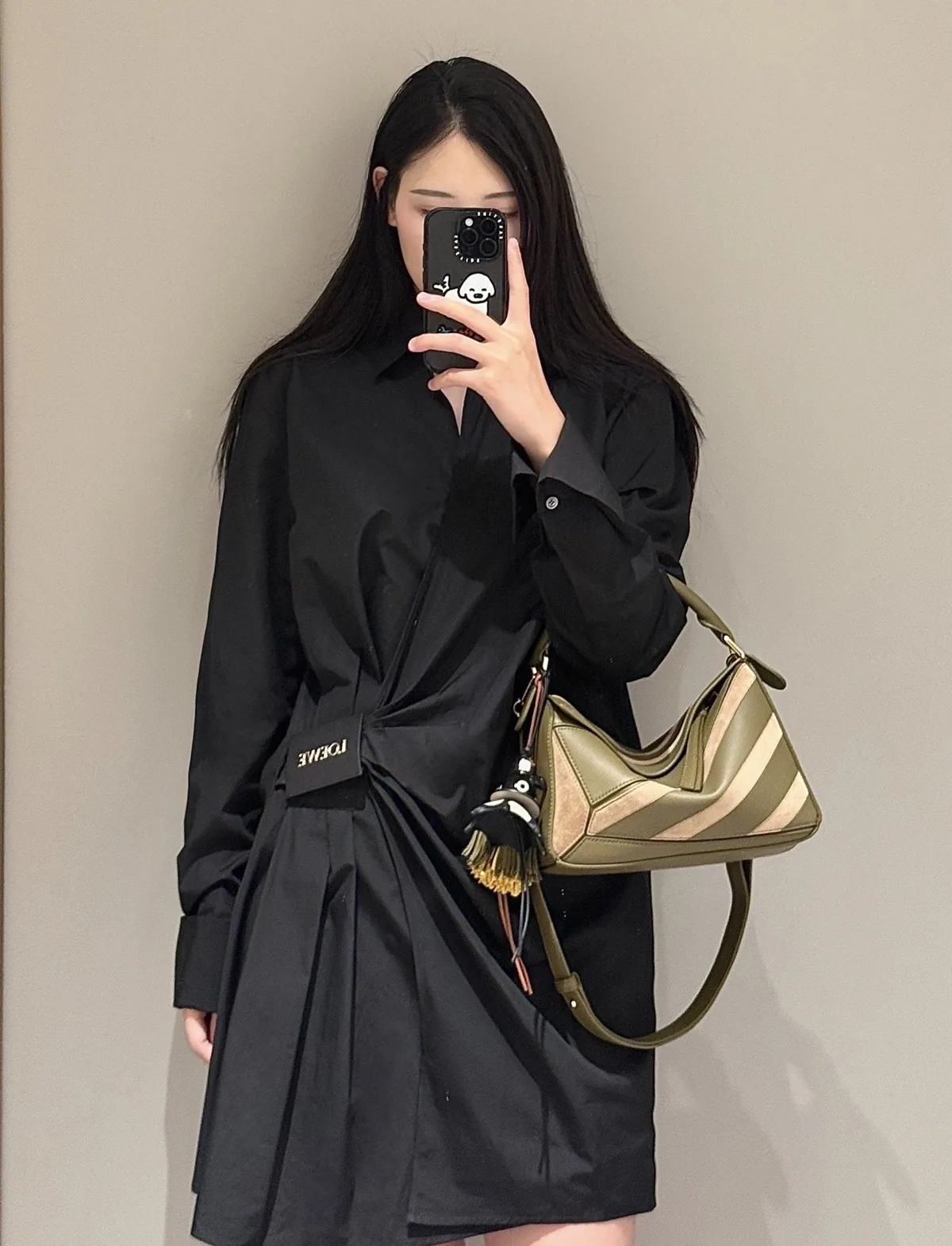
An olive shoulder bag can be the main accent in an otherwise neutral outfit. Start with black for a clear contrast, or try cream and taupe for a softer balance. When the bag already has contrasting panels, keep the clothes relatively plain and decide where its strap and lower edge sit against the outfit.
Start with the photographed black outfit
The reference photograph places an olive and pale beige shoulder bag beside a black collared, belted outfit. The dark background makes the diagonal panels easy to see. A defined waist also gives the bag a separate line at the side, rather than letting it disappear into loose fabric.
To borrow that balance, try a plain black shirt dress, or a black shirt with a matching skirt. These are alternatives to build from your wardrobe; the photograph supplies the colour relationship. Keep extra patterns away from the shoulder and waist so the bag has space to stand out.
Use cream to echo the lighter panels
For a lighter variation, pair a cream shirt or fine knit with dark trousers. The pale top can relate to the bag's lighter panels without needing an exact colour match. Compare the pieces in daylight: a warm cream and a cooler white create different contrasts with olive.
If cream trousers are your starting point, try a darker top instead. That moves the contrast towards the upper body while keeping the bag distinct from the trousers. You do not need a second green item to make the combination feel connected.
Keep taupe and olive distinct
Taupe can make a quieter base, but two muted colours can merge from a distance. Try a pale top with taupe trousers, then use the olive bag as the darker point beside the torso. If the outfit looks flat in a full length mirror, change one large area to black or cream before adding more accessories.
Texture is another option. The photograph shows smoother and more textured looking panels within the bag itself. A plain knit or an uncomplicated woven shirt lets those details remain visible. Treat the photograph as a reference for surface and colour, rather than a specification for the materials.
Check the carrying position
Put on the whole outfit before adjusting the strap. With a belted layer, compare the bag's lower edge with the waist. With a long jacket, try positioning the bag so its outline is distinct from the jacket opening. Move your arm naturally and see whether the bag and sleeve overlap awkwardly.
The reference includes a noticeable hanging charm. You can keep a similar decorative accent or choose a simpler bag outline. Make that decision before adding a patterned scarf or several statement pieces near the same shoulder.
Choose a quiet finish for shoes and jewellery
Black shoes can connect a dark outfit from top to bottom. Brown or taupe shoes are another option with pale trousers; compare their warmth with the olive bag rather than trying to match every shade. A small piece of gold tone jewellery can relate to visible hardware, but repeating the metal everywhere is optional.
For the final check, look at the outfit from the front and side. Decide whether the bag, the waist or the shoes should be the clearest detail, then simplify one competing area. A limited palette makes those small adjustments easier to judge.
Images shared by B·Y Team. Styling notes prepared by BinYue Club.