The style notebook
Prada Fall/Winter 2026 Embedded Archival Dresses: Minimal Layer Outfit Ideas
Prada Fall/Winter 2026 archival dresses embedded in minimal outer layers: decide which hem, cuff and neckline shows, with repeatable outfit formulas.
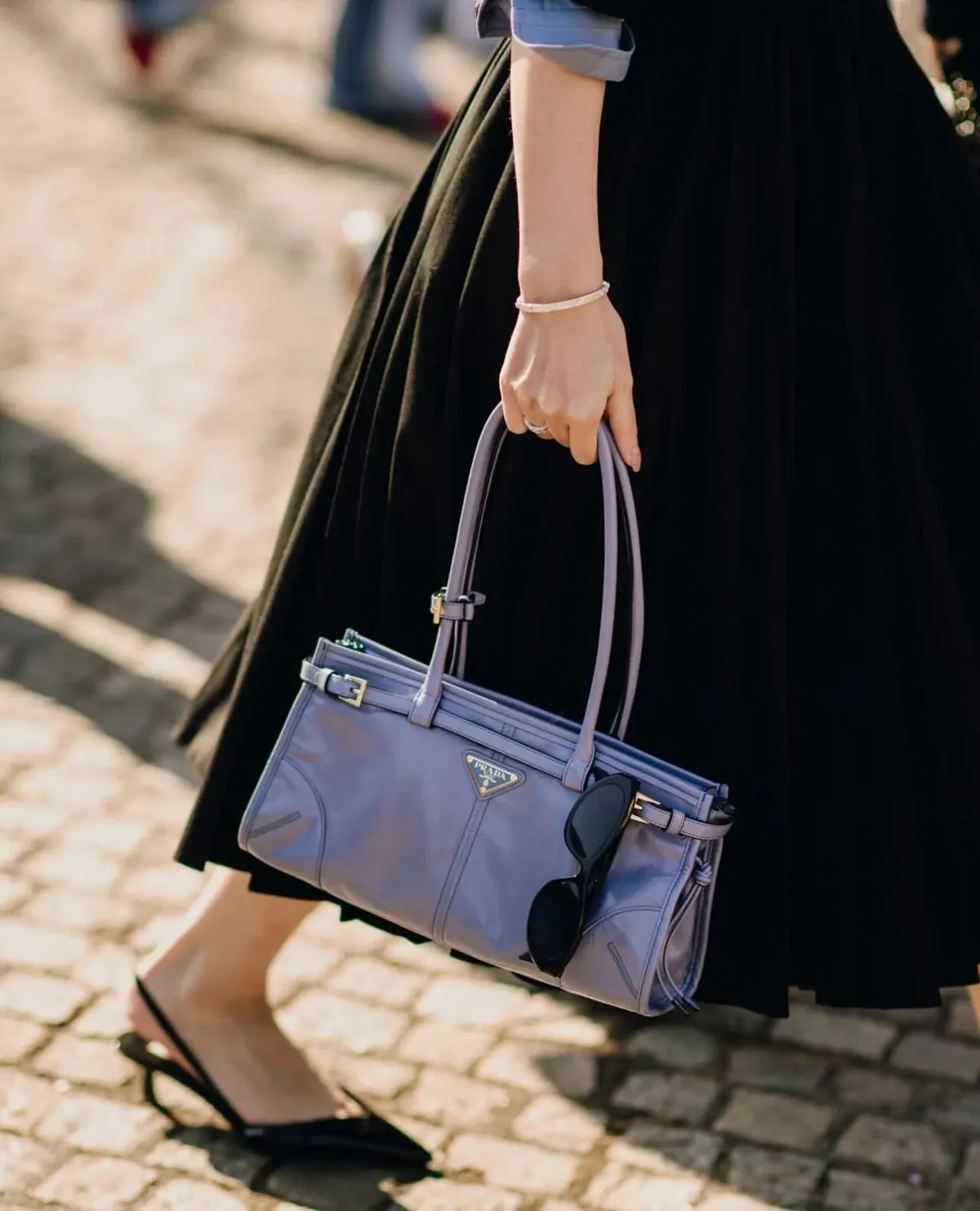
For Prada Fall/Winter 2026, the question is less which piece you own than which edge you allow to show. The collection’s official statement describes archival dresses embedded within other minimal garments, layers discovered within layers, with tailoring, sportswear and embroidered satin mixed without hierarchy. The practical answer: let the dress set the neckline and hem, let the minimal outer garment control the sleeve, and keep one clear edge per zone so the faded decoration looks chosen rather than spilled.
This is a styling guide, not a description of any single runway look. The decisions below are my interpretation of the stated ideas; the facts about the collection come from Prada Group’s published show statement. An existing same-brand wardrobe reference, the Prada Bonnie Bag: Work and Dinner Outfit Ideas image, is a separate reference for this wardrobe and is not a photograph of the Fall/Winter 2026 collection.
Decide the neckline first
The neckline is the most legible evidence of the layering order. If the archival dress has a high, plain neckline, wear the minimal outer garment open or with a deep V so a narrow band of the dress shows at the throat. If the dress neckline is low or decorative, let the outer garment close higher and keep the dress hidden at the neck; the decoration then reads at the wrist or hem instead.
- Minimal coat or jacket over a high dress neckline: one thin dress band visible at the throat.
- Crew-neck minimal knit over a low satin neckline: no dress at the neck, dress cuff at the wrist.
- Tailored blazer over a dress: choose one — lapel open with a sliver of dress, or buttoned with dress confined to hem and cuff.
The key is restraint. Two competing necklines make the layering look accidental; one controlled edge makes the worn embroidery look intentional.
Fix the hem rule before the shoes
The statement’s image of layers discovered within layers works best when the hem is a single deliberate reveal. Choose one of three formulas:
- Short over long: a minimal jacket or knit ends at the hip, the archival dress falls two to five centimetres below a straight trouser or skirt.
- Long over short: an elongated minimal coat covers the dress almost entirely, with only a narrow band of faded satin at the bottom.
- Equal lengths: hems sit within a centimetre of each other, so the eye reads texture rather than a second layer.
Whichever you choose, keep the other visible hems quiet. If the dress hem is the focus, wear simple trousers and plain shoes; if the outer hem is the focus, let the dress appear only as a dark or faded line.
Set the sleeve reveal
Sleeves are where minimal outerwear and embroidered satin disagree most often. A crisp tailored sleeve should end cleanly at the wrist, with the dress sleeve either fully hidden or extending no more than a few centimetres. A softer sportswear layer can push up, letting a satin cuff show loosely.
- Crisp tailoring: dress sleeve covered; decoration enters through the hem instead.
- Sportswear jacket or zip layer: push the outer sleeve to the forearm and let one satin cuff show.
- Sleeveless minimal garment: the dress sleeve becomes the only soft edge, so keep it narrow and avoid additional bracelets.
Balance faded satin with crisp tailoring
The statement pairs embroidered satin dresses with tailoring and sportswear, and describes materials intentionally faded and precious embroideries aged. In wearing terms, the contrast of a crisp, matte outer layer is what makes the aged satin look considered. A crease-free wool coat, a plain cotton shirt or a straight tailored trouser gives the faded dress a clean frame.
A related wardrobe guide, Prada Fall/Winter 2026 Layered Tailoring and Embroidered Satin Dresses, covers the broader tailoring-and-satin pairing. Here the focus is the embedded order: which garment is outermost, and which dress edges survive that decision. For sharper outer proportions, see Prada Fall/Winter 2026 elongated silhouette tailoring.
Repeat one formula through the week
Choose one embedded formula and change the supporting pieces, not the layer order. A workable pattern:
- Monday: minimal wool coat over the archival dress, dress hem just below the coat, plain trousers, flat boots.
- Wednesday: tailored blazer over the same dress, dress neckline hidden, satin cuff at one wrist, straight skirt.
- Friday: sportswear zip layer over the dress, sleeves pushed up, dress hem below a wide-leg trouser, as in the black shoulder bag and wide-leg trouser guide.
Keep the same dress, the same outer garment family and the same edge rule; vary the shoes and bag only. This builds the Prada idea of transforming through the day through clothes without turning each morning into a new layering problem.
Choose edges with a simple test
Before leaving, check three points in a mirror: the neckline shows one layer only, the hem reveals one clear edge, and the sleeve ends without a third competing line. If two edges argue, remove or tuck one. Faded embroidery should look like a deliberate trace, not like a garment escaping from beneath another.
For the quieter side of the wardrobe, the olive shoulder bag with neutral outfit guide offers a plain accessory route that keeps attention on the layered hem and cuff rather than adding another focal point.